
Foundational Texts
Muḥammad Amān ibn ʿAlī al-Jāmī ؒ (d. 1416 AH / 1996 CE) said:
The first text that I advise the one who wishes to begin seeking knowledge to memorise is Al-Uṣūl ath-Thalāthah (The Three Fundamental Principles). Thereafter, he should memorise Arkān aṣ-Ṣalāh wa-Wājibātihā wa-Shurūṭihā (The Pillars, Obligations, and Conditions of Prayer), followed by Al-Qawāʿid al-Arbaʿ (The Four Principles), using an edition that combines all three works in a single volume.
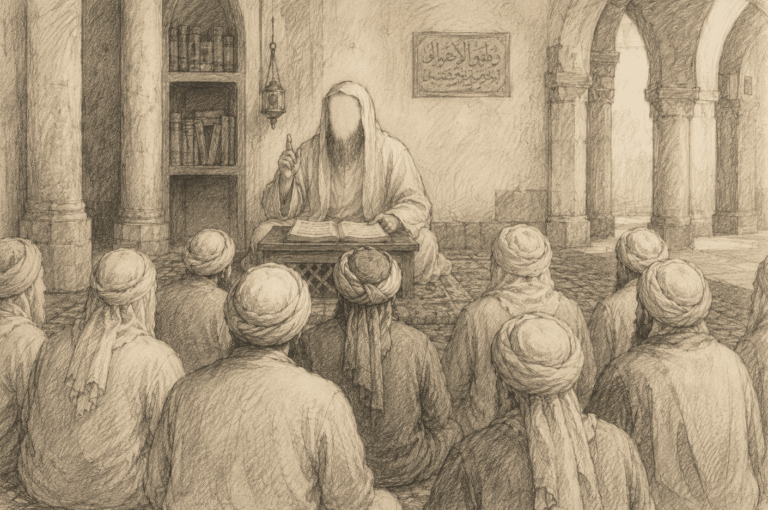
It is also recommended that he memorise Shurūṭ Lā Ilāha Illā Allah (The Conditions of Lā Ilāha Illā Allah) and Nawāqiḍ al-Islām (The Nullifiers of Islam). It is essential that these texts be memorised thoroughly. After memorising them, he should read them to a student of knowledge, so that he takes knowledge from the mouths of men and not from the bellies of books.
Thereafter, if it is easy for him to memorise Kashf ash-Shubuhāt (Removal of the Doubts), then this is good. However, the most important book for a student of knowledge to memorise and study in the subject of ʿaqīdah, particularly with regard to the tawḥīd of worship and governance, to use the newer terminology, is Kitāb at-Tawḥīd alladhī Huwa Ḥaqq Allah ʿalā al-ʿAbīd (The Book of Tawḥīd: The Right of Allah upon His Servants).
This is a great book. It consists of carefully selected verses from the Book of Allah, Prophetic ḥadīth, and narrations from the scholars. Through it, Allah has facilitated a great deal of goodness. We therefore advise our youth to give this book due importance by memorising it, understanding it well, and studying its explanations, so that they may become firmly grounded in the subject of ʿaqīdah.
Names and Attributes
With regard to the tawḥīd of the Names and Attributes, a student who has strong aspirations for knowledge should memorise the text of Al-ʿAqīdah al-Wāsiṭiyyah by Shaykh al-Islām Aḥmad ibn ʿAbd al-Ḥalīm Ibn Taymiyyah (d. 728 AH / 1328 CE), or at least study it carefully until he understands it. Thereafter, he should proceed to the works gathered under the title Majmūʿ al-Fatāwā of Ibn Taymiyyah. Within this collection are highly important treatises that are indispensable for students of knowledge.
If the student wishes to advance further in this subject, he should study Sharḥ al-ʿAqīdah aṭ-Ṭaḥāwiyyah, for its author drew all or most of it from the works of Shaykh al-Islām Aḥmad ibn ʿAbd al-Ḥalīm Ibn Taymiyyah, his student Muḥammad ibn Abī Bakr Ibn al-Qayyim (d. 751 AH / 1350 CE), and Ismāʿīl ibn ʿUmar Ibn Kathīr (d. 774 AH / 1373 CE). It is a comprehensive and highly beneficial work.
Tafsīr
With regard to tafsīr, the beginner should start with Tafsīr as-Saʿdī by ʿAbd ar-Raḥmān ibn Nāṣir as-Saʿdī (d. 1376 AH / 1957 CE). It is concise, clear, and based upon a Salafī methodology. If the student is well grounded in the Arabic language and has access to a Salafī teacher or exegete, then he may study Fatḥ al-Qadīr by Muḥammad ibn ʿAlī ash-Shawkānī (d. 1250 AH / 1834 CE).
These conditions are emphasised because Imām Ash-Shawkānī, despite his vast knowledge and valuable works, particularly Fatḥ al-Qadīr and Nayl al-Awṭār, was not free from interpretive errors concerning some of the divine attributes. Therefore, to prevent misunderstanding, this book should be studied under the guidance of a Salafī scholar. It helps the student appreciate the Book of Allah by drawing attention to grammatical analyses and, at times, points of rhetoric.
Thereafter, the well-known Tafsīr Ibn Kathīr may be studied. There is no harm in studying its abridgements before expanding one’s study later. Nevertheless, it is not appropriate for a student of knowledge to suffice with independent reading. Rather, he must return to the people of knowledge.
In addition, it is necessary to study the sciences of tafsīr, which include the sciences of Qurʾānic recitation, Arabic grammar, morphology, rhetoric, and related linguistic disciplines. All of these form part of the foundations of proper Qurʾānic interpretation.
Ḥadīth
Thereafter, the student should turn to the study of ḥadīth. He should memorise foundational texts, beginning with Al-Arbaʿūn an-Nawawiyyah, ʿUmdat al-Aḥkām, and Bulūgh al-Marām. He should then consider their conditions, become familiar with these books, and study them with specialists in the field.
Fiqh
With regard to fiqh, if the student wishes to broaden his understanding and become acquainted with scholarly differences, he should memorise a text from each of the four schools of jurisprudence. He should not restrict himself to blind adherence to a single school. Correct fiqh is that which is derived from the Qurʾān and Sunnah, as found in works such as ʿUmdat al-Aḥkām and Bulūgh al-Marām, and in the writings of Imām Ash-Shawkānī, provided that this is done without partisanship or fanaticism.
His aim should be seeking knowledge.
Editorial Commentary
Finally, it must be emphasised that reading alone is insufficient. The student of knowledge must accompany scholars, sit in their gatherings, learn from their manners, and benefit from their experience. Knowledge is not merely information, but light that is transmitted from hearts to hearts through sound companionship and sincere pursuit.
This guidance reflects the balanced and comprehensive methodology of the scholars in nurturing students upon sound foundations in creed, Qurʾān, ḥadīth, jurisprudence, and character.
References
Muḥammad Amān ibn ʿAlī al-Jāmī ؒ, “Manhajiyyat Ṭalab al-ʿIlm ash-Sharʿī”, Al-Ājurrī transcript and linked recording, posted 27 October 2013, edited 29 October 2013 by Abū Muḥammad Farīd al-Qabāʾilī.
Recommended texts: Al-Uṣūl ath-Thalāthah; the pillars, obligations and conditions of prayer; Al-Qawāʿid al-Arbaʿ; the conditions of lā ilāha illā Allah; Nawāqiḍ al-Islām; Kashf ash-Shubuhāt; Kitāb at-Tawḥīd; Al-ʿAqīdah al-Wāsiṭiyyah; Majmūʿ al-Fatāwā; Sharḥ al-ʿAqīdah aṭ-Ṭaḥāwiyyah; Tafsīr as-Saʿdī; Fatḥ al-Qadīr; Nayl al-Awṭār; Tafsīr Ibn Kathīr; Al-Arbaʿūn an-Nawawiyyah; ʿUmdat al-Aḥkām; Bulūgh al-Marām.