ʿAbd Allah ibn al-Mubārak ibn Wāḍiḥ al-Ḥanẓalī al-Marwazī (d. 181 AH/797 CE) ؒ and Abū Isḥāq Ibrāhīm ibn Muḥammad al-Fazārī (d. 186 AH/802 CE) are the subject of the following report:
وسئل ابن المبارك عن مسألة وإلى جنبه أبو إسحاق الفزاري فأشار ابن المبارك إلى السائل وهو خرساني أن يسأل أبا إسحاق، فسأله فأجابه، ثم قال الخرساني لابن المبارك بالفارسية «توجه مي كوهي» فقال ابن المبارك: «ما بمجلس مهنران سخن تكويم».
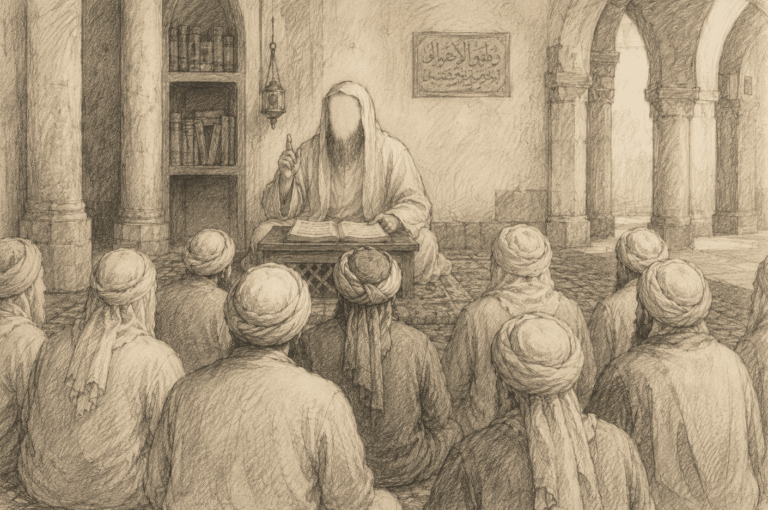
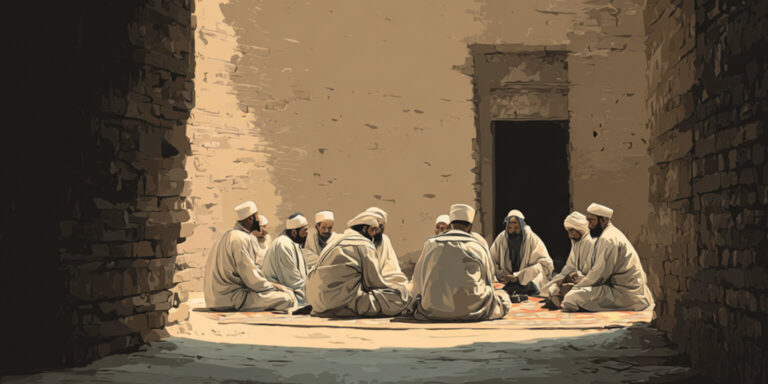
“Ibn al-Mubārak was asked about a matter while Abū Isḥāq al-Fazārī was sitting beside him. Ibn al-Mubārak gestured to the questioner, who was from Khurāsān, to ask Abū Isḥāq instead. The man asked him, and he answered. Afterwards, the Khurāsānī turned to Ibn al-Mubārak and said in Persian: ‘What are you doing?’ Ibn al-Mubārak replied in Persian: ‘We do not speak in the gatherings of our elders.’” (Siyar as-Salaf aṣ-Ṣāliḥīn, p. 1022.)
Commentary by Ṣalaḥ al-Irānī
This narration reflects the profound humility, etiquette, and reverence for knowledge that characterised the scholars of the early generations.
ʿAbd Allah ibn al-Mubārak (d. 181 AH/797 CE) was among the foremost scholars, ascetics, and muḥaddithūn of his time. Despite his vast knowledge and eminent status, he refrained from answering while a senior scholar, Abū Isḥāq al-Fazārī, was present. Instead, he directed the questioner to the more senior scholar, recognising his precedence in age, scholarship, and experience. His response, “We do not speak in the gatherings of our elders,” encapsulates a foundational principle of Islamic scholarly conduct: knowledge is inseparable from humility and proper manners (adab). True scholarship is not merely the possession of information, but the ability to recognise one’s place, honour one’s teachers, and respect the hierarchy of learning. This conduct also demonstrates sincerity in seeking truth rather than status. Ibn al-Mubārak did not seek to display his knowledge or assert his authority. Rather, he preferred that benefit reach the questioner through the most appropriate and qualified person present.
The use of the Persian language in this exchange further illustrates the cultural diversity of the early Muslim scholarly tradition and the ability of its scholars to communicate effectively with students from different regions and backgrounds.
This narration serves as an enduring lesson for students and scholars alike. Speaking in the presence of one’s teachers without need, competing for prominence, or seeking recognition undermines the blessing of knowledge. By contrast, humility, restraint, and respect elevate both the student and the scholar. Thus, the statement of Ibn al-Mubārak remains a guiding principle for seekers of knowledge in every age: true honour lies in silence when appropriate, deference to those more learned, and sincere concern for the preservation of scholarly dignity.
References
al-Aṣbahānī, Abū al-Qāsim Ismāʿīl ibn Muḥammad ibn al-Faḍl al-Aṣbahānī, known as Qiwām as-Sunnah (d. 535 AH/1140–1141 CE). Siyar as-Salaf aṣ-Ṣāliḥīn, p. 1022 in the verified electronic transcription. al-Aṣbahānī, Abū Qāsim Ismāʿīl, Sīyr as-Salaf aṣ-Ṣāliḥ. Riyadh, KSA: Dār ar-Riyāh, (1999) pp.1022