


Ṣalaḥ al-Irānī
November 11, 2016
6 mins read
Imām Sībawayhi, the pioneering scholar who laid the foundations of Arabic grammar.
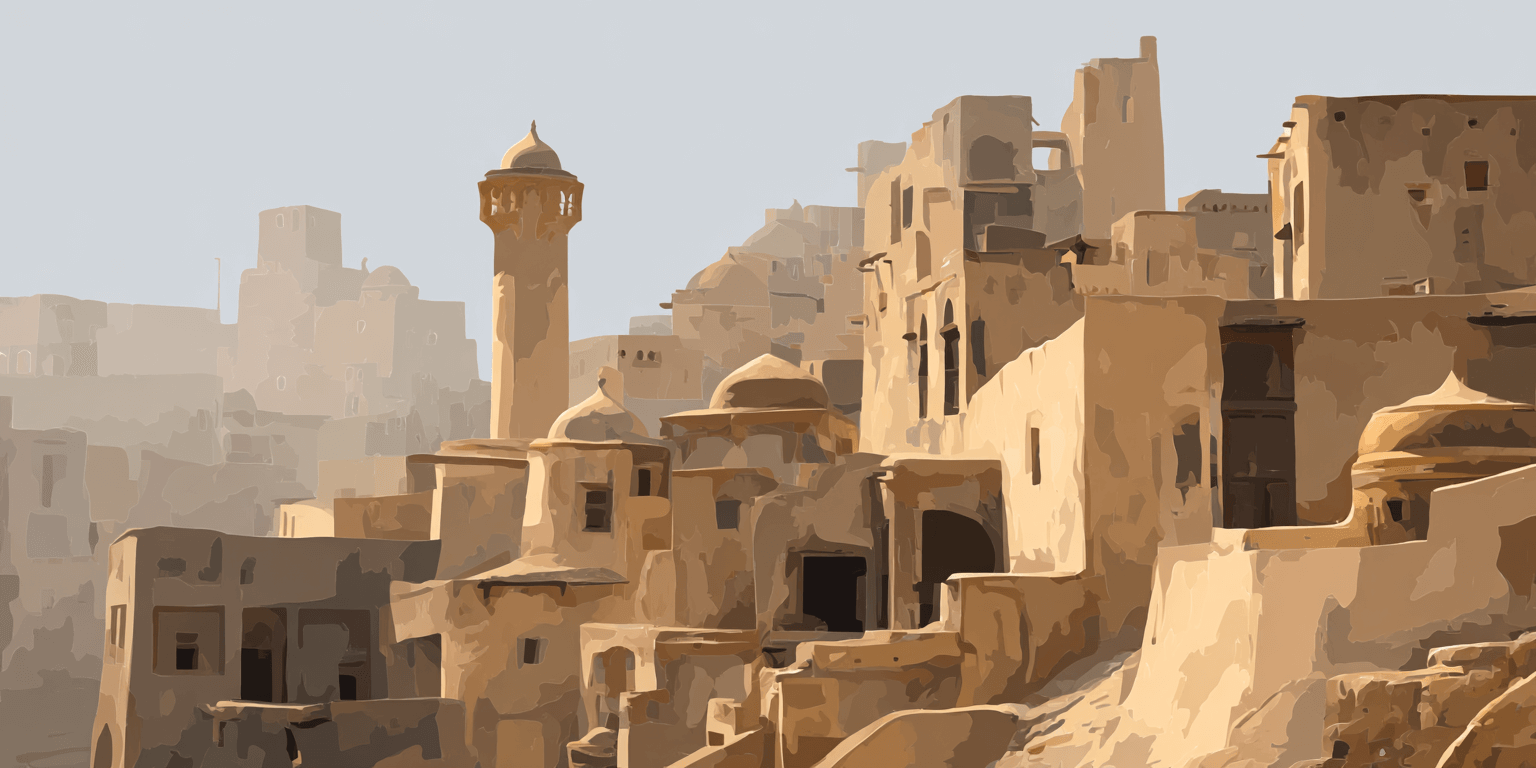
Abū Bishr ʿAmr ibn ʿUthmān ibn Qanbar, the leading authority of Arabic grammar and the ḥujjah (decisive proof) of the Arabs, was an Iranian scholar who resided in Baṣra, Iraq. He is the author of the unparalleled and foundational work in Arabic grammar, al-Kitāb. He was born in 140 AH / 757 CE in the city of al-Bayḍāʾ in Persia, situated eight parasangs from the city of Shīrāz.
He is universally known by the name Sībawayhi. It is said that sīb means “apple” in Persian, and that the name refers either to his pleasant fragrance or to his rosy, apple-like cheeks. This nickname was reportedly given to him by his mother during his youth. It is also said that no one in history bore this name prior to him.
During his adolescence, his family chose to migrate, following the custom of that era, to a city renowned for knowledge. The most prominent destinations for Persian migrants were the neighbouring Iraqi cities of Baṣra, Baghdād, and Kūfah. His family chose Baṣra, the epicentre and capital of learning at the time. It was there that Sībawayhi initially turned his attention to Islamic law.
Sībawayhi devoted himself to the gatherings of the scholars of ḥadīth (Ahl al-Ḥadīth), benefitting from the circles in which Prophetic narrations were transmitted and discussed. Among the most influential of these gatherings was that of Ḥamād ibn Salamah, the eminent muḥaddith of Iraq.
Al-Qifṭī relates that Sībawayhi was diligent and earnest in his studies. During one such gathering, while reading the ḥadīth text:
ليس من أصحابي أحد إلا ولو شئت لأخذت عليه ليس أبا الدرداء
he incorrectly read “laysa Abū al-Dardāʾ” instead of “laysa Abā al-Dardāʾ”, mistaking the accusative case for the nominative and being unaware of the grammatical rule governing laysa and its sisters. Ḥamād rebuked him, saying: “O Sībawayhi, you Persian, you have erred.” He then clarified that the construction was an exception, not as Sībawayhi had understood it.
Overcome with embarrassment, Sībawayhi resolved to master Arabic grammar so that he would never err again. In another report, it is said that he broke his pen and declared that he would not write anything until he had become firmly grounded in the sciences of the Arabic language. He subsequently devoted approximately twenty years to the study of Arabic linguistics.
Among his teachers was Ḥamād ibn Salamah ibn Dīnār al-Baṣrī (d. 167 AH / 783 CE), the renowned worshipper and muftī of Baṣra. He had no equal in the city and met numerous Successors of the Companions, including Ibn Jurayj, Sufyān al-Thawrī, and ʿAbd Allāh ibn al-Mubārak. He was known for his strong opposition to innovation. From his students were the two Imāms Muḥammad ibn Ismāʿīl al-Bukhārī and Muslim ibn al-Ḥajjāj. It was Ḥamād who redirected Sībawayhi from jurisprudence to Arabic grammar.
Another of his teachers was ʿAbd al-Ḥamīd ibn ʿAbd al-Majīd, commonly known as al-Akhfash al-Akbar (d. 177 AH / 793 CE), a leading grammarian who acquired knowledge directly from the Bedouin Arabs and revived linguistic usages that had faded among urban populations.
He also studied under Yaʿqūb ibn Isḥāq al-Ḥaḍramī (d. 205 AH / 820 CE), a foremost authority in Qurʾānic recitation and language, and one of the transmitters of the recognised schools of qirāʾāt.
His greatest teacher, however, was al-Khalīl ibn Aḥmad al-Farāhīdī (d. 175 AH / 791 CE). Whenever Sībawayhi states in al-Kitāb, “I heard”, “We were told”, or “I asked him”, he is referring to al-Khalīl. It has also been reported that al-Khalīl’s father was the first to name a child Aḥmad after the Prophet ﷺ.
Among Sībawayhi’s students was Saʿīd ibn Masʿadah al-Akhfash al-Awsaṭ (d. 207 AH / 822 CE), originally from Balkh, who later settled in Baṣra. Another was Quṭrub ibn Aḥmad al-Mustanīr (d. 206 AH / 821 CE), who was known for his constant companionship of Sībawayhi, often waiting for him outside his home to benefit from him.
It has been suggested that Sībawayhi’s speech impediment may have contributed to the relatively small number of students he had. Muʿāwiyah ibn Bakr al-ʿIlmī said that he once saw ʿAmr ibn ʿUthmān as a young man and heard that he was a student of al-Khalīl. Upon hearing him speak, he noticed a speech defect, yet when he examined his book, he found his knowledge superior to his speech.
al-Farrāʾ remarked that he visited Sībawayhi, found him to be Persian and inarticulate, and upon hearing a grammatical error, left and never returned. It should be noted, however, that al-Farrāʾ was a companion of al-Kisāʾī, one of Sībawayhi’s principal rivals.
Sībawayhi later travelled to Baghdād, then under the authority of the vizier Yaḥyā ibn Khālid al-Barmakī during the reign of Hārūn al-Rashīd. There, Sībawayhi rose to prominence as the leading figure of the Baṣran grammatical school. His success attracted both admiration and hostility, particularly from al-Kisāʾī, the founder of the Kūfan school.
A public debate was eventually arranged between the two. The central issue concerned the grammatical validity of the expressions: فَإِذَا هُوَ هِيَ and فَإِذَا هُوَ إِيَّاهَا, relating to the sentence describing whether the sting of the scorpion or the hornet was more severe. While the matter hinged upon complex grammatical principles, the political climate influenced the outcome. Bedouin Arabs present sided with al-Kisāʾī, allegedly out of fear of authority, despite Sībawayhi’s correctness. As a result, Sībawayhi was declared defeated and awarded ten thousand dirhams as compensation.
Deeply affected by the outcome, Sībawayhi returned to Shīrāz, unable to remain in Iraq. Ibn Abī Qutaybah reported that after being humiliated in Baghdād, he returned to Persia and died young. He passed away in Shīrāz in 180 AH / 796 CE at the age of approximately thirty-five.
To this day, nothing comparable has been authored. al-Kitāb is the first complete and systematic work on Arabic grammar, upon which all subsequent grammatical studies are based. It continues to be studied throughout the world. It is reported that al-Kisāʾī later studied al-Kitāb, recognised its brilliance, and taught it out of respect for Sībawayhi.
ʿUthmān al-Māzinī famously said that whoever seeks to author a great work in Arabic grammar after al-Kitāb should be ashamed of himself.
________
Reference
ʿAmr ibn ʿUthmān Sībawayhi (d. 180 AH / 796 CE), al-Kitāb, 1st edn. (with additions), Cairo: Maktabat Nāshir, 1988, vol. 1, p. 34.
June 9, 2020
7 mins read
March 28, 2017
6 mins read


