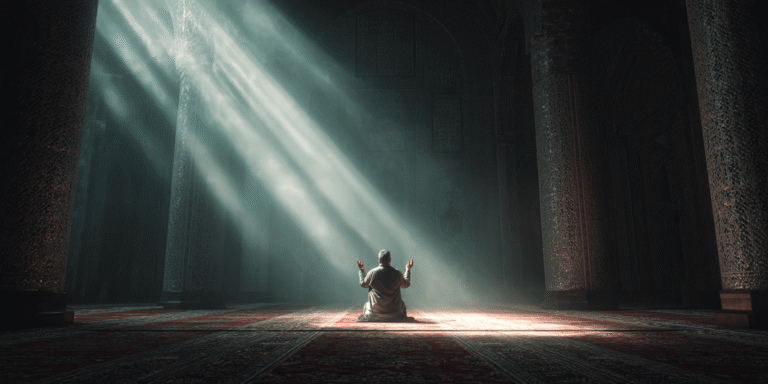

Shaykh Muḥammad ibn Ṣāliḥ ibn Muḥammad al-ʿUthaymīn (d. 1421 AH / 2001 CE) ؒ answered the following question:
Question
بارك الله فيكم، هذه رسالة من السائل إبراهيم هارون أبو بكر سوداني الجنسية، مقيم بالعراق، يقول في سؤاله: في معظم صلواتي أجد نفسي باكياً بصوت مرتفع، هل هذا يبطل صلاتي أم لا، أريد إجابة عن هذا السؤال؟
“May Allah bless you. This is a message from the questioner Ibrāhīm Hārūn Abū Bakr, of Sudanese nationality and resident in Iraq. He says in his question: In most of my prayers I find myself crying in a loud voice. Does this invalidate my prayer or not? I would like an answer to this question.”
Answer
The answer to this question is that crying in the prayer, if it is out of fear of Allah, the Mighty and Majestic, and awe of Him, and from the person’s remembrance of the Day of Judgement and of the verses of promise and warning in the Noble Qurʾān that he passes through, does not invalidate the prayer. But if the crying is due to remembering a calamity that has befallen him, or something similar, it invalidates the prayer, because it arises from a matter outside the prayer.
Accordingly, he should try to treat himself for this crying, so that he does not expose his prayer to invalidation. Rather, it is prescribed for him that in his prayer he should not be attached to anything other than what relates to it, and should not think about other matters. For thinking about what does not relate to the prayer, while one is in it, greatly diminishes it. That is from the work of Satan, from his whisperings, and from his theft from a servant’s prayer.
The Prophet was asked about turning in the prayer, and he said:
هُوَ اخْتِلَاسٌ يَخْتَلِسُهُ الشَّيْطَانُ مِنْ صَلَاةِ الْعَبْدِ
“It is a snatching that Satan snatches from the prayer of a servant.”
Just as this is clear in the case of turning the head, it equally includes turning of the heart. For it is Satan who comes to a person in his prayer and says to him: “Remember such-and-such on such-and-such a day,” and so on, until he ends up not knowing what he has prayed.
References
Al-ʿUthaymīn, Muḥammad ibn Ṣāliḥ ibn Muḥammad, Fatāwā Nūr ʿalā ad-Darb, official answer, “Hal Tabṭul aṣ-Ṣalāh bi-l-Bukāʾ?”, tape 141. al-Fatawá Nūr alá ad-Ḍarb of Muḥammad ibn Sāliḥ al-ʿUthaymīn (9/141)
Al-Bukhārī, Muḥammad ibn Ismāʿīl (d. 256 AH/870 CE), Ṣaḥīḥ al-Bukhārī, ḥadīth on turning (iltifāt) in prayer, narrated by ʿĀʾishah