Ṣalaḥ al-Irānī
September 1, 2016
6 mins read
Imām al-Barbahārī’s principle on lawful earning, self-reliance, and avoiding dependence on people, as clarified by Shaykh Ṣāliḥ al-Fawzān.
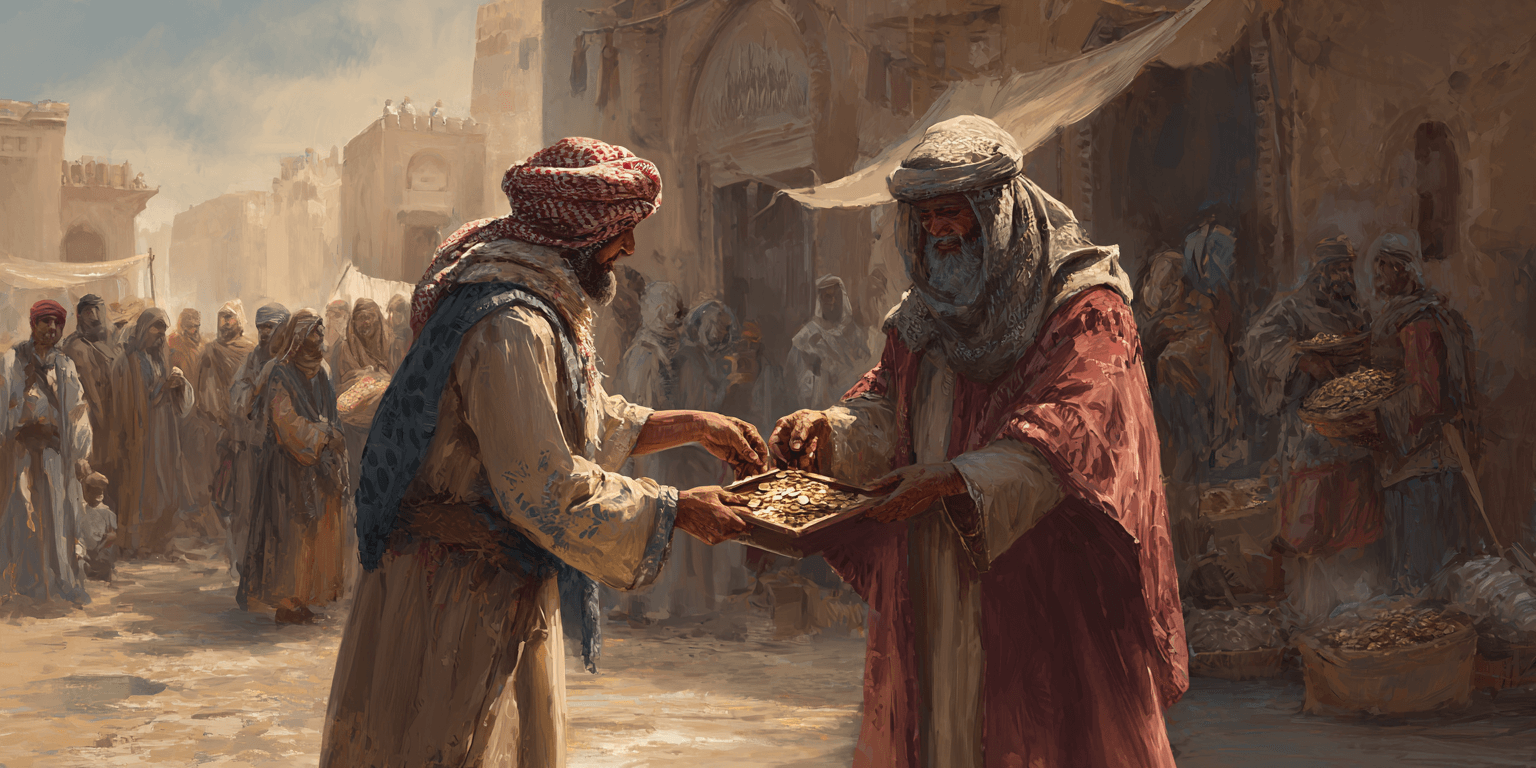
Point No. 123 Imām al-Ḥasan ibn ʿAlī al-Barbahārī (d. 329 AH / 941 CE), may Allah ﷻ have mercy upon him, said: “The means of earning that are clear to be sound to you are unlimited, except that which is apparently corrupt. If it is corrupt, then one takes from it only what suffices him. You do not say, ‘I will leave the means of earning and take that which is given to me by the people.’ This was never done by the Companions nor by the scholars until this time of ours. ʿUmar ibn al-Khaṭṭāb said: ‘An earning in which some part of it is lowly is better than being in need of the people.’”
Shaykh Ṣāliḥ ibn Fawzān ibn ʿAbd Allāh al-Fawzān (b. 1354 AH / 1933 CE) explained: The meaning of his statement, “The means of earning that are clear to be correct to you are unlimited,” is based upon the statement of the Prophet Muḥammad ﷺ: “That which is lawful is clear and that which is unlawful is clear, and between the two are doubtful matters which many people do not know. Whoever avoids the doubtful matters clears himself in regard to his religion and his honour.” (Ṣaḥīḥ Muslim) This ḥadīth establishes that whatever is clearly lawful is permissible, in accordance with the principle that all matters are originally lawful unless their prohibition has been clearly established. Likewise, whatever is unlawful is clearly known.
Allah ﷻ said:
۞ حُرِّمَتْ عَلَيْكُمُ الْمَيْتَةُ وَالدَّمَ وَلَحْمُ الْخِنزِيرِ وَمَا أُهِلَّ لِغَيْرِ اللَّهِ بِهِ ۞
“Forbidden to you (for food) are: al-Maytatah (dead animals not slaughtered), blood, the flesh of swine, and that which has been slaughtered as a sacrifice for others than Allah.” (Sūrat al-Māʾidah 5:3) ۞
Likewise, gambling, betting, and intoxicants are prohibited by explicit legislative texts. Similarly, stealing, unlawfully seizing the property of others, and consuming people’s wealth unjustly are clearly forbidden.
As for ambiguous matters whose permissibility or prohibition is unclear due to conflicting evidences, they must be avoided until their ruling becomes clear. This is the principle established by the Prophet ﷺ. This is the meaning of the author’s statement, “except that which is apparently corrupt.”
Concerning his statement, “If it is corrupt, then one takes from it only what suffices him,” this refers to situations of necessity. If a person fears that he will die unless he eats, then he may take from that which is normally unlawful only what is sufficient to preserve his life, whether it belongs to others, is from impure wealth, or even from carrion.
Allah ﷻ said:
۞ إِنَّمَا حَرَّمَ عَلَيْكُمُ الْمَيْتَةَ وَالدَّمَ وَلَحْمَ الْخِنزِيرِ وَمَا أُهِلَّ لِغَيْرِ اللَّهِ بِهِ ۖ فَمَنِ اضْطُرَّ غَيْرَ بَاغٍ وَلَا عَادٍ فَإِنَّ اللَّهَ غَفُورٌ رَّحِيمٌ ۞
“He has forbidden you only the dead animals, blood, the flesh of swine, and that which is slaughtered for others than Allah. But if one is forced by necessity, without wilful disobedience nor transgressing due limits, then there is no sin upon him. Truly, Allah is Oft-Forgiving, Most Merciful.” (Sūrat al-Naḥl 16:115) ۞
Thus, one may take an adequate amount from what is unlawful in order to preserve life, and then abstain from the remainder.
Allah ﷻ also said:
۞ وَقَدْ فَصَّلَ لَكُم مَّا حَرَّمَ عَلَيْكُمْ إِلَّا مَا اضْطُرِرْتُمْ إِلَيْهِ ۗ ۞
“He has explained to you in detail what is forbidden to you, except under compulsion of necessity.” (Sūrat al-Anʿām 6:119) ۞
Therefore, in cases of necessity, prohibition is lifted within defined limits.
Concerning his statement, “You do not say, ‘I will leave the means of earning and take that which is given to me by the people,’” some people claim, “I put my trust in Allah and will devote myself to worship or seeking knowledge, and the people will provide for me.”
This is not permissible. Rather, it is obligatory upon a person to seek provision for himself, his wife, his children, and the members of his household. Seeking lawful provision is itself an act of worship. One must not sit idle and depend upon the charity of people. Instead, one must strive to earn sustenance.
Allah ﷻ said:
۞ وَتَزَوَّدُوا فَإِنَّ خَيْرَ الزَّادِ التَّقْوَىٰ وَاتَّقُونِ يَا أُولِي الْأَلْبَابِ ۞
“And take provision, but the best provision is al-Taqwā. So fear Me, O people of understanding.” (Sūrat al-Baqarah 2:197) ۞
Concerning his statement, “This was never done by the Companions nor by the scholars until this time of ours,” this practice of sitting idle and relying upon people was unknown among the Companions. They were the most God-fearing and foremost in worshipping Allah ﷻ, yet they were people of labour and trade.
Among them were farmers and merchants. From them were Abū Bakr al-Ṣiddīq (d. 13 AH / 634 CE), al-Zubayr ibn al-ʿAwwām (d. 36 AH / 656 CE), ʿAbd al-Raḥmān ibn ʿAwf (d. 32 AH / 652 CE), and ʿUthmān ibn ʿAffān (d. 35 AH / 656 CE), may Allah be pleased with them all. They were wealthy Companions, and among the best of the Companions.
They spent their wealth in the path of Allah ﷻ and supported the Muslim armies. They did not abandon earning provision.
Abū Bakr al-Ṣiddīq engaged in trade and supported the Messenger of Allah ﷺ from the time Allah ﷻ sent him in Makkah. He assisted him in his well-known affairs, fed the needy, purchased persecuted slaves and freed them, such as Bilāl ibn Rabāḥ and others. He did not abandon lawful earning and say, “I will sit and worship Allah, for I am among the Companions of the Messenger of Allah ﷺ.”
Concerning al-Barbahārī’s statement, “ʿUmar ibn al-Khaṭṭāb said: ‘An earning in which some part of it is lowly is better than being in need of the people,’” this means that taking a humble occupation, such as cupping or manual labour, and earning from it is better than humiliating oneself by asking people.
Thus, earning lawful provision, even through modest work, preserves dignity, independence, and obedience to Allah, and is superior to dependence upon others.
References
Ṣāliḥ ibn Fawzān ibn ʿAbd Allāh al-Fawzān, Ithāf al-Qāriʾ fī Sharḥ al-Sunnah li-al-Barbahārī, 2 vols, Maktabat al-Rushd, Riyadh, 1st edn, 2005, vol. 1, pp. 119-123.
Muslim ibn al-Ḥajjāj al-Naysābūrī (d. 261 AH / 875 CE), Ṣaḥīḥ Muslim, ed. Muḥammad Fuʾād ʿAbd al-Bāqī, Dār Iḥyāʾ al-Turāth al-ʿArabī, Beirut, n.d., Book of Transactions, ḥadīth no. 1599.
Muḥammad ibn Ismāʿīl al-Bukhārī (d. 256 AH / 870 CE), Ṣaḥīḥ al-Bukhārī, ed. Muṣṭafā Dīb al-Bughā, Dār Ibn Kathīr, Damascus and Beirut, 1993.
The Qurʾān, Sūrat al-Māʾidah 5:3; Sūrat al-Naḥl 16:115; Sūrat al-Anʿām 6:119; Sūrat al-Baqarah 2:197.

July 15, 2020
3 mins read