Shaykh ʿAbd al-ʿAzīz ibn ʿAbd Allah ibn Bāz (d. 1420 AH/1999 CE), may Allah have mercy upon him
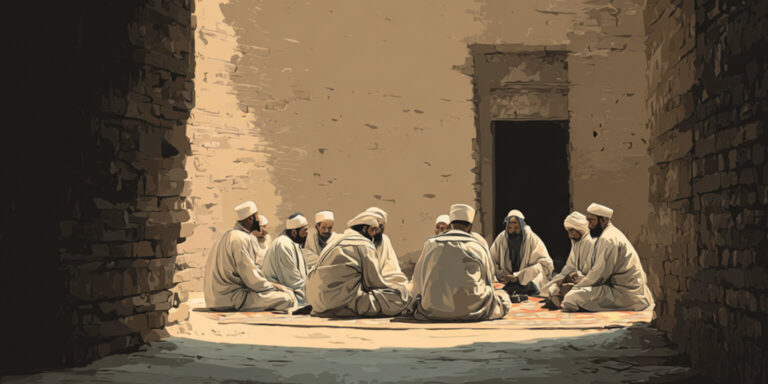
There is no doubt that circles of knowledge occupy a position of immense importance. The Messenger of Allah would establish such gatherings, sitting with his Companions, teaching and admonishing them from time to time. They would gather around him in circles to learn from him.
Likewise, after his passing, the Companions رضي الله عنهم continued this practice, establishing circles of knowledge in which they taught the people. This tradition was then inherited by the scholars throughout every generation until the present day.
The benefits of these gatherings are immense. The student of knowledge attends, listens attentively, and brings the book from which the lesson is being delivered so that he may derive the fullest benefit and record important points that might otherwise be forgotten. Writing down beneficial knowledge is of tremendous value, for a person may hear something and later forget it, whereas writing preserves knowledge and safeguards its benefit.
Likewise, members of the general public attend these gatherings, listen attentively, benefit from what they hear, and ask about matters they do not understand. All of this is among the deeds beloved to Allah .
Anas ibn Mālik narrated that the Prophet said:
إِذَا مَرَرْتُمْ بِرِيَاضِ الْجَنَّةِ فَارْتَعُوا
“When you pass by the gardens of Paradise, then graze therein.” (Jāmiʿ at-Tirmidhī, no. 3510).
They asked:
وَمَا رِيَاضُ الْجَنَّةِ
“O Messenger of Allah , what are the gardens of Paradise?” (Jāmiʿ at-Tirmidhī, no. 3510).
He replied:
حِلَقُ الذِّكْرِ
“The circles of remembrance.” (Jāmiʿ at-Tirmidhī, no. 3510).
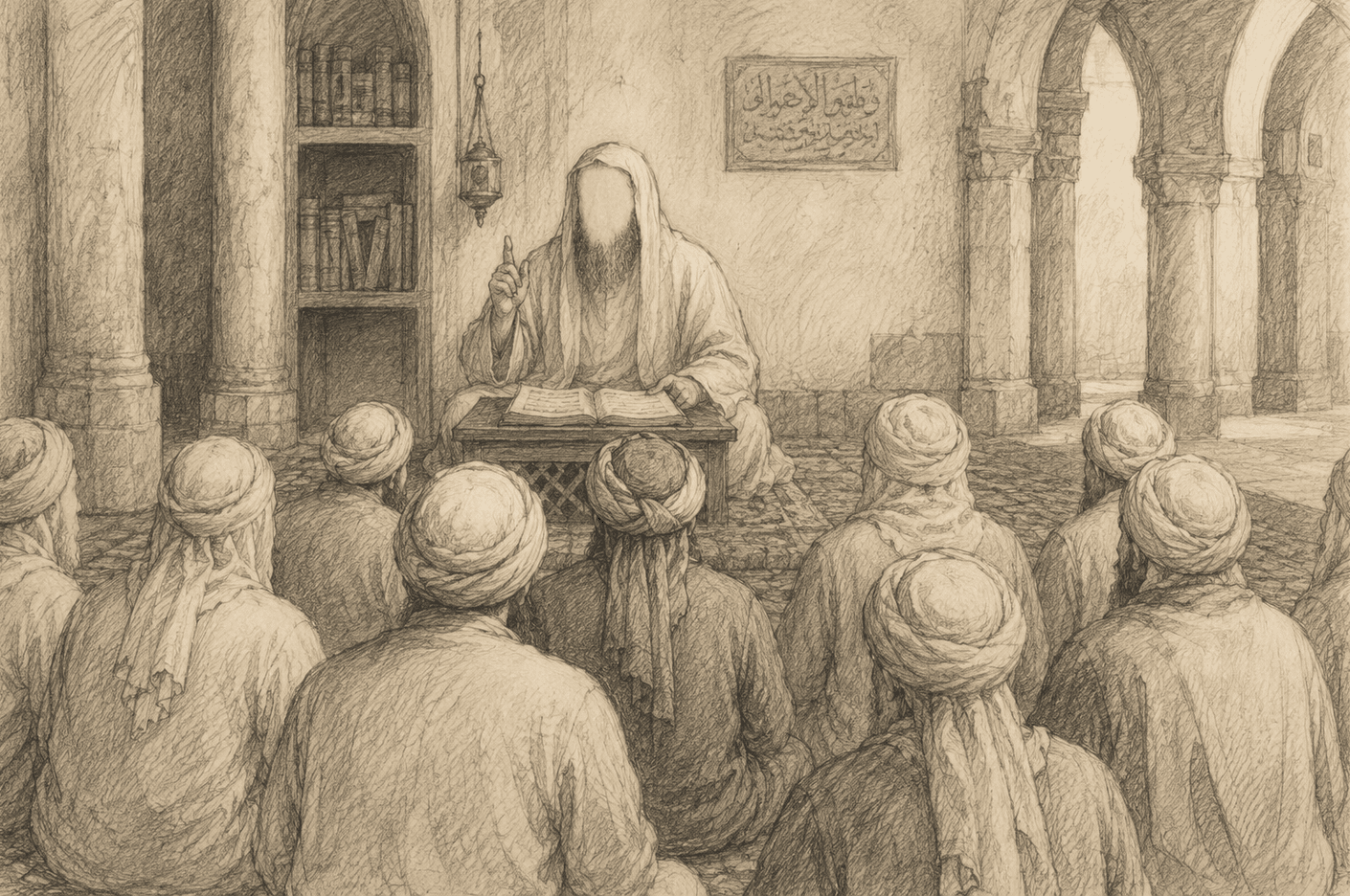
Abū Wāqid al-Laythī رضي الله عنه narrated, in another authentic narration recorded by both Ṣaḥīḥ al-Bukhārī and Ṣaḥīḥ Muslim, the Prophet was sitting in the mosque teaching his Companions رضي الله عنهم, who had gathered around him in a circle.
Three men entered the mosque.
One of them came forward and sat within the circle.
The second sat behind the circle.
The third turned away and departed.
When the Prophet had finished speaking, he said:
أَلاَ أُخْبِرُكُمْ عَنِ النَّفَرِ الثَّلاَثَةِ
“Shall I inform you about these three men?” (Ṣaḥīḥ al-Bukhārī, no. 66).
They replied:
“Yes, O Messenger of Allah .” [Response retained from the edited translation; not present in the wording of Ṣaḥīḥ al-Bukhārī, no. 66.]
He said:
أَمَّا أَحَدُهُمْ فَأَوَى إِلَى اللَّهِ، فَآوَاهُ اللَّهُ
“As for one of them, he sought refuge with Allah, so Allah granted him refuge.” (Ṣaḥīḥ al-Bukhārī, no. 66).
This referred to the one who entered and joined the gathering.
He continued:
وَأَمَّا الآخَرُ فَاسْتَحْيَا، فَاسْتَحْيَا اللَّهُ مِنْهُ
“As for the second, he felt shy, so Allah showed shyness towards him.” (Ṣaḥīḥ al-Bukhārī, no. 66).
This referred to the one who remained seated behind the circle without pushing his way forward.
He continued:
وَأَمَّا الآخَرُ فَأَعْرَضَ، فَأَعْرَضَ اللَّهُ عَنْهُ
“As for the third, he turned away, so Allah turned away from him.” (Ṣaḥīḥ al-Bukhārī, no. 66).
This contains a severe warning against turning away from gatherings of knowledge and neglecting the pursuit of beneficial knowledge.
Likewise, it is recorded in both Ṣaḥīḥ al-Bukhārī and Ṣaḥīḥ Muslim, on the authority of Muʿāwiyah ibn Abī Sufyān, that the Prophet said:
مَنْ يُرِدِ اللَّهُ بِهِ خَيْرًا يُفَقِّهْهُ فِي الدِّينِ،
“Whoever Allah intends good for, He grants him understanding of the religion.” (Ṣaḥīḥ al-Bukhārī, no. 71; Ṣaḥīḥ Muslim, no. 1037).
This is a tremendous ḥadīth. It demonstrates that one of the greatest signs that Allah intends good for His servant is that He grants him understanding and insight into the religion. Conversely, one of the signs of deprivation is that a person neglects to seek understanding of the religion, turns away from it, and remains heedless.
Abū Hurayrah narrated in Ṣaḥīḥ Muslim that the Prophet said:
وَمَنْ سَلَكَ طَرِيقًا يَلْتَمِسُ فِيهِ عِلْمًا سَهَّلَ اللَّهُ لَهُ بِهِ طَرِيقًا إِلَى الْجَنَّةِ
“Whoever travels a path seeking knowledge, Allah will make easy for him a path to Paradise.” (Ṣaḥīḥ Muslim, no. 2699).
Seeking knowledge is among the greatest acts of worship and one of the most important obligations upon every Muslim.
Therefore, my advice to every Muslim man and woman is to be diligent in seeking understanding of the religion, to pursue beneficial knowledge through every lawful means available, and to seize every opportunity to learn.
Translator’s note: This is an edited translation adapted from a Nūr ʿalā ad-Darb radio programme answer by Shaykh Ibn Bāz, may Allah have mercy upon him.
References
Al-Bukhārī, Muḥammad ibn Ismāʿīl (d. 256 AH/870 CE), Ṣaḥīḥ al-Bukhārī, nos. 66 and 71.
Ibn Bāz, ʿAbd al-ʿAzīz ibn ʿAbd Allah (d. 1420 AH/1999 CE), “Importance of the Circles of Knowledge (Ḥalaq al-ʿIlm)”, Nūr ʿalā ad-Darb.
Muslim, ibn al-Ḥajjāj (d. 261 AH/875 CE), Ṣaḥīḥ Muslim, nos. 1037 and 2699. The story of the three men is also attributed to Muslim.
At-Tirmidhī, Muḥammad ibn ʿĪsā (d. 279 AH/892 CE), Jāmiʿ at-Tirmidhī, no. 3510. Declared ḥasan by al-Albānī, as stated in the source article.