The cause of al-Harawī’s deviation was a mistake committed by al-Dāraquṭnī
 Whilst Imām al-Dāraquṭnī (ʿAlī ibn ʿUmar ibn Aḥmad al-Dāraquṭnī, d. 385 AH / 995 CE) and his student, Abū Dharr al-Harawī (ʿAbd ibn Aḥmad al-Harawī, d. 435 AH / 1043 CE), were strolling through the marketplace, they encountered the renowned scholar, theologian, and logician Abū Bakr Muḥammad ibn al-Ṭayyib al-Bāqillānī (d. 406 AH / 1015 CE), who was regarded as the leading authority of the Ashʿarī school in his time.
Al-Bāqillānī was an Ashʿarī scholar known for his firm and uncompromising stance against hypocrites, speculative intellectuals, rejectionist groups, Christians, and other external adversaries of Islam. He was distinguished by his mastery in debate and his ability to refute and dismantle the doubts and arguments of his opponents with clarity, precision, and intellectual rigour.
It has been reported that the Caliph of ʿIrāq dispatched al-Bāqillānī to Constantinople in 371 AH (981 CE) in order to engage in theological debate with its learned Christian scholars. When the Emperor of the Romans learned of al-Bāqillānī’s imminent arrival, he devised a scheme intended to humiliate him. He instructed his craftsmen to lower the height of the entrance, so that when al-Bāqillānī entered, he would be forced to bow and thus appear to prostrate himself before the Emperor and his entourage.
Al-Bāqillānī became aware of this plan. Instead of submitting to this intended humiliation, he turned his body backwards, knelt, and entered the doorway in reverse, walking backwards and directing his back towards the Emperor and his assembly.
Thereafter, Abū Bakr al-Bāqillānī approached the Pope and asked, “How are your family and children?” This question caused astonishment among those present and disrupted their conversations. They immediately made the sign of the cross over their faces and condemned his words. The Emperor was angered and exclaimed, “Do you not know that Popes neither marry nor have children?” Al-Bāqillānī replied, “Allāh ﷻ is the Greatest! Your Popes are prohibited from marrying and bearing children, yet you ascribe to your Lord the marriage to Mary and the fathering of Jesus!”
This response only intensified the Emperor’s anger. He then said, “Is this not similar to what ʿĀʾishah did?” Abū Bakr replied, “If ʿĀʾishah has been accused, then Mary has also been accused in a similar manner. Yet both are pure. ʿĀʾishah was married and did not bear children, while Mary gave birth without marriage. Who, then, was the first to be falsely accused? May Allāh ﷻ bless them both.”
The Emperor then asked, “Did your Prophet ﷺ go to war?” Abū Bakr replied, “Yes.” He asked, “Did he fight at the forefront of the battle?” He replied, “Yes.” He asked, “Did he win?” He replied, “Yes.” He then asked, “Did he ever lose?” He replied, “Yes.” The Emperor exclaimed, “Amazing! He was a Prophet and yet he was defeated?” Abū Bakr responded, “And he is your Lord, yet he was crucified!”
The Emperor then asked, “What do you say about the splitting of the moon, which you claim was a miracle of your Prophet ﷺ?” Abū Bakr al-Bāqillānī replied, “This is true according to us. The moon split during the time of our Prophet ﷺ until people witnessed it. Only those who were present and those who happened to observe the event saw it.”
The Emperor asked, “Why, then, did not all people see it?” Abū Bakr replied, “Because not all people were prepared to witness its splitting.” The Emperor continued, “Is there any special relationship between you and the moon? Why did the Romans and other nations not see it, while you did?” Abū Bakr replied, “What about the ‘table’ which was sent down to Prophet ʿĪsá عليه السلام from the heavens? Is there any special relationship between you and that table? You have seen it, while the Jews, the Magians, the Brahmans, the atheists, and even your neighbours, the Greeks, deny it.”
The Emperor then called upon one of their leading priests to intervene. Abū Bakr al-Bāqillānī later related:
“They brought a man with blond hair. When he sat, I presented the issue to him. He said, ‘What the Muslim has said is correct. I know of no other answer.’ I then asked him, ‘What do you say about an eclipse? Is it seen by all people on earth, or only by those in the region where it occurs?’ He replied, ‘It is seen only by those in the region where it occurs.’ I said, ‘Then what do you deny about the splitting of the moon, since it may take place in a region where only its people can witness it, while others are unable to see it?’ He said, ‘It is as you have said. No one can deny this. The argument concerns the narrators who reported it.’”
The Emperor then asked, “How, then, are the narrators discredited?” The priest replied, “If such signs were true, they would be transmitted by a large group to another large group, until certain knowledge of them reached us. Since such necessary knowledge has not reached us, it indicates that the report is fabricated.”
The Emperor then turned to me and said, “What is your answer?” I replied, “What is irrevocable and unquestionable for him regarding the ‘table’ is irrevocable and unquestionable for me regarding the splitting of the moon. It would be said to him: had the descent of the table been true, it would have been reported by a large number of people, and no Jew, Christian, or dualist would be ignorant of it. Since they do not possess necessary knowledge of it, it would imply that the report is fabricated.”
At this, the priest and the Emperor, as well as the entire gathering, were astonished, and the assembly concluded upon this decisive argument.
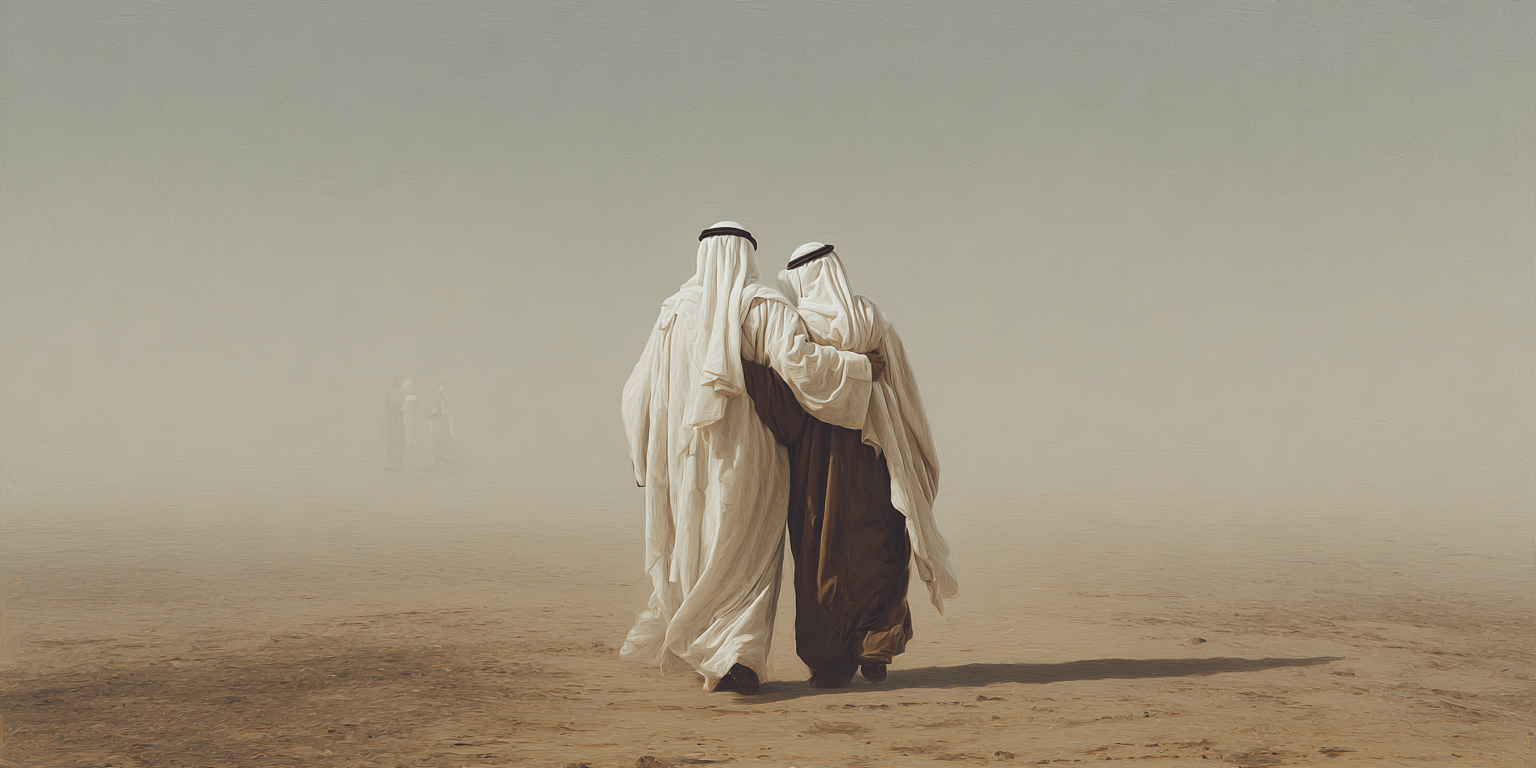
Nevertheless, he was an Ashʿarī. When Imām al-Dāraquṭnī encountered Abū Bakr al-Bāqillānī in the marketplace, he embraced him warmly, hugged him, and kissed his head. All the while, Abū Dharr al-Harawī, the student of al-Dāraquṭnī, observed the scene attentively, reflecting upon what he had witnessed. After they had continued walking for a short distance through the market, Abū Dharr turned to his teacher and enquired about the man whom he had seen him embrace and kiss. Al-Dāraquṭnī replied, “That was Abū Bakr al-Bāqillānī, the man responsible for such-and-such, and the one who accomplished such-and-such.” Imām adh-Dhahabī (Shams al-Dīn Muḥammad ibn Aḥmad adh-Dhahabī, d. 748 AH / 1348 CE) reported that Abū al-Walīd al-Bājī (Sulaymān ibn Khalaf al-Bājī, d. 474 AH / 1081 CE) said:
“Abū Dharr al-Harawī used to incline towards the creed of al-Bāqillānī. I asked him, ‘How did you come to adopt this position?’ He replied, ‘I was once walking with al-Dāraquṭnī when we encountered the judge, Abū Bakr al-Bāqillānī. He embraced him and kissed his face and eyes. When we departed from him, I asked al-Dāraquṭnī, “Who was that?” He replied, “That was the Imām of the Muslims and the defender of the religion. He was the judge, Abū Bakr al-Ṭayyib.” From that time onwards, I have always returned to him.’” This report illustrates the high esteem in which Abū Bakr al-Bāqillānī was held by leading scholars of his era, and how their respect and recognition contributed to the scholarly orientation of those who observed them.
Imām adh-Dhahabī further stated: “In Baghdad, al-Bāqillānī used to debate and defend the Sunnah and the way of the people of ḥadīth with insight against the leaders of the al-Muʿtazilah, ar-Rāfiḍah, al-Qadariyyah, and others. He used to support the Ḥanbalīs. Even though there were some differences between them, these were minor. This is why al-Dāraquṭnī treated him with such respect.”
As time passed, Abū Dharr al-Harawī returned to his homeland carrying this esteem for al-Bāqillānī in his heart. He began to study the books of Abū Bakr al-Bāqillānī and was profoundly influenced by his theological creed.
Al-Ḥasan ibn Baqī al-Māliqnī reported that it was once said to Abū Dharr: “You are from Harw. How did you come to adopt the madhhab of Imām Mālik and the creed of al-Ashʿarī?” He replied: “I visited Baghdad,” and he then mentioned an account similar to that previously narrated, concluding: “So I followed his creed.”
Subsequently, Abū Dharr al-Harawī moved to Makkah. Owing to his possession of highly regarded chains of Prophetic narrations, students of knowledge began to flock to him, particularly from North Africa. They would attend his gatherings in order to hear and study these chains. Indeed, the most authentic and strongest chain of transmission for Ṣaḥīḥ al-Bukhārī, upon which Ibn Ḥajar relied in Fatḥ al-Bārī, is the chain of al-Harawī. Having adopted the creed of al-Bāqillānī, al-Harawī would impart it to those who came to him seeking ḥadīth. Thus, alongside the transmission of Prophetic narrations, students would also absorb his theological views. In this manner, he became a principal cause for the spread of the Ashʿarī creed from the East to the West, particularly through the students of North Africa who studied under him.
Ibn ʿAsākir (d. 571 AH / 1176 CE) stated: “It was al-Harawī who transmitted the creed of al-Ashʿarī to the Ḥijāz. Abū Dharr adopted this methodology from al-Bāqillānī and introduced it into Makkah. It is said that he was the initiator of this creed there. The people of North Africa adopted it from him when they listened to Ṣaḥīḥ al-Bukhārī from him.”
Adh-Dhahabī further remarked: “The scholars of North Africa did not previously engage in rhetorical theology. Rather, they specialised in fiqh, ḥadīth, and the Arabic language.”
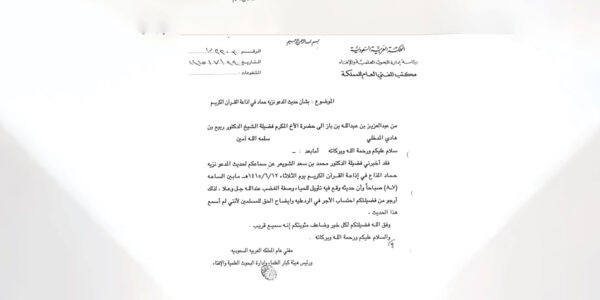
Shaykh Rabīʿ al-Madkhalī stated: “The narrator of Ṣaḥīḥ al-Bukhārī, the eminent authority in ḥadīth, Abū Dharr, was influenced by the praise of al-Dāraquṭnī for al-Bāqillānī. This praise affected him to such an extent that he became ensnared in the Ashʿarī creed and became one of its callers. Because of him, the Ashʿarī creed spread throughout North Africa. The people of that region would come to him, visit him, and he would instil in them the Ashʿarī methodology, whereas previously they knew no methodology other than that of the Salaf. He introduced to them an evil tradition. The Prophet ﷺ said: ‘Whoever calls to guidance will have a reward similar to that of those who follow him, without their reward being diminished in any way. And whoever calls to misguidance will bear a burden of sin similar to that of those who follow him, without their sins being diminished in any way.’ (Ṣaḥīḥ Muslim, 4:2060) We ask Allāh ﷻ for protection.”
ʿAbdullāh al-Anṣārī (d. 481 AH / 1089 CE) said: “I heard al-Ḥasan al-Makkī say: I heard my father say, ‘May Allāh curse Abū Dharr, for he was the first to introduce rhetorical theology into Makkah and the first to spread it among the North Africans.’”
Shaykh Muḥammad Bāzmūl stated: “The Ashʿarī creed spread from the East to the West through the students of knowledge from North Africa who studied with al-Harawī. The cause of al-Harawī’s deviation was a mistake committed by al-Dāraquṭnī. At the very least, he should have clarified and said to him: ‘I kissed his head in appreciation of his efforts, but beware of his creed.’”
In conclusion, the presence of the Ashʿarī creed in North Africa resulted from the students who studied under al-Harawī in Makkah. Al-Harawī himself adopted this methodology due to what he observed from his teacher, al-Dāraquṭnī. We ask Allāh ﷻ to forgive us and this great Imām.