Early Life and Formation
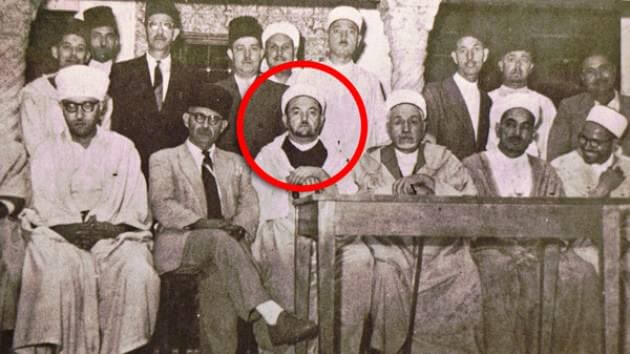
Shaykh al-ʿArabī ibn Balqāsim ibn Mubārak ibn Farḥāt at-Tibsī (d. 1376 AH/1957 CE), may Allah have mercy upon him, was born in 1895 CE in the village of as-Suṭṭāḥ, near the town of Tébessa in the far east of Algeria. His real name was al-ʿArabī Farḥātī, though he became known throughout Algeria by the nisbah “at-Tibsī,” in reference to the town with which his life and legacy became so closely associated.
He began memorising the Qurʾān under the guidance of his father. In 1324 AH/1907 CE, he travelled to the zāwiyah of Nājī ar-Raḥmāniyyah, south-east of the town of Khenchela in eastern Algeria, where he completed his memorisation of the Qurʾān over the course of three years. He then journeyed to the zāwiyah of Muṣṭafā ibn ʿAzzūz in Nefta, in south-western Tunisia, in 1327 AH/1910 CE, where he mastered Qurʾānic orthography and recitation (tajwīd) and acquired the foundational principles of Arabic grammar, morphology, jurisprudence, and doctrine (tawḥīd).
He subsequently enrolled at the University of Ez-Zitouna in Tunis in 1331 AH/1914 CE, where he obtained the certificate of ahliyyah (competency). He then travelled to al-Azhar in Cairo in 1339 AH/1920 CE, remaining there until 1346 AH/1927 CE, after which he returned to Tunisia and obtained the ash-Shahādah al-ʿĀlamiyyah (the highest certification, equivalent to a doctoral-level qualification) from the University of Ez-Zitouna.
Return to Algeria and Calling to Allah
Upon his return, at-Tibsī began his work of religious instruction and daʿwah from a small mosque in Tébessa. He soon attracted a considerable following, and his popularity grew across Algeria despite repeated attempts by the French colonial administration to restrict his activities and prevent him from preaching.
He met with Shaykh ʿAbd al-Ḥamīd ibn Muḥammad ibn Bādīs (d. 1359 AH/1940 CE), may Allah have mercy upon him, the founder of the Algerian mujaddid movement, in Constantine. Ibn Bādīs remarked of him:
هذا رجل عالم نفاع، قصر أوقاته ببلدة تبسة على نشر العلم الصحيح وهدي العباد إلى الدين القويم
“This is a beneficial and learned man, who has devoted his time in his homeland of Tébessa to spreading sound knowledge and guiding the servants of Allah towards the straight religion.”
At-Tibsī had long harboured the hope of establishing a unified association of scholars and preachers to consolidate the efforts of reform across Algeria. In 1926, he published an article in ash-Shihāb magazine entitled “The Hour of Unity Has Drawn Near, and the Age of Individualism Is Forbidden,” in which he lamented the fragmentation of the Muslim community and called for collective religious revival.
This aspiration was realised on 5 May 1931, with the founding of the Association of Algerian Muslim ʿUlamāʾ (Jamʿiyyat al-ʿUlamāʾ al-Muslimīn al-Jazāʾiriyyīn). At-Tibsī played an instrumental role in its establishment and served initially as deputy to its secretary-general.
In 1932, the people of Tébessa pressed him to return to them, and he agreed on the condition that a school and mosque be established. He founded Madrasat Tahdhīb al-Banīn wa-l-Banāt (“The School for the Refinement of Boys and Girls”), equipped with modern facilities, which by its opening year in 1934 had enrolled five hundred pupils. Alongside the school, he built a new mosque independent of colonial administrative oversight.
In 1935, at-Tibsī was appointed secretary-general of the Association, succeeding Shaykh al-Amīn al-ʿAmmūdī, and he also assumed the chairmanship of its fatwā committee on account of his considerable juristic and scholarly standing. He continued in this role until the outbreak of the Second World War.
Leadership of the Association
At-Tibsī was imprisoned in 1943 on charges of collaboration with Germany, and was later released. He was imprisoned again in 1945, following the Sétif and Guelma massacres of 8 May 1945.
After his release, he resumed teaching at the al-Akhḍar Mosque in Constantine and oversaw the Association’s Education and Teaching Committee. In 1940, he was appointed deputy to the Association’s new president, Shaykh al-Bashīr al-Ibrāhīmī, who was then living in exile in Aflou.
Following the opening of the Ibn Bādīs Institute in Constantine in 1947, at-Tibsī was appointed its director, a position he held until the institute’s closure in 1956. In his inaugural address to its students, he said:
“O brothers, education in this homeland of yours, among this nation of yours, is a field of sacrifice and struggle, not a theatre of comfort and ease. Let us be the soldiers of knowledge in this first year. Let us dwell in this institute as though we were its own sons, and live as they live, a life of separation from family. Forget your families and your kin, and visit them only rarely. I am more burdened by family obligations and lack of means than any of you, and yet here I am, acting; so act as I do. Here I am, beginning; so follow.”
When the people of Tébessa objected to his prolonged absence, Shaykh al-Ibrāhīmī addressed them directly, saying:
“We have reassured the noble people of Tébessa, who regarded the departure of Shaykh at-Tibsī from among them as a grave loss for whoever caused it, and we have convinced them that Shaykh al-ʿArabī is a man belonging to an entire nation, not to a single town, and a man of great undertakings, not small ones.”
From 1952 onwards, with Shaykh al-Ibrāhīmī residing for a period in Egypt, at-Tibsī became the effective head of the Association, and thereby the foremost religious authority in Algeria, a position that made him a figure greatly feared by the French colonial administration, which recognised his profound influence over scholars, revolutionaries, and the general populace alike.
Scholarly Character and Contribution
Shaykh Aḥmad Ḥammānī, a contemporary, described him as follows:
“He was a meticulous scholar, a successful teacher, a capable educator, and a distinguished writer, whose scholarly style was marked by depth, rigour, and precision of information. Yet he left behind relatively few written works, owing to his lifelong dedication to teaching. What he did leave behind bears witness to his elevated standing as a writer. As he was a writer, so too was he an eloquent orator, a skilled conversationalist, and an able debater, distinguished by his quick wit and his capacity to persuade both heart and mind, of which he left many remarkable examples.”
His writings, published across the Association’s periodicals, particularly ash-Shihāb magazine and the newspaper an-Najāḥ, addressed two central themes in the formation of the modern Algerian: the intellectual dimension, concerning moral reform, the pursuit of knowledge, the purification of doctrine from innovation, and vigilance against the schemes of the enemies of religion and homeland; and the practical dimension, concerning sincerity in the fulfilment of duty, the shouldering of responsibility, and the emulation of righteous scholars.
At-Tibsī was regarded among the foremost Mālikī jurists of his era. He issued numerous fatāwā addressing pressing contemporary concerns, including questions of French naturalisation, marriage to French women, emigration, and the validity of prayer behind imams appointed by the colonial administration.
His Stand Against Innovation in the Ṭarīqahs
Among at-Tibsī’s most significant scholarly contributions was his sustained refutation of the innovations he observed among the Ṣūfī orders (ṭuruq) active in Algeria at the time. In 1347 AH/1929 CE, he published a series of three articles in ash-Shihāb magazine, the journal founded by Shaykh ʿAbd al-Ḥamīd ibn Bādīs, under the collective title Bidʿat aṭ-Ṭarāʾiq fī al-Islām (“The Innovation of the Ṭarīqahs in Islam”). In these articles, he identified and refuted three specific innovations he held to be widespread among the orders:
- The innovation of fixing specific numbers and times for devotional remembrance (adhkār) beyond what had been established by the Prophet .
- The innovation of the ṭarīqah shaykhs extracting formal pledges (ʿuhūd) of allegiance from their followers.
- The innovation of certain shaykhs presenting themselves as intermediaries uniquely qualified to receive supplications (daʿawāt) on behalf of the people, as though endowed with special access to the unseen.
At-Tibsī grounded his refutation in the principle transmitted from Imām Mālik ibn Anas (d. 179 AH/795 CE) through Ibn al-Mājishūn, that:
“whoever introduces into this nation something for which there was no precedent among its predecessors has thereby claimed that the Messenger of Allah betrayed his prophetic mission,”
citing the verse:
الْيَوْمَ أَكْمَلْتُ لَكُمْ دِينَكُمْ وَأَتْمَمْتُ عَلَيْكُمْ نِعْمَتِي وَرَضِيتُ لَكُمُ الْإِسْلَامَ دِينًا
“This day I have perfected for you your religion and completed My favour upon you and have approved for you Islam as religion.” [Q 5:3, excerpt]
He argued that whatever was not part of the religion on that day cannot become part of the religion today.
Addressing the innovation of fixed devotional formulae, at-Tibsī distinguished between two categories of worship established by the sharīʿah: acts whose number, form, and timing Allah Himself specified, such as the five daily prayers, and acts commended in general terms, whose particular number and timing were left to the capacity of the individual believer, such as the general remembrance of Allah . He argued that the ṭarīqah shaykhs had wrongly imposed fixed numbers, times, and forms upon this second category, something never practised by the Prophet or the Companions, citing the well-attested report of ʿAbd Allah ibn Masʿūd, who rebuked a group of men who had gathered in the mosque to recite fixed collective formulae of tasbīḥ and tahlīl using pebbles to count, saying to them:
“You are either more rightly guided than the Companions of Muḥammad , or you have opened a door to misguidance.”
On the matter of the pledges of allegiance extracted by the ṭarīqah shaykhs, at-Tibsī drew a sharp distinction between the pledges (bayʿāt) taken by the Prophet himself, whether from new converts renouncing their former disbelief, or for specific military purposes such as the Pledge of ar-Riḍwān, and the pledges demanded by the ṭarīqah shaykhs from an already-Muslim populace with no prior connection to disbelief. He noted that neither the Companions, the Successors, nor even the rightly-guided Caliphs themselves ever instituted or bequeathed such a practice.
On the third innovation, at-Tibsī argued that no scholar among the Salaf, however righteous, whether ʿUmar ibn al-Khaṭṭāb, ʿAlī ibn Abī Ṭālib, or others, ever regarded himself as uniquely qualified to receive and answer supplications on behalf of the people. He cited the report that ʿUmar ibn al-Khaṭṭāb, when a man wrote to him asking him to supplicate for him, replied:
إني لست بنبي ولكن إذا أقيمت الصلاة فاستغفر الله لذنبك
“I am not a prophet. Rather, when the prayer is established, seek forgiveness for your own sin.” [Ash-Shāṭibī, al-Iʿtiṣām, quoted in at-Tibsī’s refutation.]
At-Tibsī likewise cited a well-known statement of the Prophet :
بَدَأَ الإِسْلاَمُ غَرِيبًا وَسَيَعُودُ كَمَا بَدَأَ غَرِيبًا فَطُوبَى لِلْغُرَبَاءِ
“Islam began as something strange, and it will return to being strange as it began, so blessed are the strangers.” (Ṣaḥīḥ Muslim, no. 145).
The articles concluded with a lengthy appended rebuttal addressed to a certain “Nāṣir Maʿrūf,” a defender of the ṭarīqah position who had written a response in the newspaper al-Balāgh, associated with the ʿAlawiyyah Ṭarīqah. At-Tibsī systematically dismantled his opponent’s argument on both linguistic and juristic grounds, demonstrating that the analogical reasoning (qiyās) employed to justify innovated fixed formulae of remembrance failed for want of a discernible underlying legal cause (ʿillah) shared between the Prophetic precedent and the innovated practice.
Support for Algeria and Martyrdom
As the Algerian War of Independence unfolded, at-Tibsī became one of its most steadfast religious supporters. He issued a fatwā affirming the obligation of fighting against French colonial rule, and he consistently urged the students of the Ibn Bādīs Institute and the teachers of the Association to join the ranks of the revolution. Through his articles in ash-Shihāb, published under such stirring titles as “Algeria Cries Out to You, O Algerian, Wherever You May Be,” he sought to rouse the nation from what he regarded as a long and dangerous slumber. In one such article, he wrote:
“My weeping is for Islam and its principles, and my lamentation is for the unity of this religion, which its own sons have squandered, this religion which commanded unity and urged it, and which counted whoever separates from it as being in a state of division from religion itself, isolation from Islam, and hostility towards its people.”
The French colonial authorities, aware of his immense popularity and his central role in mobilising support for the resistance, sent several envoys to negotiate with him regarding a ceasefire, employing both inducement and intimidation. At-Tibsī consistently replied that the sole legitimate negotiating party was the National Liberation Front (FLN), recognising these overtures as attempts to fracture the ranks of the resistance. He refused to participate in secret capitulation negotiations with French representatives in 1956.
Having failed to secure his cooperation, and unwilling to risk the backlash of arresting or killing him publicly, French forces resorted to abduction. On 4 April 1957, disguised as paratroopers, they seized at-Tibsī, then an elderly and ailing man confined to his bed, from his home in Algiers. According to one account transmitted by Aḥmad ʿAysāwī, four Senegalese soldiers bound his hands and feet, raised him above a barrel of boiling oil, and demanded that he confess, agree to negotiations, and call upon the revolutionaries and the Algerian people to lay down their arms. The Shaykh is reported to have responded only with the quiet, steady declaration of faith: lā ilāha illā Allah , Muḥammadun rasūl Allah (“there is no god worthy of worship in truth but Allah, and Muḥammad is the Messenger of Allah”). He was then lowered, feet first, into the boiling oil, until he lost consciousness, and was subsequently lowered further until his body was entirely consumed.
To this day, the French military has never officially acknowledged his arrest or detention, and his remains have never been returned to Algeria. He is remembered among Algerians as shahīd ath-thawrah alladhī lā naʿrifu qabrahu, “the martyr of the revolution whose grave we do not know.”
Legacy
Shaykh al-ʿArabī at-Tibsī is remembered as one of the foremost pillars of the Algerian reformist movement, a man who united the pen of the scholar with the resolve of the revolutionary. The University of Tébessa, established in 1992, bears his name in his honour, and an annual prize is awarded in his memory to distinguished Algerian researchers. Seminars are held each year by Algeria’s Ministry of Culture and Ministry of War Veterans to commemorate his life and sacrifice.
May Allah have mercy upon him and accept him among the martyrs.
Translator’s Note on Associations
As for associations in general, regardless of their description, if they are founded upon loyalty and disavowal, love and enmity, being based upon membership in that association; or if they adopt the statements of their leaders and administrators as fundamental principles without evidence; or if among their principles is unquestioning submission to the opinions of the group, treating them as established truths that are not open to discussion or criticism, and similar meanings, then such an association is, in this respect, a partisan organisation (ḥizbiyyah), even if it bears the name of Islam. It is thereby opposing and contending against Allah and His Messenger, because the basis of loyalty and disavowal is faith in Allah and His Messenger.
Partisan grouping is therefore blameworthy. Throughout the ages it has divided the Ummah into sects and parties and has only increased it in weakness and corruption. The religion commands us to unite upon the creed of tawḥīd and upon following the Messenger .
However, although partisan grouping is impermissible, this does not prevent lawful, brotherly cooperation founded upon righteousness and piety and regulated by the Qurʾān and the sunnah. Included within this general principle of lawful cooperation is what the ruler organises among the Muslims in the form of official bodies such as ministries, institutions, and associations that do not possess a partisan or tribal character, regardless of their various legitimate functions and activities relating to both religious and worldly affairs.
Shaykh Rabīʿ ibn Hādī ʿUmayr al-Madkhalī (d. 1447 AH/2025 CE), may Allah have mercy upon him, was asked: Does establishing an association whose purpose is to call to the Qurʾān and the sunnah, and to unite people upon them, resemble partisanship (taḥazzub) and division? What is your view on this issue?
He replied: Firstly, establishing an association in this country is not permissible at all, because it is a Muslim state founded upon the Book of Allah and the sunnah of His Messenger. It adopts this methodology in its education and daʿwah through the mosques, universities, schools, and every other institution. It carries out the affairs of Islam in full, with the scholars cooperating with it. It relies upon the scholars in formulating curricula, provides the financial support, and consults the scholars in appointing teachers, imams, and the like. Thus, it is already fulfilling the affairs of Islam. To establish an association or a party in such a situation would divide the Ummah and contradict the statement of Allah :
وَاعْتَصِمُوا بِحَبْلِ اللَّهِ جَمِيعًا وَلَا تَفَرَّقُوا
“And hold firmly to the Rope of Allah all together and do not become divided.” [Q 3:103, excerpt]
However, if a country has adopted secular slogans and man-made laws, abandoned Islam, or even wages war against Islam, then if a group of people come together to spread Islam, teach it, and call people to the truth, organising themselves financially and educationally, then there is no objection to that. There is no objection.
Had the Muslims in India, and the Salafīs in India, not done this, Islam would have been lost there. It was a secular, disbelieving state that opposed Islam. They therefore came together in associations, which were later recognised by the state. They established schools and mosques, and through those schools Allah protected Islam. This was a necessity, and Muslims must do likewise under such circumstances.
But if the entire Islamic world were united under a single Imām, then it would not be permissible for another group to arise.
However, the Islamic world has become fragmented, and every country has its own corrupt system, except this state which is established upon the Qurʾān and the sunnah. Therefore, Muslims in any country that does not adopt the true Islamic methodology should themselves adopt Islam, and then establish one or more associations, organising themselves correctly so that they are able to spread the true call of Allah and cultivate those among the Ummah whom they are able to educate upon this methodology.
Source: lecture entitled “Holding Fast to the Qurʾān and the sunnah”.
References
Al-Qurʾān, excerpts from Q 5:3 and Q 3:103.
Association of Algerian Muslim ʿUlamāʾ, “Ash-Shaykh al-ʿArabī at-Tibsī: Ḥayātuhu wa Āthāruhu”, by Nafīsah Duwaydah, 10 April 2014 CE.
ʿAysāwī, Aḥmad, ash-Shaykh al-ʿArabī at-Tibsī Muṣliḥan, pp. 131–132.
Cheurfi, Achour, Dictionnaire de la révolution algérienne (1954–1962): dictionnaire biographique, Alger: Casbah Éditions, 2004, pp. 324–325.
Dabbūz, ʿAlī, Aʿlām al-Iṣlāḥ fī al-Jazāʾir, vol. 1, p. 27; vol. 2, p. 15.
Ḥammānī, Aḥmad, biographical remarks on Shaykh al-ʿArabī at-Tibsī, cited in ash-Shaykh al-ʿArabī at-Tibsī: Ḥayātuhu wa Āthāruhu, Association of Algerian Muslim ʿUlamāʾ, oulama.dz.
Al-Madkhalī, Rabīʿ ibn Hādī ʿUmayr (d. 1447 AH/2025 CE), lecture entitled “Holding Fast to the Qurʾān and the sunnah”,
Muslim, ibn al-Ḥajjāj (d. 261 AH/875 CE), Ṣaḥīḥ Muslim, no. 145.
Nuwayhiḍ, ʿĀdil, Muʿjam Aʿlām al-Jazāʾir, p. 16.
Ar-Rifāʿī ash-Sharīfī, Aḥmad (Dr., compiler), Maqālāt fī ad-Daʿwah ilā an-Nahḍah al-Islāmiyyah fī al-Jazāʾir, 2 vols., published 1402 AH and 1404 AH.
Ash-Shāṭibī, Abū Isḥāq (d. 790 AH/1388 CE), al-Iʿtiṣām, cited extensively in at-Tibsī’s refutation of innovated devotional practices.
At-Tibsī, al-ʿArabī ibn Balqāsim (d. 1376 AH/1957 CE), Bidʿat aṭ-Ṭarāʾiq fī al-Islām, articles originally published in ash-Shihāb magazine, vol. 4, nos. 166, 168, and 169 (1347 AH/1929 CE); compiled with annotation by Muḥammad Shāyib Sharīf.
At-Tibsī, al-ʿArabī ibn Balqāsim, “In Kunta Ḥāmilan fa-ladayya Ghulāman” (response to Nāṣir Maʿrūf), ash-Shihāb magazine, vol. 4, nos. 177 and 178 (1347 AH/1929 CE).
University of Tébessa, “ULT at a Glance”, Arabic institutional history and biography of Shaykh al-ʿArabī at-Tibsī.