Ḥadīth #1 of the ‘Allah Laughs’ Series
Abū Hurayrah رضي الله عنه narrated that the Prophet Muḥammad said:
حَدَّثَنَا مُحَمَّدُ بْنُ أَبِي عُمَرَ الْمَكِّيُّ، حَدَّثَنَا سُفْيَانُ، عَنْ أَبِي الزِّنَادِ، عَنِ الأَعْرَجِ، عَنْ أَبِي هُرَيْرَةَ، أَنَّ رَسُولَ اللَّهِ صلى الله عليه وسلم قَالَ “ يَضْحَكُ اللَّهُ إِلَى رَجُلَيْنِ يَقْتُلُ أَحَدُهُمَا الآخَرَ كِلاَهُمَا يَدْخُلُ الْجَنَّةَ ” . فَقَالُوا كَيْفَ يَا رَسُولَ اللَّهِ قَالَ “ يُقَاتِلُ هَذَا فِي سَبِيلِ اللَّهِ عَزَّ وَجَلَّ فَيُسْتَشْهَدُ ثُمَّ يَتُوبُ اللَّهُ عَلَى الْقَاتِلِ فَيُسْلِمُ فَيُقَاتِلُ فِي سَبِيلِ اللَّهِ عَزَّ وَجَلَّ فَيُسْتَشْهَدُ ”
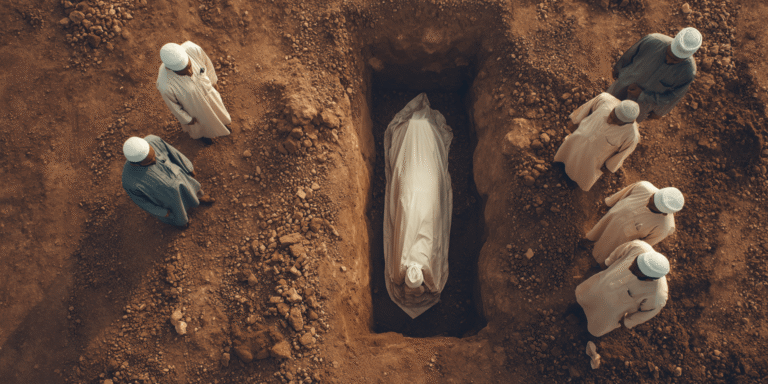
“Muḥammad ibn Abī ʿUmar al-Makkī narrated to us; Sufyān narrated to us; from Abū az-Zinād; from al-Aʿraj; from Abū Hurayrah, that the Messenger of Allah said: ‘Allah laughs at two men, one of whom kills the other, yet both enter Paradise.’ They asked: ‘How is that, O Messenger of Allah?’ He replied: ‘One fights in the cause of Allah, the Mighty and Majestic, and is martyred. Then Allah accepts the repentance of the killer, who embraces Islām, fights in the cause of Allah, the Mighty and Majestic, and is martyred.’” (Ṣaḥīḥ Muslim, no. 1890).
The Narration
Muḥammad ibn Abī ʿUmar al-Makkī narrated to us; Sufyān narrated to us; from Abū az-Zinād; from al-Aʿraj; from Abū Hurayrah, that the Messenger of Allah said:
يَضْحَكُ اللَّهُ إِلَى رَجُلَيْنِ يَقْتُلُ أَحَدُهُمَا الآخَرَ كِلاَهُمَا يَدْخُلُ الْجَنَّةَ
“Allah laughs at two men, one of whom kills the other, yet both enter Paradise.” (Ṣaḥīḥ Muslim, no. 1890).
They asked:
كَيْفَ يَا رَسُولَ اللَّهِ
“How is that, O Messenger of Allah?” (Ṣaḥīḥ Muslim, no. 1890).
He replied:
يُقَاتِلُ هَذَا فِي سَبِيلِ اللَّهِ عَزَّ وَجَلَّ فَيُسْتَشْهَدُ ثُمَّ يَتُوبُ اللَّهُ عَلَى الْقَاتِلِ فَيُسْلِمُ فَيُقَاتِلُ فِي سَبِيلِ اللَّهِ عَزَّ وَجَلَّ فَيُسْتَشْهَدُ
“One fights in the cause of Allah, the Mighty and Majestic, and is martyred. Then Allah accepts the repentance of the killer, who embraces Islām, fights in the cause of Allah, the Mighty and Majestic, and is martyred.” (Ṣaḥīḥ Muslim, no. 1890).
Shaykh Muḥammad ibn Ṣāliḥ al-ʿUthaymīn (d. 1421 AH/2001 CE) on This Ḥadīth
May Allah have mercy upon him.
Concerning the statement of the Prophet :
يَضْحَكُ اللَّهُ إِلَى رَجُلَيْنِ
“Allah laughs at two men.” (Ṣaḥīḥ Muslim, no. 1890, excerpt).
Shaykh Muḥammad ibn Ṣāliḥ al-ʿUthaymīn explained that Allah is amazed by their remarkable situation. The laughter mentioned in this ḥadīth is real laughter. It is not merely a figurative expression meaning reward, as claimed by the people of taʿṭīl, who reinterpret the revealed texts.
Rather, our obligation regarding such matters is to believe, submit, and refrain from raising objections. We affirm that Allah laughs. However, is His laughter like the laughter of human beings? The answer is no, because we possess a fundamental principle established in the Book of Allah :
لَيْسَ كَمِثْلِهِ شَيْءٌۖ وَهُوَ السَّمِيعُ الْبَصِيرُ
“There is nothing like unto Him, and He is the All-Hearer, the All-Seer.” [Q 42:11, excerpt]
This principle should always remain before you. Whenever you encounter Qurʾānic verses or aḥādīth affirming the divine attributes, apply this principle:
لَيْسَ كَمِثْلِهِ شَيْءٌۖ وَهُوَ السَّمِيعُ الْبَصِيرُ
“There is nothing like unto Him, and He is the All-Hearer, the All-Seer.” [Q 42:11, excerpt]
Likewise, do not entertain thoughts that generate doubts concerning what the Messenger of Allah has informed us.
For example, some people ask:
“Allah descends to the lowest heaven during the last third of the night, but the last third of the night differs from one place on earth to another. In one region it is the last third of the night, while elsewhere it is already mid-morning. How can that be?” [Question quoted in Ibn ʿUthaymīn’s commentary.]
Our duty is simply to submit and say:
“The Messenger of Allah has spoken the truth.” [Ibn ʿUthaymīn, commentary on Ṣaḥīḥ Muslim, no. 1890.]
As for asking how this occurs, such questioning is not permissible. When Imām Mālik ibn Anas (d. 179 AH/795 CE) was asked:
“How did Allah rise over the Throne?” [Quoted in Ibn ʿUthaymīn’s commentary.]
, he famously replied:
الاستواء معلوم، والكيف مجهول، والإيمان به واجب، والسؤال عنه بدعة
“Al-istiwāʾ is known, its manner (kayfiyyah) is unknown, believing in it is obligatory, and asking about it is an innovation.” [Quoted by Ibn ʿUthaymīn in his commentary on Ṣaḥīḥ Muslim, no. 1890.]
Therefore, submit completely and do not allow doubts to enter your heart, for they may eventually cause you to doubt the reports of Allah and His Messenger . Accordingly, it is obligatory upon us to affirm that Allah truly laughs, and not to interpret His laughter figuratively as merely meaning reward. But is His laughter like our laughter? No. I have even heard that some ignorant people have said, and we seek refuge with Allah , that Allah laughs and His front teeth become visible. May Allah condemn such a statement. Does Allah possess front teeth?
We do not categorically assert that He does not. Human beings require teeth only for eating, whereas Allah feeds others and is never fed. Likewise, we affirm with certainty that Allah has no intestines, stomach, or anything of that nature, because all such things are organs required for eating, and this is impossible with respect to Allah . He is aṣ-Ṣamad, the Absolutely Self-Sufficient. Some of the scholars explained aṣ-Ṣamad to mean the One who has no internal cavity.
The essential principle is that whenever Allah describes Himself with an attribute, or His Messenger describes Him with one, we affirm it completely without asking how (takyīf) and without likening Him to His creation (tamthīl). The same applies to the attribute of amazement. Allah is amazed, as He says:
بَلْ عَجِبْتَ وَيَسْخَرُونَ
“Nay, you wondered, while they mock.” [Q 37:12]
According to one of the accepted alternative Qurʾānic readings (qirāʾāt), it is recited:
بَلْ عَجِبْتُ
“Rather, I am amazed…” [Q 37:12, excerpt, alternative reading]
That is, the amazement is attributed to Allah Himself.
Thus, we affirm amazement for Allah while maintaining that it is unlike the amazement experienced by created beings. For this reason, we say: the methodology of the Salaf is safer, more knowledgeable, and wiser than that of the Khalaf.
The Meaning of the Prophet’s Statement
The Shaykh then commented on the Prophet’s statement:
يَقْتُلُ أَحَدُهُمَا الآخَرَ كِلاَهُمَا يَدْخُلُ الْجَنَّةَ
“One of them kills the other, yet both enter Paradise.” (Ṣaḥīḥ Muslim, no. 1890, excerpt).
One kills the other out of intense enmity. Yet they both ultimately enter Paradise, and Allah removes whatever rancour existed between them. Their former hostility is transformed into friendship and brotherhood. This is the aspect that is truly astonishing. The meaning is not that each one kills the other. Rather, the Prophet said:
يَقْتُلُ أَحَدُهُمَا الآخَرَ كِلاَهُمَا يَدْخُلُ الْجَنَّةَ
“One of them kills the other, yet both enter Paradise.” (Ṣaḥīḥ Muslim, no. 1890, excerpt).
The reason for the divine laughter is evident. The killer slew his victim only because of the intense hatred he held for him at that time. Yet, in the end, both enter Paradise and become brothers,
عَلَىٰ سُرُرٍ مُّتَقَابِلِينَ
“Facing one another on thrones.” [Q 15:47, excerpt]
References
Al-Qurʾān al-Karīm, excerpts from Q 42:11 and Q 15:47; Q 37:12, including the alternative reading quoted in the commentary. English renderings retained from the source article; translator not identified.
Ibn ʿUthaymīn, Muḥammad ibn Ṣāliḥ (d. 1421 AH/2001 CE), Sharḥ Ṣaḥīḥ Muslim, commentary on no. 1890, recording 12a, segment 25, as catalogued by the al-Athar audio archive. Exact Arabic for the translated hypothetical questions remains unverified.
Muslim, ibn al-Ḥajjāj al-Qushayrī (d. 261 AH/875 CE), Ṣaḥīḥ Muslim, Kitāb al-Imārah, chapter on two men, one of whom kills the other, both entering Paradise, no. 1890. The source article’s reference to Kitāb al-Īmān and no. 189 has been corrected against the collection.