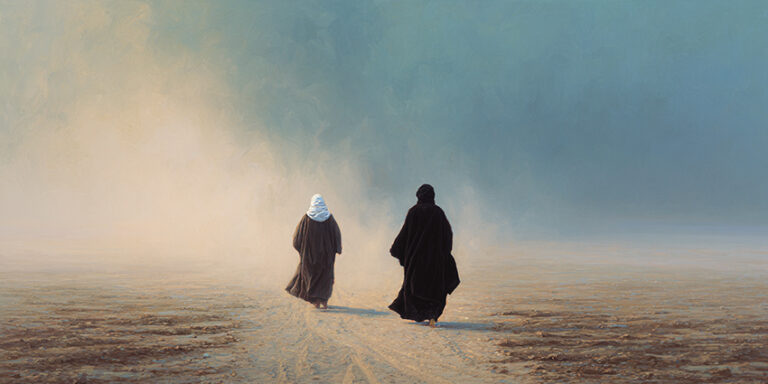
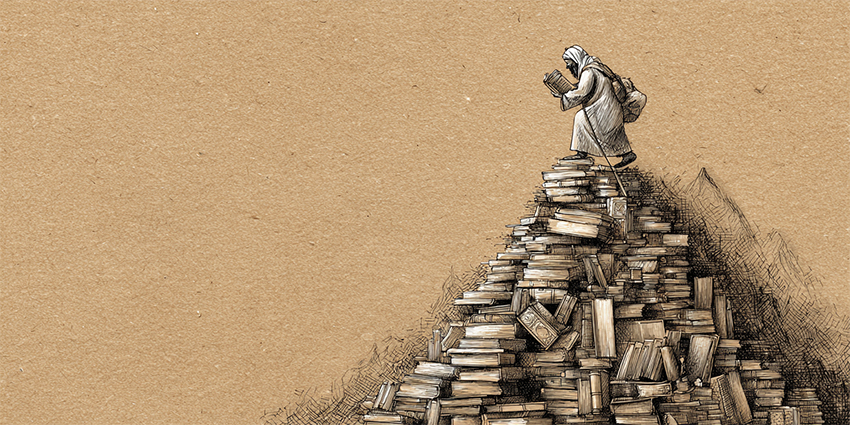
It is most appropriate for the student of knowledge to bear with patience any harshness that proceeds from his shaykh, or any ill conduct on his part, and to let none of that deter him from keeping close to him, maintaining sound regard for him, and interpreting his actions, those which appear on the surface to be at variance with what is correct, in the most favourable light. When the shaykh shows coldness, the student should be the first to apologise, to repent of whatever may have occurred, and to seek forgiveness. He should attribute the cause to himself, place the reproach upon his own shoulders, for this is most conducive to preserving the affection of his shaykh, most protective of his shaykh’s heart, and most beneficial to the student in both this world and the next. Whoever fails to endure his teacher loses out, his efforts in seeking knowledge come to nothing, and he remains mired in ignorance.
ʿAbd al-Malik ibn Qurayb al-Aṣmaʿī (d. 216 AH/831 CE) ؒ said:
مَنْ لَمْ يَحْتَمِلْ ذُلَّ التَّعَلُّمِ سَاعَةً بَقِيَ فِي ذُلِّ الْجَهْلِ أَبَدًا
“Whoever cannot bear the humility of learning for an hour shall remain in the humiliation of ignorance forever.”
ʿAbd al-Karīm ibn Muḥammad as-Samʿānī (d. 562 AH/1166 CE) ؒ said:
“Do not reproach a scholar for his ill conduct; rather, make allowance for him and bear his harm with patience. For knowledge is more deserving of its people’s indulgence, and too noble a thing to be turned aside by your passing whims.” [As-Samʿānī, Adab al-Imlāʾ wa-l-Istimlāʾ, p. 146]
Bilāl ibn Abī Burda (d. 120 AH/738 CE) said:
لا يَمنَعْكُم سوءُ ما تَعلَمونَ مِنَّا أن تَقبَلوا أحسَنَ ما تَسمَعونَ مِنَّا
“Let not the worst of what you witness from us prevent you from accepting the best of what you hear from us.” [Ibn ʿAbd al-Barr, Jāmiʿ Bayān al-ʿIlm wa-Faḍlih, vol. 1, p. 529]
ʿAbd Allah ibn Aḥmad ibn Ḥanbal (d. 290 AH/903 CE) reported:
“My father informed me, saying: I heard Abū Yūsuf al-Qāḍī (d. 182 AH/798 CE) say: ‘There are five categories of people whom it is incumbent upon others to treat with mudārāh (tactful forbearance): the ruler who holds power, the judge who exercises his own interpretation, the sick person, the woman, and the scholar, so that benefit may be drawn from his knowledge.’ I found this remark most admirable.” [Al-Khaṭīb al-Baghdādī, al-Jāmiʿ li-Akhlāq ar-Rāwī wa-Ādāb as-Sāmiʿ, vol. 1, p. 222]
ʿAbd al-Qādir ibn Mūsā al-Jīlānī (d. 561 AH/1166 CE) said:
“Do not flee from the harshness of my speech. It was nothing but that which is firm and rigorous in the religion of Allah that shaped me. Whoever flees from me and those like me shall not prosper.” [Al-Jīlānī, al-Fatḥ ar-Rabbānī wa-l-Fayḍ ar-Raḥmānī, p. 22]
Muʿāfā ibn ʿImrān (d. 185 AH/801 CE) said:
مَثَلُ الذي يَغضَبُ على العالِمِ مَثَلُ الذي يَغضَبُ على أساطينِ الجامِعِ
“The likeness of one who grows angry with a scholar is the likeness of one who grows angry with the columns, that is, the pillars, of the mosque.” [Al-Khaṭīb al-Baghdādī, al-Jāmiʿ, vol. 1, p. 223]
Muḥammad ibn Idrīs ash-Shāfiʿī (d. 204 AH/820 CE) ؒ reported:
قيلَ لسُفيانَ بنِ عُيَينةَ: إنَّ قَومًا يَأتونَك مِن أقطارِ الأرضِ تَغضَبُ عليهم، يوشِكُ أن يَذهَبوا ويَترُكوك! قال: هم حَمقى إذَنْ مِثلُك أن يَترُكوا ما يَنفعُهم لسُوءِ خُلُقي!
“It was said to Sufyān ibn ʿUyaynah (d. 198 AH/814 CE): ‘People come to you from the farthest corners of the earth, yet you grow angry with them. Soon they will leave and abandon you.’ He replied: ‘Then they are fools, just as you are, if they abandon what benefits them on account of my poor character.’” [Al-Khaṭīb al-Baghdādī, al-Jāmiʿ, vol. 1, p. 223]
ash-Shāfiʿī further related:
كان يَختَلفُ إلى الأعمَشِ رَجُلانِ؛ أحَدُهما كان الحَديثُ مِن شَأنِه، والآخَرُ لَم يَكُنِ الحَديثُ مِن شَأنِه، فغَضِبَ الأعمَشُ يَومًا على الذي مِن شَأنِه الحَديثُ، فقال الآخَرُ: لَو غَضِبَ عليَّ كما غَضِبَ عليك لَم أعُدْ إليه! فقال الأعمَشُ: إذَنْ هو أحمَقُ مِثلُك، يَترُكُ ما يَنفعُه لسُوءِ خُلُقي!
“Two men used to attend the circles of al-Aʿmash (d. 148 AH/765 CE). One of them made ḥadīth his chief concern, whilst the other did not. One day, al-Aʿmash grew angry with the one who was devoted to ḥadīth. The other man said: ‘Had he treated me as he has treated you, I would never have returned to him.’ Al-Aʿmash replied: ‘Then he is a fool like you, abandoning what benefits him because of my poor character.’” [Al-Khaṭīb al-Baghdādī, al-Jāmiʿ, vol. 1, p. 223]
Al-Khalīl ibn Aḥmad al-Farāhīdī (d. 170 AH/786 CE) said:
“Act upon my knowledge even if I fall short in my own deeds; my knowledge shall benefit you, whilst my shortcoming harms only me.” [Ibn ʿAbd al-Barr, Jāmiʿ Bayān al-ʿIlm, vol. 1, p. 529]
And hear what Muḥammad ibn Hārūn ad-Dimashqī recited:
“An inkwell that keeps me company throughout my day is dearer to me than the companionship of a friend. A bundle of kāghad, that is, paper, in my home is dearer to me than a load of flour. A scholar’s rebuke upon my cheek is sweeter to me than a draught of wine.” [Al-Khaṭīb al-Baghdādī, al-Jāmiʿ, vol. 1, p. 106]
On Choosing the Right Moment to Visit One’s Shaykh
ʿAbd Allah ibn ʿAbbās (d. 68 AH/687 CE) ؓ said:
“I found the greater part of the knowledge of the Messenger of Allah to reside with this tribe of the Anṣār. There were occasions when I would rest at midday by the door of one of them; had I wished to seek permission to enter, it would surely have been granted. But I preferred to wait, so as not to disturb him.” [Al-Khaṭīb al-Baghdādī, al-Jāmiʿ, vol. 1, p. 159]
Al-Ḥajjāj ibn Arṭāh (d. 145 AH/762 CE) said:
“Love of distinction has ruined me.” [Adh-Dhahabī, Siyar Aʿlām an-Nubalāʾ, vol. 1, p. 505]
ʿĪsā ibn Yūnus (d. 187 AH/803 CE) said:
“Ibn Arṭāh would not attend the congregational prayer, and would say: ‘Am I to attend your mosque only to be jostled by porters and grocers?’” [Adh-Dhahabī, Siyar Aʿlām an-Nubalāʾ, vol. 1, p. 226]
Abū Saʿīd ibn Yūnus remarked:
لَمْ يَكُنْ لَهُ آفَةٌ غَيْرُ الْكِبْرِ
“Aḥmad ibn Ṣāliḥ (d. 248 AH/862 CE) had no failing other than arrogance.” [Adh-Dhahabī, Siyar Aʿlām an-Nubalāʾ, vol. 9, p. 520]
Al-Ḥajjāj ibn Arṭāh also said:
“A man’s murūʾah (personal honour and dignity) is not complete until he abandons the congregational prayer.”
Shams ad-Dīn Muḥammad ibn Aḥmad adh-Dhahabī (d. 748 AH/1348 CE) ؒ commented:
“May Allah curse this so-called murūʾah, it is nothing but foolishness and arrogance, lest the common folk bump into him in rows.” [Adh-Dhahabī, Siyar Aʿlām an-Nubalāʾ, entry on al-Ḥajjāj ibn Arṭāh]
References
Adh-Dhahabī, Shams ad-Dīn Muḥammad ibn Aḥmad (d. 748 AH/1348 CE), Siyar Aʿlām an-Nubalāʾ, ed. Shuʿayb al-Arnaʾūṭ et al. (Beirut: Muʾassasat ar-Risālah, 1985 CE), vol. 1, pp. 226 and 505; vol. 9, p. 520; entry on al-Ḥajjāj ibn Arṭāh.
Ibn ʿAbd al-Barr, al-Namarī (d. 463 AH/1071 CE), Jāmiʿ Bayān al-ʿIlm wa-Faḍlih, ed. Abū al-Ashbāl az-Zuhayrī (Dammam: Dār Ibn al-Jawzī, 1994 CE), vol. 1, p. 529.
Al-Jīlānī, ʿAbd al-Qādir ibn Mūsā (d. 561 AH/1166 CE), al-Fatḥ ar-Rabbānī wa-l-Fayḍ ar-Raḥmānī (Beirut: Dār al-Fikr, n.d.), p. 22.
Al-Khaṭīb al-Baghdādī, Abū Bakr Aḥmad ibn ʿAlī (d. 463 AH/1071 CE), al-Jāmiʿ li-Akhlāq ar-Rāwī wa-Ādāb as-Sāmiʿ, ed. Maḥmūd aṭ-Ṭaḥḥān (Riyadh: Maktabat al-Maʿārif, 1983 CE), vol. 1, pp. 106, 159 and 222–223.
As-Samʿānī, ʿAbd al-Karīm ibn Muḥammad (d. 562 AH/1166 CE), Adab al-Imlāʾ wa-l-Istimlāʾ, p. 146.
Al-kāghad: an Arabic term of Persian origin denoting paper or parchment.