


Nūr ad-Dīn an-Nīgerī
October 26, 2019
4 mins read
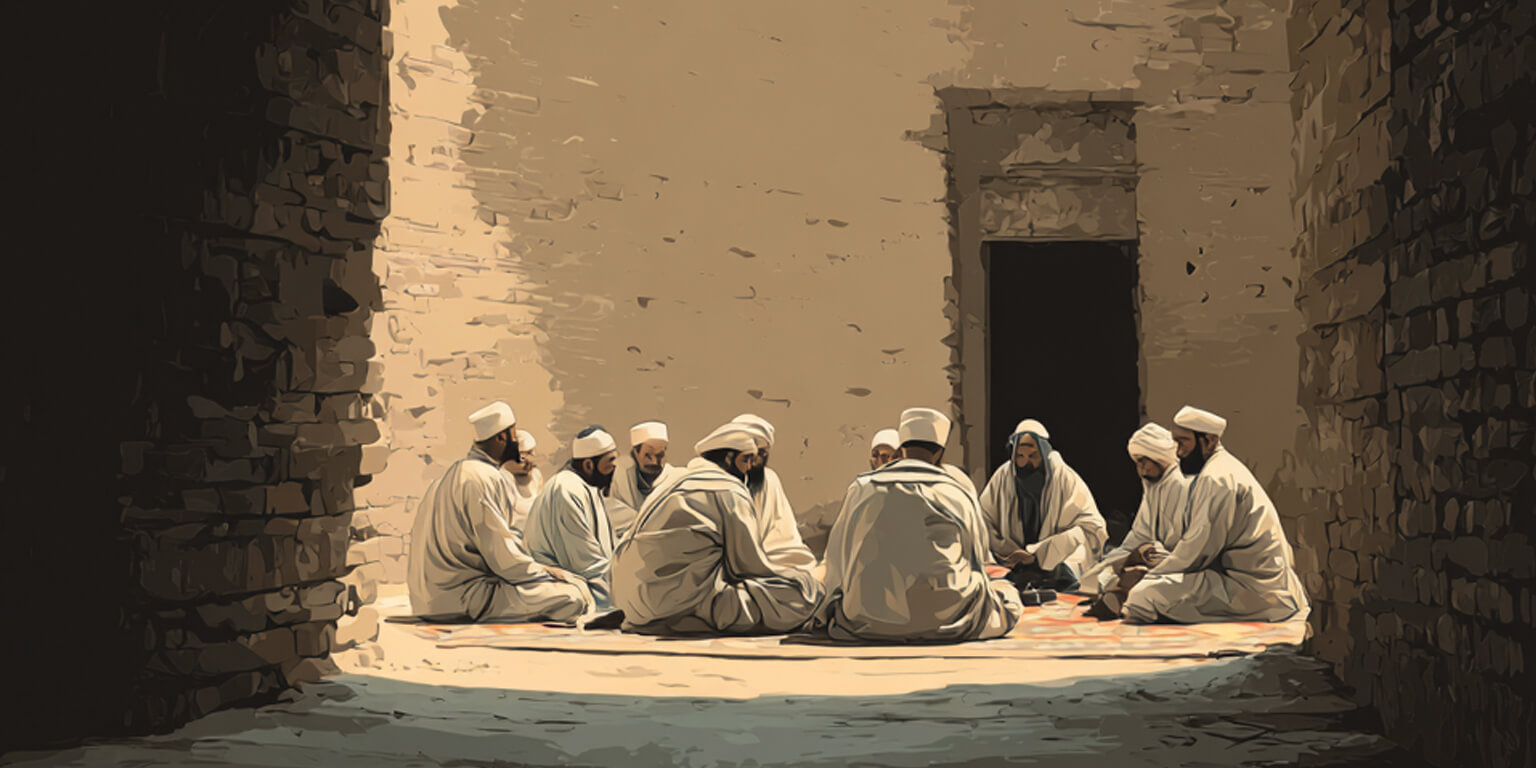
ʿAbdullāh ibn ʿAbbās (raḍiya Allāhu ʿanhumā, d. 68 AH / 687 CE) used to exert himself greatly to attend the gatherings of the Companions as a learner seeking knowledge. On one occasion, he said to a man from among the Anṣār: “Come, let us go and consult the Companions of the Messenger of Allah ﷺ, for many of them are still present today.” The man replied: “I am astonished at you, Ibn ʿAbbās. Do you really think that people will ever need you while you can see so many of the Companions of the Prophet ﷺ among the people?”
As a result, that man refused to accompany Ibn ʿAbbās in his pursuit of knowledge, whereas Ibn ʿAbbās continued undeterred. Only a few years later, twenty or thirty years on, people came to be in greater need of Ibn ʿAbbās than of many of the foremost Companions, due to the vast knowledge he had acquired.
Therefore, do not disregard knowledge, for you do not know who may come to need it. You may travel to a land overwhelmed by ignorance, where no learned person is to be found. Allah decrees whatever He wills, and His decree is carried out upon His servants.
If a person does not possess firm knowledge acquired during times of ease, while striving against his own inclinations, he will be of no benefit to people. Indeed, in some circumstances, he may even be sinful if the means are available to him. If a person is intelligent, motivated, and capable, yet chooses worldly pursuits over acquiring religious knowledge and conveying the religion of Allah, then there is no doubt that, in certain situations, he may be sinful if the responsibility rests solely upon him.
No prophet will come to this Ummah after the Prophet Muḥammad ﷺ. As for the Children of Israel, prophets were sent to them one after another, and they also had learned men among them. In this Ummah, however, the scholars are the inheritors of the prophets. Therefore, remember this great virtue. Remember how the angels seek forgiveness for the people of knowledge, how they are pleased with them, and how they lower their wings in humility and honour. Recall the statement of the Prophet ﷺ: “Whoever takes a path seeking knowledge, Allah will make easy for him a path to Paradise.” And his ﷺ statement: “The scholars are the inheritors of the prophets.” And remember times of need.
Today, the number of Muslims in this Ummah exceeds one billion, yet how many are truly students of knowledge? Genuine students of knowledge are rare. Are they sufficient for the entire Ummah? They are not. Even if millions upon millions were trained and graduated as scholars, they would still not suffice for the needs of the Ummah. How could they, when people are distributed across countries, and those countries contain cities and towns numbering in the hundreds of thousands throughout the world?
Despite the growth of the human population, students of knowledge are decreasing in number. Do not look at Riyāḍ, for example, and observe the study circles of certain shaykhs and conclude that there are many students. Nor should one be deceived by the number of students enrolled in universities. The reality is that knowledge today is scarcer than scarce. It is true that there are many readers, yet the student who possesses strong foundations, who has acquired knowledge built upon its core principles, and who is capable of conveying the religion of Allah and teaching the meanings of the Qurʾān and the Sunnah, is rare indeed.
Therefore, striving and high aspiration are essential, alongside supplication to Allah for success and support. Do not underestimate yourself. The Prophet ﷺ said: “Do not belittle any good deed.”
Ibn Ibrāhīm, Ṣāliḥ ibn ʿAbd al-ʿAzīz ibn Muḥammad ibn Ibrāhīm. Sharḥ Uṣūl al-Īmān. Riyadh: Dār al-ʿĀṣimah, 1415 AH, p. 371.

March 10, 2018
5 mins read

November 30, 2017
4 mins read


