This is the story of a man who went from being poor and forgotten in Baghdad to ruling one of the greatest lands in the Muslim world. His name was Abū Bakr Muḥammad ibn Ṭughj ibn Juff ibn Khāqān al-Farghānī at-Turkī, but he became known simply as al-Ikhshīd, a Turkic title meaning “King of Kings”.
He became governor of Egypt in 321 AH (933 CE). Later, Damascus was added to the lands he ruled. Both of these were given to him by the ʿAbbāsid Caliph ar-Rāḍī bi-Allah, who ruled from 322 to 329 AH (934–940 CE). He also passed on narrations that he had learned from his paternal uncle, Badr.
The Story
The dust of Baghdad had a way of clinging to a man when he was down, but for Abū Bakr Muḥammad ibn Ṭughj, the weight he carried went far deeper than dirt.
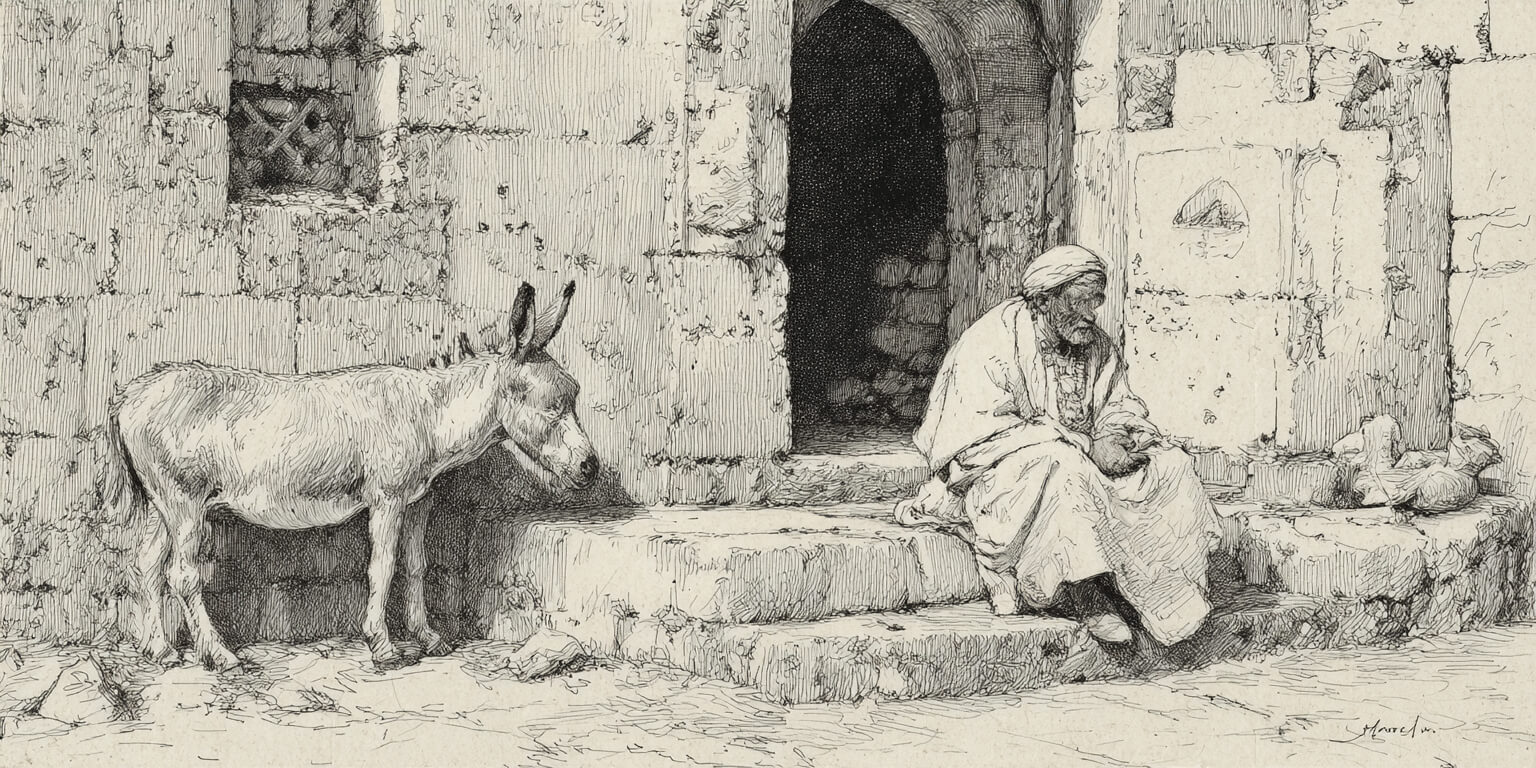
He sat every day on a simple wooden bench outside his humble home in the quarter of Yaqṣūr Faraj. Beside him, tethered to a post, stood his sole riding animal. There were no servants to tend it; Muḥammad hauled the water and measured the grain himself, his hands calloused and worn.
Once, his name had meant something. His father, Ṭughj, had been a brilliant and feared military commander in service to the rulers of Egypt and Syria. But ambition and pride are dangerous companions in the halls of power. After moving to Baghdad, Ṭughj insulted the powerful vizier and was thrown into a dark cell. He died in prison, leaving his young son with nothing but an empty stomach, a disgraced name, and a small, irregular allowance from a government that barely remembered he existed.
Muḥammad’s home was filled with the soft chatter of daughters, ten of them over the years, but no sons. In a world where a man’s legacy and protection depended on male heirs, his heart was heavy with worry. Whenever his respected neighbour, Abū al-Qāsim, or his sons passed by, Muḥammad would rise respectfully and remain standing until they turned the corner.
Occasionally, a neighbour named Abū aṭ-Ṭayyib would sit with him on that wooden bench. In those quiet moments, Muḥammad would voice the quiet desperation of his soul.
“I wish Allah had given me just one son,” he would sigh, staring out into the dusty street. “Just one, so I could find some comfort in him. It might ease the crushing weight I carry for my daughters.”
And then there was his childhood dream, a modest wish for a grand life he felt he’d never have. “Since I was young,” he confided, “I’ve wanted a piebald horse. Just one spotted, multi-coloured horse. I always felt that if I could ride one, I would want for nothing else.”
Instead, the years drifted on, bringing only hardship, late stipend payments, and another daughter.
Then, the tide turned.
Opportunity came in the form of a call to arms. Muḥammad joined an army heading west toward Syria. For months, then years, silence fell over Yaqṣūr Faraj. The neighbours in Baghdad wondered if the poor, quiet man on the bench had perished in some forgotten desert skirmish.
Then, rumours began to trickle back along the trade routes, extraordinary and unbelievable rumours.
Muḥammad ibn Ṭughj had not only survived; his martial brilliance, incredible physical strength (it was said no other man could draw his massive bow), and tactical mind had caught the attention of the High Caliph in Baghdad, ar-Rāḍī bi-Allah. The Caliph bestowed upon him the governorship of Egypt, later adding Syria and Damascus to his dominion. He was granted the ancient, exalted Turkic title of al-Ikhshīd, meaning the King of Kings.
Years later, a wealthy merchant from Muḥammad’s old Baghdad neighbourhood travelled west on business to Egypt. When he returned, his friends gathered around to hear if the tales were true.
“He is a completely different man,” the merchant reported, his eyes wide. “In his posture, his seriousness, his command, he carries the presence of a true king. Yet, when he recognised me, he called me forward warmly. He sat me beside him and asked about our old neighbours, one by one.”
The merchant recalled how al-Ikhshīd had paused, looking out over his magnificent palace, and reflected on the mystery of fate.
“Do you remember how things were for me in Baghdad?” al-Ikhshīd had asked him quietly. “The hardship, the poverty, the struggle, my constant fear for my daughters?”
“Yes, my master,” the merchant replied.
“By Allah,” al-Ikhshīd said, “I used to pray endlessly for a single son, yet every time, another daughter was born. And I longed for just one piebald horse, but Allah gave me none. I grew older, and it seemed my life was set. But when I left Baghdad, good fortune rushed to meet me.”
Al-Ikhshīd smiled, gesturing toward a group of handsome, strong young men standing nearby in noble attire.
“Allah gave me a son every year, and took my daughters one by one, until they were laid to rest and my sons grew up before my eyes to stand beside me. And as for the horse I dreamed of?”
Al-Ikhshīd stood up, took the merchant’s hand, and led him out into the grand royal grounds. They walked into vast, immaculate stables that seemed to stretch to the horizon.
“He took me from one stable to the next,” the merchant told the eager listeners back in Baghdad. “Stables filled entirely with piebald horses, warhorses, and multi-coloured mounts. We counted over five hundred in just the first section before losing track. At every door, the king would ask the stable master, ‘How many here?’ and the man would answer, ‘Five hundred in this block, my lord, four hundred in the next.’ The servants of his servants rode better beasts than most lords!”
Yet for all his immense wealth, his eight thousand personal guards, and his vast armies, al-Ikhshīd was defined most by the strength of his character.
When a rival commander, Ibn Rāʾiq, clashed with al-Ikhshīd’s forces, a tragic skirmish resulted in the death of al-Ikhshīd’s own brother. Devastated and fearing brutal retribution, Ibn Rāʾiq sent his own young son, Muzāḥim, directly to al-Ikhshīd’s court, offering the boy’s life as compensation for the fallen brother.
The court held its breath, expecting the blood of the young prince to be spilled. Instead, al-Ikhshīd looked upon the terrified youth, saw the cycle of vengeance, and chose mercy. He draped Muzāḥim in robes of honour, bestowed rich gifts upon him, and sent him back safely to his father.
Al-Ikhshīd ruled his lands with wisdom, bravery, and generosity until 334 AH (946 CE), passing away in Damascus at the age of sixty-six. He was carried to the holy city of Jerusalem, where he was laid to rest: no longer the forgotten, impoverished man on a wooden bench in Baghdad, but a king who had built a dynasty from the dust.
References
Adh-Dhahabī, Shams ad-Dīn Muḥammad ibn Aḥmad (d. 748 AH/1348 CE), Siyar Aʿlām an-Nubalāʾ, ed. Shuʿayb al-Arnaʾūṭ et al., 3rd edn, Muʾassasat ar-Risālah, Beirut, 1985, vol. 15, p. 366.