


'Uthmān as-Sūdānī
November 9, 2017
8 mins read
The necessity of maintaining bonds of brotherhood, scholarly connection, and communication after seeking knowledge
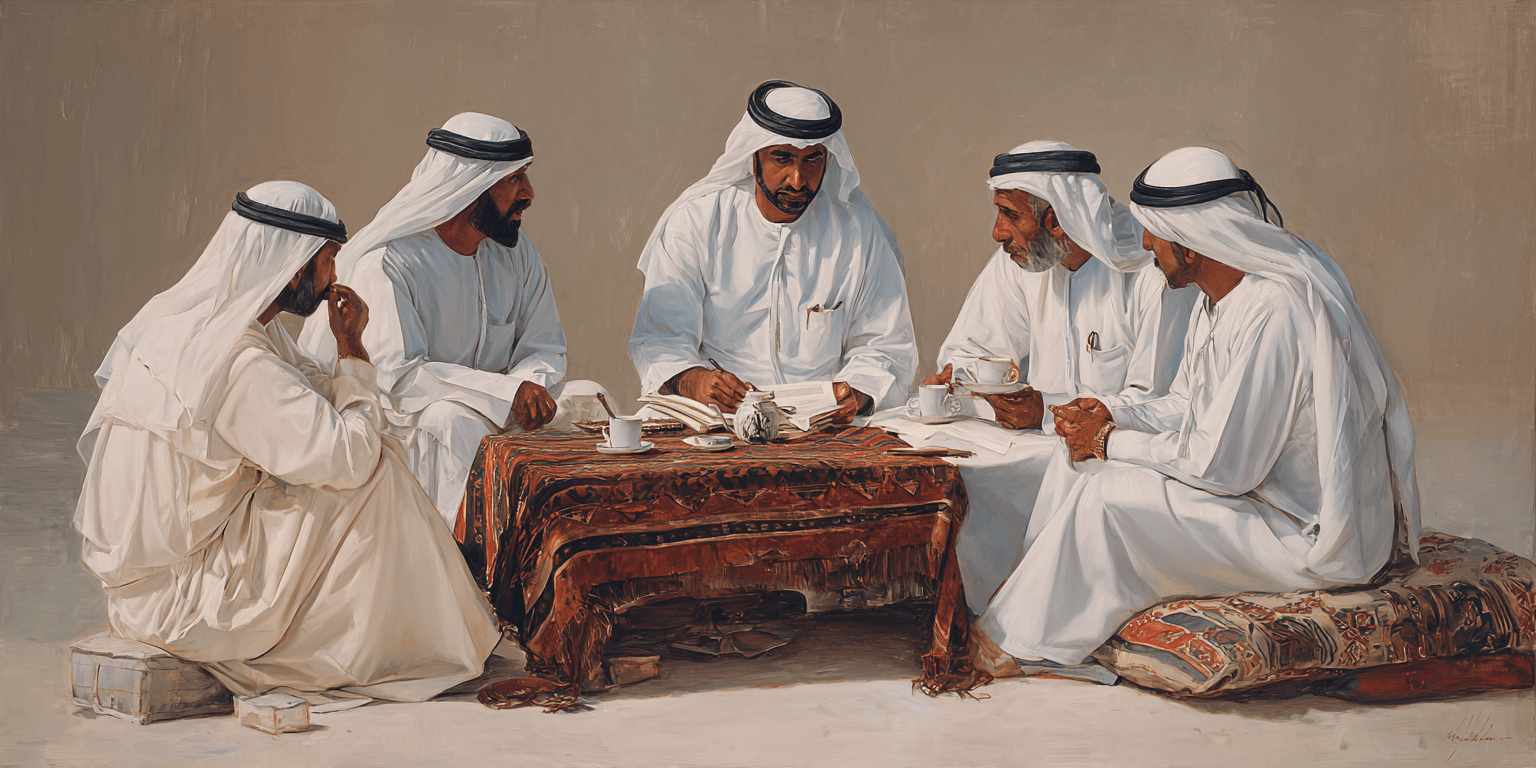
Shaykh Muḥammad ibn Hādī al-Madkhalī
Indeed, we praise Allah ﷻ for this blessing which He has bestowed upon you and upon me through this gathering tonight, the night of Friday corresponding to the 11th of Shaʿbān 1436 AH. We ask Allah, by His Most Perfect Names and Attributes, to grant us correctness in our statements and actions. I ask Him to bestow upon us beneficial and righteous knowledge, for indeed He is the Most Generous. We congratulate our sons in advance for their anticipated graduation, and we ask Allah ﷻ to grant them and us success.
There is a matter that I wish to remind both you and myself of, and it concerns maintaining contact amongst yourselves after your graduation, once each of you returns to his respective country, homeland, or to another land.
I advise you to preserve communication amongst yourselves, for it was these gatherings of lessons and knowledge, in the presence of the scholars of the Sunnah and athar, that were the means by which you were brought together. You were united by the favour of Allah ﷻ through the hands of the scholars, and you benefited from them. Therefore, I advise you to uphold this brotherhood, this unity, and this connection. It should not be the case that these sittings become the final point of connection between you, such that this particular gathering becomes the last of them. Beware of that.
In the past, the people of knowledge and the students of ḥadīth would correspond with one another by writing letters whenever one of them encountered a traveller heading towards the land where his brothers or companions from his days of seeking knowledge resided. They would enquire about one another’s condition, inform one another of their own circumstances, and convey news regarding the state of the Sunnah and knowledge in their respective lands. If a major incident occurred, they would inform one another of what had taken place and of the stance adopted by the people of knowledge concerning it.
Through this, relationships were maintained, bonds of brotherhood were preserved, and communication between brothers remained intact. Likewise, I advise you to maintain contact with your scholars, the scholars of the Sunnah and athar from whom you acquired knowledge and benefited. This can be achieved by visiting them, if Allah ﷻ facilitates your return, or by writing to them, or by conveying messages through any available and appropriate means. Inform them of your circumstances, ask about their wellbeing, and consult them regarding major events that occur in your lands.
By doing so, closeness is preserved, bonds remain strong between you and your brothers, and your scholars remain aware of your situation. Each person becomes aware of the condition of his brother and of the major events affecting his land. However, if contact is severed for years, such that neither the scholars nor the brothers know anything of a person’s condition, and then he returns after a long period during which trials and tribulations have unfolded and calamities have afflicted Ahl al-Sunnah, perhaps even having affected him personally, then the scholars may be asked about him while they no longer possess any knowledge of his situation, even if he once studied under them.
In such a case, justice necessitates restraint. The scholars neither praise nor criticise, but rather withhold judgement. This is fair, as they do not know his condition and news of him has ceased while tribulations have continued and taken new forms. We have heard this principle from some of our scholars, and we have observed that some individuals who are now asked about harbour resentment against their scholars, when in reality the error lies with themselves.
The reason I mention this issue is that today I was reading the biography of al-Ḥāfiẓ Abū Muḥammad ʿAbd Allāh ibn ʿAbd al-Raḥmān al-Dārimī (d. 255 AH / 869 CE), the Imām of Samarqand. In his biography, I came across a report that perfectly suits our gathering, so I brought it with me in order to summarise it for you, that you may observe how this pure methodology is now being criticised by those who once deceptively attached themselves to it while claiming adherence, only to later oppose its adherents and malign them with accusations. None of this harms us so long as we transmit knowledge through ḥaddathanā and akhbaranā, for that is true knowledge, and anything besides it is ignorance.
This narration is found in Tārīkh Baghdād, volume eleven, page 211. Al-Khaṭīb al-Baghdādī transmits it on the authority of Isḥāq ibn Dāwūd al-Samarqandī, who said that a close relative of his arrived from al-Shāsh. He said that he went to Aḥmad ibn Ḥanbal and began describing Abū al-Mundhir to him, praising him. Imām Aḥmad replied that he did not know him, explaining that their brother’s absence from them had been lengthy. That is, due to the prolonged absence and the severance of news, he did not know his current condition.
He then said: I do not know him, for our brother’s absence from us has been long. But what is your position regarding ʿAbd Allāh ibn ʿAbd al-Raḥmān al-Dārimī? I recommend that noble man to you. He repeated this recommendation several times.
Here we see that Imām Aḥmad refrained from commenting on the first individual. He justified this restraint by citing the length of the absence and the absence of information. He neither praised nor criticised. If your brother, or your student, remains absent for ten years while tribulations unfold and strike his land, and no news reaches you, and then he suddenly appears seeking commendation, what can you say? You are unaware of his condition and of what developments may have occurred. You have no option except to say what Aḥmad said: that you knew him previously, but you do not know what has become of him over this extended period.
Yet today, if such a statement is made, an uproar ensues. People say that no one is safe from his tongue, or that even when he cannot comment, he still speaks. But this was the clear and just stance of Imām Aḥmad, who said: our brother’s absence from us has been long. Meaning, there was no communication, no knowledge of his condition, no certainty as to whether he remained steadfast or had changed.
Therefore, you should only commend those with whom you remain in contact, whose adherence to the Sunnah you know, and who likewise know your stance in upholding the Sunnah, defending it, and clarifying opposition to it. This was the case with ʿAbd Allāh ibn ʿAbd al-Raḥmān al-Dārimī, who was an Imām and one of the four great ḥuffāẓ of the eastern regions. Imām Aḥmad directed people to him.
Accordingly, if you are asked about a former student with whom you have lost contact, but you have knowledge of another who remains active in teaching, calling to the Sunnah, and defending it, then you refer people to the one whose condition you know and you refrain regarding the other. For this reason, my beloved brothers, you must preserve your connections with one another and with your scholars, so that they remain aware of your condition after you return to your lands and of your stances in supporting the Sunnah. When your steadfastness and efforts become known to them through reliable channels, this reassures the heart.
As for the one who cuts off communication completely while tribulations continue, this necessitates restraint regarding him. Hence, Imām Aḥmad said: our brother’s absence from us has been long.
I mention this because today some people accuse Ahl al-Sunnah, claiming that they want constant surveillance and attachment. This is false, and we seek refuge with Allah ﷻ from such an understanding. Rather, they only wish to hear good and reassuring news. But when a student of knowledge cuts himself off from his scholars and peers, this inevitably gives rise to doubt.
We ask Allah ﷻ not to make this our final meeting, to make our relationship sincerely for His sake, to avert trials and tribulations from us, our brothers, and those we love, whether apparent or hidden, and to grant us steadfastness upon the truth and guidance until we meet Him. Indeed, He is the Most Generous.
Reference (Video Source)
Shaykh Muḥammad ibn Hādī al-Madkhalī, “Maintaining Connection After Graduation” (YouTube video), uploaded by Nesmu Dawah, 22 March 2015, https://www.youtube.com/watch?v=zcwuOwBVelQ&t=2s (accessed 19 January 2026).

October 26, 2019
4 mins read

March 10, 2018
5 mins read


