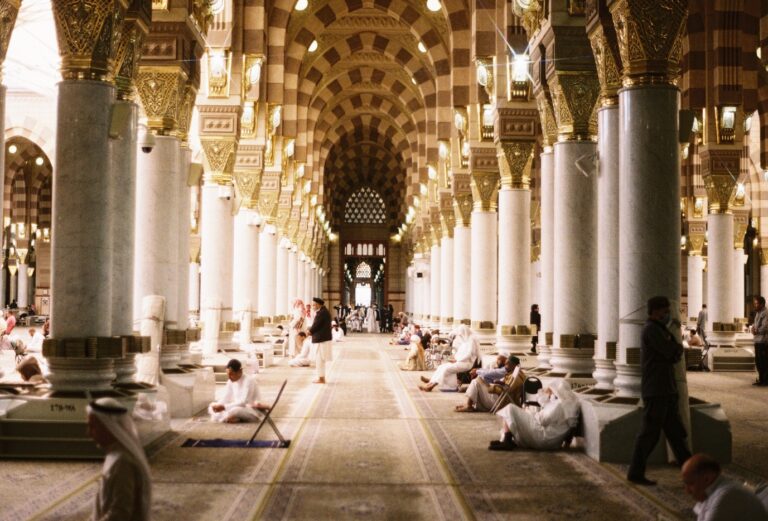

In the earliest period of Islam, imprisonment did not necessarily mean confinement within a purpose-built prison. The jurists explained that al-ḥabs ash-sharʿī, legal detention, originally referred more broadly to restraining a person and preventing him from acting freely, whether he was kept in a house or a mosque, or placed under supervision. This was the form of detention known during the time of the Prophet and Abū Bakr, may Allah be pleased with him.
It was only later, during the caliphate of ʿUmar ibn al-Khaṭṭāb, may Allah be pleased with him, that specific premises were acquired for use as a prison, marking an important development in the administration of legal detention in the early Muslim community.
The Meaning of Legal Detention
What is meant by “legal detention” (al-ḥabs ash-sharʿī), and what was imprisonment like during the time of ʿUmar ibn al-Khaṭṭāb? [At-Tarātīb al-Idāriyyah, vol. 1, p. 295.]al-Maqrīzī
Abū al-Ḥasan ʿAlī ibn Muḥammad al-Māwardī (d. 450 AH/1058 CE), may Allah have mercy upon him, is quoted in At-Tarātīb al-Idāriyyah as saying:
الحبس الشرعي ليس هو السجن في مكان ضيق وإنما هو تعويق الشخص ومنعه من التصرف بنفسه سواء كان في بيت أو مسجدا وكان يتولى نفس الخصم أو وكيله عليه وملازمته له
“Legal detention is not confinement in a narrow place. Rather, it is restraining a person and preventing him from acting freely, whether he is in a house or a mosque, or under the supervision of the opposing party himself or his agent, who remains with him.” [Al-Māwardī, Al-Aḥkām as-Sulṭāniyyah, as quoted in al-Kattānī, At-Tarātīb al-Idāriyyah, vol. 1, p. 295.]
It is for this reason that the Prophet referred to a detained person as a captive in the ḥadīth narrated by the grandfather of Hirmās ibn Ḥabīb, may Allah be pleased with him. The Prophet said:
يَا أَخَا بَنِي تَمِيمٍ مَا تُرِيدُ أَنْ تَفْعَلَ بِأَسِيرِكَ
“O brother of Banū Tamīm, what do you intend to do with your captive?” (Sunan Abī Dāwūd, no. 3629.)
This was the manner in which imprisonment was conducted in the time of the Prophet and Abū Bakr.
Shams ad-Dīn Muḥammad ibn Abī Bakr ibn Qayyim al-Jawziyyah (d. 751 AH/1350 CE), may Allah have mercy upon him, explained the same principle in Aṭ-Ṭuruq al-Ḥukmiyyah (p. 148).
Premises Set Aside for Imprisonment
As for designating a specific location for this purpose, this did not occur until the time of ʿUmar. He imprisoned al-Ḥuṭayʾah in a well. Later, he purchased the house of Ṣafwān ibn Umayyah, may Allah be pleased with him, which was thereafter known as Dār as-Sijn, “the House of Imprisonment”.
Badr ad-Dīn Maḥmūd ibn Aḥmad al-ʿAynī (d. 855 AH/1451 CE), may Allah have mercy upon him, said:
وكانت السجون آبارا فأول من بنى السجن علي بن أبي طالب
“Prisons were wells, and the first to build a prison was ʿAlī ibn Abī Ṭālib.” [Al-ʿAynī, commentary cited in al-Kattānī, At-Tarātīb al-Idāriyyah, discussion of imprisonment.]
The statement concerns building a prison specifically for that purpose.
Lawful Detention and Oppressive Conditions
Taqī ad-Dīn Aḥmad ibn ʿAlī al-Maqrīzī (d. 845 AH/1442 CE), may Allah have mercy upon him, criticised the prison conditions of his time:
وأمّا الحبس الذي هو الآن ، فإنه لا يجوز عند أحد من المسلمين ، وذلك أنه يجمع الجمع الكثير في موضع يضيق عنهم ، غير متمكنين من الوضوء والصلاة ، وقد يرى بعضهم عورة بعض ، ويؤذيهم الحرّ في الصيف ، والبرد في الشتاء
“As for the imprisonment practised now, it is not permissible according to any of the Muslims, because large numbers are gathered in a place too cramped for them, unable to perform wuḍūʾ and prayer. Some may see the nakedness of others, and they are harmed by the heat in summer and the cold in winter.” [Al-Maqrīzī, Al-Mawāʿiẓ wa-l-Iʿtibār bi-Dhikr al-Khiṭaṭ wa-l-Āthār, “Dhikr as-Sujūn”, p. 328 in the consulted text.]
He also described their dependence upon food provided by others.
This serves as a response to the Khawārij and others who claim that the very existence of a prison system is somehow un-Islamic. The historical evidence demonstrates otherwise: lawful imprisonment and detention have a recognised basis within Islam. A distinction must therefore be made between imprisonment itself and the oppressive practices found within some modern prison systems.
Injustice, abuse, humiliation and the violation of a prisoner’s rights are condemned, but this does not render the institution of lawful detention itself contrary to the sharīʿah.
References
Abū Dāwūd, Sulaymān ibn al-Ashʿath (d. 275 AH/889 CE), Sunan Abī Dāwūd, no. 3629.
Al-ʿAynī, Badr ad-Dīn Maḥmūd ibn Aḥmad (d. 855 AH/1451 CE), cited commentary, as quoted in al-Kattānī, At-Tarātīb al-Idāriyyah, discussion of imprisonment.
Ibn al-Qayyim al-Jawziyyah, Muḥammad ibn Abī Bakr (d. 751 AH/1350 CE), Aṭ-Ṭuruq al-Ḥukmiyyah fī as-Siyāsah ash-Sharʿiyyah, p. 148.
Al-Kattānī, Muḥammad ʿAbd al-Ḥayy ibn ʿAbd al-Kabīr (d. 1382 AH/1962 CE), At-Tarātīb al-Idāriyyah, vol. 1, p. 295, and the discussion of imprisonment.
Al-Maqrīzī, Taqī ad-Dīn Aḥmad ibn ʿAlī (d. 845 AH/1442 CE), Al-Mawāʿiẓ wa-l-Iʿtibār bi-Dhikr al-Khiṭaṭ wa-l-Āthār, “Dhikr as-Sujūn”, pp. 327–328 in the consulted text.
Al-Māwardī, Abū al-Ḥasan ʿAlī ibn Muḥammad (d. 450 AH/1058 CE), Al-Aḥkām as-Sulṭāniyyah, as quoted in al-Kattānī, At-Tarātīb al-Idāriyyah, vol. 1, p. 295.