
Shaykh Muḥammad ibn Ṣāliḥ ibn ʿUthaymīn (d. 1421 AH/2001 CE) ؒ
All praise belongs to Allah, we praise Him, seek His aid, seek His forgiveness and repent to Him. We seek refuge in Allah from the evil of our own selves and from our evil deeds. Whomsoever Allah guides, none can misguide, and whomsoever Allah misguides, none can guide.
I bear witness that there is none worthy of worship except Allah without associating partners with him, and I bear witness that Muḥammad is His servant and final Messenger, May Allah bestow abundant blessings and salutations upon him.
To proceed,
It gives me great pleasure to present to this noble assembly a lecture entitled Signs of the Prophets and Their Effect on Society.
Introduction
Allah the Most High created Ādam with His Hand from earth, fashioned him and blew a soul into him. He also taught him the names of all the creatures and commanded the Angels to prostrate before him. Allah provided Ādam with a mind and then chose to create a wife for Ādam named Ḥawwāʾ. Allah then created many men and women from their loins, this was the origin of mankind, and they began to roam the Earth. At this point, mankind performed acts of worship in accordance with the revealed commands of Allah conveyed to Ādam, in a manner suitable for that time and place.
There was for mankind, at that time, no cause for trials or diversion from their father’s method in worshipping Allah and adhering to his example. After much time had passed and his descendants significantly multiplied, with habitats vastly spread and the competing of people in the attainment of worldly riches, differing ensued between the people and they began to deviate from the way of their forefather. Thus, Allah sent Messengers. The first Messenger sent to the people was Noah (Nūḥ), Allah stated ,
كان الناس أمة واحدة فبعث الله النبيين مبشرين ومنذرين وأنزل معهم الكتاب بالحق ليحكم بين الناس فيما اختلفوا فيه
“Mankind were one community and Allah sent Prophets with glad tidings and warnings, and with them He sent the Scripture in truth to judge between the people in matters wherein they differed.” [Q 2:213] (excerpt)
ʿAbd Allah ibn ʿAbbās mentioned:
كان بين نوح وآدم عشرة قرون كلهم على شريعة من الحق فاختلفوا فبعث الله النبيين مبشرين ومنذرين
“Between Nūḥ and Ādam were ten generations, all of them adherent to the true legislation. Then they differed, so Allah sent Prophets as proclaimers of glad tidings and warners from evil.” Report quoted in Ibn ʿUthaymīn’s lecture.
The Wisdom in Sending the Messengers
Since the human intellect is unable to independently determine the worship of Allah in the manner which pleases and is most beloved to Him, and in addition to the fact that a human is incapable of instilling systematic organisation and adequate legislation for the creation whilst taking into consideration the vast differences in people – as this is not possible by anyone besides Allah – it is therefore evident from the perfect Wisdom and Mercy of Allah to send Messengers and reveal books to reform His creatures and establish the evidences upon them. Allah says,
رسلا مبشرين ومنذرين لئلا يكون للناس على الله حجة بعد الرسل
“Messengers as bearers of good news as well as of warning in order that mankind should have no plea against Allah after the Messengers.” [Q 4:165] (excerpt)
The wisdom in sending the Messengers can be summarised in the following:
Firstly: Determining the proofs upon the creation for none to be able to have a plea before Allah, as He has stated that those who will be in search of refuge from the torment will say,
ربنا لولا أرسلت إلينا رسولا فنتبع آياتك من قبل أن نذل ونخزى
“Our Lord! If only You had sent us a Messenger, we should certainly have followed your Āyāt [proofs, evidences, verses, lessons, signs, revelation, etc.] before we were humiliated and disgraced.” [Q 20:134] (excerpt)
Allah indisputably ceased this type of excuse from its core by sending the Messengers and aiding them with the clear signs that indicate their truthfulness, authenticity of Prophethood and soundness in their practices.
Secondly: Guiding the people and directing them to all that is good and righteous for their own benefit as it pertains to the worldly affairs and hereafter, because regardless of how much understanding, intelligence and astuteness of mind an individual may have been given, their minds still remain incapable of independently organising the common affairs that bring about benefit to the Ummah [Nation] in its entirety as one that is coherent, equitable and fair in delivering the correct rights to their recipients. The Prophet said,
إِنَّمَا مَثَلِي وَمَثَلُ النَّاسِ كَمَثَلِ رَجُلٍ اسْتَوْقَدَ نَارًا فَلَمَّا أَضَاءَتْ مَا حَوْلَهُ جَعَلَ الْفَرَاشُ وَهَذِهِ الدَّوَابُّ الَّتِي تَقَعُ فِي النَّارِ يَقَعْنَ فِيهَا فَجَعَلَ يَنْزِعُهُنَّ وَيَغْلِبْنَهُ فَيَقْتَحِمْنَ فِيهَا فَأَنَا آخُذُ بِحُجَزِكُمْ عَنِ النَّارِ وَأَنْتُمْ تَقْتَحِمُونَ فِيهَا
“My example and that of the people can be likened to a man who lit a fire. When it illuminated its surrounding area, moths and other insects began to fall into it. He tried to hold them back, but they overwhelmed him and plunged into it. I take hold of you by your waistbands to keep you from the Fire, but you instead plunge into it.” Ṣaḥīḥ al-Bukhārī, no. 6483.
The Messengers guard the people against harm and invite them to whatever benefits them.
Thirdly: Uniting the people upon one religion and in agreement with one man. The submission by the people to what they witness of the signs that happen in support of the Prophet is among the swiftest, strongest and most effective reasons for unity. This is because they unite in this way upon a deeply rooted creed and firmly established faith. Thus, this results in righteousness and reform.
Support for the Messengers Through Signs Familiar to Their Era
If a man emerged from among us and said that he is a Prophet upon whom revelation descends, and that obeying him is compulsory and that whomsoever disobeys him is recompensed with the fire, while whomsoever obeys him is recompensed with Paradise, then he proceeds to pass legislation, establish traditions and then says, live by these laws or else you will be recompensed with the fire; no individual would accept this from him regardless of his level of truthfulness and honesty until he presents clear evidence to highlight his truthfulness. Therefore, if anyone were to reject the claim of this claimant who has emerged without any clear evidence to what he says, that individual who rejected the claim would not be blameworthy. The minds of people will comply with the fact that the claimant must present the proof, if that isn’t the case, the claim should not be accepted.
In solidifying the proofs upon the creation through the Messengers, Allah supported them with clear proofs that indicate their truthfulness, and that they are truly His Messengers. Allah selected from among the people those whom He knew were worthy and best suited to convey the message, and able to handle its challenges and remain patient towards the plots of its enemies. Allah states,
الله يصطفي من الملائكة رسلا ومن الناس
“Allah chooses Messengers from angels and from men.” [Q 22:75] (excerpt)
He also states in another chapter,
الله أعلم حيث يجعل رسالته
“Allah knows best with whom to place his Message.” [Q 6:124] (excerpt)
He chose accomplished and resilient men, civil, compassionate and understanding people. Allah also mentions,
وما أرسلنا من قبلك إلا رجالا نوحي إليهم من أهل القرى
“And we sent not before you (as Messengers) any but men, whom we inspired from among the people of the townships.” [Q 12:109] (excerpt)
i.e: The city folk, as a city can be referred to as a town and this is displayed when Allah labeled Mecca a town in the following verse,
وكأين من قرية هي أشد قوة من قريتك التي أخرجتك أهلكناهم
“And many a town, stronger than your town which has driven you out, We have destroyed.” [Q 47:13] (excerpt)
He likewise called it Umm al-Qurā [The Mother of Towns]:
ولتنذر أم القرى ومن حولها
“So that you may warn the Mother of Towns and all those around it.” [Q 6:92] (excerpt)
.
Allah never sent a Messenger except that He supported him with signs that indicate the authenticity of his message and the genuineness of his call. Allah stated,
لقد أرسلنا رسلنا بالبينات
“Indeed We have sent Our Messengers with clear proofs.” [Q 57:25] (excerpt)
i.e: Clear and manifest signs that leave no room to doubt the authenticity of that particular Messenger who had been sent. The Prophet said,
مَا مِنَ الأَنْبِيَاءِ نَبِيٌّ إِلاَّ أُعْطِيَ مَا مِثْلُهُ آمَنَ عَلَيْهِ الْبَشَرُ
“There has never been a Prophet among the Prophets except that he was given signs through which people believed.” Ṣaḥīḥ al-Bukhārī, no. 4981 (excerpt).
This is from the perfect Wisdom of Allah and His Mercy towards His servants that He supports the Messengers in order for their affair to be uncomplicated and so that the people do not suffer in a state of confusion and become doubtful without a sense of assurance.
These signs that the Messengers came with are outside the natural capability of man. If it were within the capability of any man, it would not be correct to call it a miracle due to the fact that anyone could claim to hold the true message and bring about a miracle if it were within his capabilities. However, the miracles of the Messengers cannot appear at the hands of normal men. The scholars have asserted that the major signs that happened at the hands of each Messenger resemble the type of activity that became prevalent among the people of that era whom the particular Messenger was sent to. The scholars have been able to evidently prove and cite this through the miracles handed to Prophet Mūsā (Moses), ʿĪsā (Jesus) and Muḥammad.
Signs of the Prophethood of Mūsā
In the time of Moses, the practice of magic was at an advanced level, to the extent that the magicians had reached the ultimate level of expertise and skill. Therefore, from the greatest miracles that Moses presented was the act in which he would defeat the magicians with something that resembled magic but in reality differed tremendously, because whatever Moses came with could be seen in reality by all witnesses, contrary to the acts of the magicians who would cast spells over the eyes of the people through trickery and deception rather than presenting a real change and transformation of objects for people to see.
From the miracles given to Moses was his staff that he would release and it would become a live snake, however when he took hold of it again it would reform back into a staff. Moses once again used his staff before the tyrant Pharaoh when he invited him to believe in Allah. Likewise, Moses would place his hand inside his bosom and would remove it without any ailment and white in colour, i.e: without deformity or skin condition, and this was the case when he revealed his hand to the Pharaoh when he was being invited to believe in Allah.
When the Pharaoh witnessed these two miracles, he paraded his arrogance and said to the surrounding audience,
إن هذا لساحر عليم يريد أن يخرجكم من أرضكم بسحره فماذا تأمرون
“Verily, this is indeed a well versed sorcerer , He wants to drive you out of your land with his sorcery, then what is your counsel, and what do you command.” [Q 26:34–35] (excerpt)
Moses also used his staff when he was called in front of the magicians when they released their ropes and staffs in a huge gathering and display of sorcery that the Pharaoh organised in order to defeat Moses and what he falsely claimed was the magic of Moses.
So when the crowd gathered along with the magicians, they released their ropes and their staffs and took an oath,
وقالوا بعزة فرعون إنا لنحن الغالبون
“They said: ‘By the honour of Pharaoh, we shall indeed be victorious.’.” [Q 26:44] (excerpt)
So they presented highly advanced magic to the extent that their ropes and staffs would give the illusion that they are moving to anyone that sees them. Then Moses released his staff by the command of Allah the All-Mighty and behold it immediately swallowed up all the falsehood that they presented. At that point, the magicians whilst they were the most knowledgeable about their practice realised that the actions of Moses were not magic, rather it was from the matters that humans could not challenge, thus the magicians fell into prostration and said:
قالوا آمنا برب العالمين رب موسى وهارون
“They said: ‘We believe in the Lord of all Dominion, the Lord of Mūsā and Hārūn [Aaron].’.” [Q 26:47–48]
This staff was also used for another purpose, it was when Moses was in search of water for his people, he would strike the rock with it and water would gush out from the rock in twelve places in accordance to the number of tribes within the tribe of the children of Israel.
The staff was also used when Moses and his followers reached the sea whilst being followed closely by the Pharaoh and his troops, Allah revealed to him that he should strike the sea with his staff, he did so and the sea was split into twelve different paths that Moses and his followers walked through to salvation.
Signs of the Prophethood of ʿĪsā
During the time of Jesus (ʿĪsā), the science of medicine had reached a highly advanced level. Therefore the miracles handed to Jesus resembled the practice of medicine that had become cutting-edge. The significant difference was that Jesus presented something that medicine failed to do, Jesus would fashion the shape of a bird from the soil and blow into it and it would then fly by the permission of Allah whilst the people witnessed this, he would also cure the one that was born blind and heal the leper all by the permission of Allah.
The doctors at that time were unable to cure these two aforementioned illnesses and this remains the case until this day as far as I am aware. Some of the scholars have stated:
إنما سمي المسيح لأنه كان لا يمسح ذا عاهة إلا برئ
“He was named al-Masīḥ because any afflicted person over whom he passed his hand would be cured.” Explanation attributed to some scholars in this lecture.
. It has also been mentioned in the Qurʾān that Jesus would give life to the dead by the permission of Allah, and in another verse it is stated that he would resurrect the dead by the permissions of Allah. Both are different actions, the first is giving life to the dead before they are buried, and the second is giving life to the dead along with resurrecting them from their graves after they have been buried, and there is no doubt that the miracles that were handed to Jesus are beyond the capabilities of humans. Therefore, being given such miracles as support is evidence and clear proof that he is a Messenger from Allah Who is the sole Creator and Perfectly Capable.
Allah could also support His Messengers with other miracles, however the most prominent and paramount ones of those are the ones that resemble the type of practice(s) that were widespread during the era of that particular Messenger.
This is why Allah supported His Messenger Muḥammad with numerous miracles, the greatest and most prominent of them being this Noble Qurʾān that is the speech of the Lord of all Dominion; a book that is never subject to any falsehood and is revealed from Allah. During the time of the Messenger Muḥammad , proficiency and eloquence of speech along with its delivery was widespread. Purity of language and eloquence had become the reason for attaining honour and mastery in society as is well known to those who study history.
Miracles and Signs of the Prophets
The miracles are in fact the signs that thwarted all the efforts of humans when they attempted to replicate them. Allah names them Āyāt (signs), they are signs that reveal the truthfulness of the Messengers, May the blessings and salutations of Allah be upon them – in the message they conveyed.
The technical meaning of a miracle as understood by the scholars of Islam is:
أمر خارق للعادة
“An occurrence contrary to the customary course of events.” Technical definition given in this lecture.
In other words, something that occurs in opposition to the universal course of events that have been set out by Allah, whilst being undisputable and granted by Allah to the Messengers for their support.
An example of such an event was the splitting of the Moon and the sprouting of water from the hand of the Messenger Muḥammad and other than that.
Thus, any incident that happens according to the norm cannot be called a miracle. So if an individual were to say
أريكم معجزة أن لا يمضي ساعة حتى تطلع الشمس
“I will show you a miracle: one hour will not pass before the sun rises.” Hypothetical example in this lecture.
whilst he says this, the time shows that there is less than one hour before sunrise. If the sun rises at its scheduled time, its emergence will not count as a miracle for this claimant because its rising at its time is according to the norm and not abnormal. Likewise, even if an abnormal incident were to take place but is susceptible to challenges, it would not be called a miracle. This is seen in the practices of magicians, sorcerers and their like because other magicians and sorcerers can challenge their practices.
If the abnormal incident were to take place at the hands of a noble and pious person (ally of Allah), it would also not be called a miracle, but rather it would technically be called a karāmah (an act he has been honoured with). However, this incident that has occurred at the hands of this pious individual is in fact a miraculous sign of the Messenger who this pious individual follows, as it is a proof of the correctness of this individuals methodology.
Benefits Derived from the Miracles of the Prophets
First: A clear manifestation of the ability of Allah , as it is inescapable that these occurrences are beyond the scope of any creation and they are also a testimony to the authenticity of the message, and since it is abnormal, it remains a proof for the ability of the Creator and that He is able to change the norm that people have become accustomed to. This is why an individual can become perplexed at these miracles that leave them no option but to believe in the message of the Messengers because he has presented something that only Allah can do.
Second: The clear display of the mercy Allah has towards his servants, as these miracles that are witnessed by the people are in support of the Messengers and a reason for the increase of faith and reassurance in the message. This will result in an increase in their certitude and reward from Allah without encountering any confusion, doubt or disarray.
Third: A clear manifestation of the perfect Wisdom of Allah, He did not send any messenger to be left in an idle state without supporting him with the things that prove his truthfulness. If an individual were to send someone with an important mission without providing him with the tools that prove and highlight the genuineness of the message, it will be deemed as foolishness from the sender and irresponsible behaviour by the Messenger. What would you expect in the case of the greatest Message ever sent from the One with perfect wisdom? Clear evidences and signs would no doubt support it.
Fourth: The mercy that Allah has bestowed on the Messenger. He has been sent and Allah has facilitated the acceptance of the Message through the miracles that take place at the hands of that Messenger in a way that deeply convinces the creation with occurrences that cannot be matched or challenged, nor can they be rejected except by pure denial and stubbornness, Allah said,
فإنهم لا يكذبونك
“They do not belie you.” [Q 6:33] (excerpt)
That is, they do not belie you because of these miracles that indicate your truthfulness.
Allah also said about the Pharaoh and his people,
وجحدوا بها واستيقنتها أنفسهم ظلما وعلوا فانظر كيف كان عاقبة المفسدين
“They belied them wrongfully and arrogantly, [though their own selves were convinced], so see what the end result of the evil doers was.” [Q 27:14]
Fifth: Establishing the proof over the creation. If a Messenger were to appear without a miracle that indicated his truthfulness, the people would have a valid excuse in their refusal to accept and believe in him. But if the Messenger comes with convincing signs in aid of his message, the people would not have a case in rejecting his Message.
Sixth: A clarification that the Universe is governed by Allah and yields to His commands and that if this Universe governed itself or was governed by a force of nature that contains elements that react with one another in order to produce something, things would never change instantly nor would the norm be altered through someone as a support for their declaration. Take a look at the planets and the solar system that do not change merely due to the passing of time unless Allah wills. They exist as per the decree of Allah . They have existed since their creation by Allah and will continue to exist until Allah permits their extinction. On one night, the pagan tribe of Quraysh requested to see a miracle from the Prophet Muḥammad, so Prophet Muḥammad pointed to the moon and it split in half with each half separated and distant from the other for all to see. Subsequently, out of pure denial and stubbornness, the pagan tribe of Quraysh claimed that Muḥammad had cast a magic spell on them. They asked the travellers to Mecca on that night if they had seen the splitting of the moon, so they informed them that they witnessed it that night. Does this not unequivocally prove that this Universe in its entirety is governed by and yields to the Creator, the Perfectly-wise!?
The miracles of Moses (Mūsā) and Jesus (ʿĪsā), may the blessings and salutations of Allah be upon them, have been mentioned previously as it relates to his staff that transformed into a snake and the use of it in striking the sea to part it, and the rock that gushed out water. In addition, the revival of the dead and their resurrection from their graves as it pertains to the miracles of Jesus (ʿĪsā).
The Miracles of Muḥammad
Shaykh al-Islām Taqī ad-Dīn Aḥmad ibn ʿAbd al-Ḥalīm Ibn Taymiyyah (d. 728 AH/1328 CE) ؒ mentioned in Al-Jawāb aṣ-Ṣaḥīḥ li-man Baddala Dīn al-Masīḥ:
والآيات والبراهين الدالة على نبوة محمد كثيرة، وهي أكثر وأعظم من آيات غيره من الأنبياء، ويسميها من يسميها من النظار معجزات، وتسمى دلائل النبوة وأعلام النبوة ونحو ذلك، وهذه الألفاظ التي سميت بها آيات الأنبياء كانت أدل على المقصد من لفظ المعجزات، ولهذا لم يكن لفظ المعجزات موجودا في الكتاب والسنة، وإنما فيه لفظ الآية والبينة والبرهان
“The signs and clear evidences that stand as proof for the Prophethood of Muḥammad are many. They are more numerous and greater than the signs of other Prophets. Some theoreticians call them ‘miracles’, while they are also called ‘proofs of Prophethood’, ‘signs of Prophethood’ and similar names. These terms more effectively demonstrate the intended meaning than the term ‘miracle’. This is why the term ‘miracle’ is not found in the Qurʾān or the Prophetic tradition; rather, the terms ‘āyah’ (sign), ‘bayyinah’ (proof) and ‘burhān’ (conclusive evidence) are found.” Al-Jawāb aṣ-Ṣaḥīḥ li-man Baddala Dīn al-Masīḥ, as quoted in this lecture.
Ibn Taymiyyah also stated:
والآيات نوعان منها ما مضى وصار معلوما بالخبر، ومنها ما هو باق إلى اليوم كالقرآن، والإيمان والعلم اللذين في أتباعه، وكشريعته التي جاء بها
“Signs are of two types: those that have passed and become known through reports, and those that remain until this day, such as the Qurʾān, the faith and knowledge possessed by his followers, and the legislation he brought.” Al-Jawāb aṣ-Ṣaḥīḥ, as quoted in this lecture.
Ibn Taymiyyah mentioned other examples and we shall go through some of them here in further detail in shāʾ Allah (Allah willing).
Among These Signs
The Noble Qurʾān: It is the greatest sign for the Prophet Muḥammad because it is the most complete and constant sign. Ever since Allah revealed this Qurʾān to him, it has been a sign that bears testament to the Prophethood of Muḥammad until this day. The Qurʾān is the speech of Allah in meaning and expression, Allah spoke this Qurʾān [in a manner that befits His Majesty] and conveyed it to the Angel Jibrīl, then Jibrīl descended with it to the heart of the Prophet where he embraced and memorised it; an act that Allah guaranteed that He would do, as He stated,
إن علينا جمعه وقرآنه فإذا قرأناه فاتبع قرآنه ثم إن علينا بيانه
“Indeed, upon Us is to gather it in your heart and to make possible its recitation , So, when we have recited it [through Jibrīl] then follow its recitation , Then upon us is its clarification.” [Q 75:17–19]
Since Allah has guaranteed to clarify it, it would subsequently mean that the Messenger would memorise and comprehend it in order to convey and explain it to the people. The All-Mighty said,
إنا نحن نزلنا الذكر وإنا له لحافظون
“Verily, it is We who have sent down the Qurʾān, and indeed we will guard it [from corruption].” [Q 15:9]
The Qurʾān is a sign from among the signs of the Prophet that prove his truthfulness from numerous perspectives:
Firstly: The collective inability of the entire creation whether it be a joint effort or individual, to produce something similar to this Qurʾān. Allah said,
قل لئن اجتمعت الإنس والجن على أن يأتوا بمثل هذا القرآن لا يأتون بمثله ولو كان بعضهم لبعض ظهيرا
“Say, if Mankind and the Jinn were to work together to produce the like of this Qurʾān, they could not produce the like thereof, even if they helped one another.” [Q 17:88]
Meaning: They cannot produce something similar to it even if they were to aid one another in doing so, this is because the Qurʾān is the speech of Allah and is never resembled by anything from the speech of the creation, not from the aspect of articulation, meaning, its effect on the one who is exposed to it or the fruitful, praiseworthy outcomes.
Secondly: In terms of its power, serenity, composition, elegance of style, structure, clarity, and immeasurable value in meaning; all of which do not diminish the more it is scrutinised and pondered over. To the extent that you may hear a verse that is continuously read and a new meaning may appear to you upon its repetition, evoking the notion that this verse was revealed to address you.
Ibn Taymiyyah stated:
نفس نظم القرآن وأسلوبه عجيب بديع، ليس من جنس أساليب الكلام المعروفة، ولم يأت أحد بنظير هذا الأسلوب، فإنه ليس من جنس الشعر ولا الرجز ولا الرسائل ولا الخطابة، ولا نظمه نظم شيء من كلام الناس عربهم وعجمهم، ونفس فصاحة القرآن وبلاغته هذا عجيب خارق للعادة ليس له نظير في كلام جميع الخلق
“The structure and style of the Qurʾān are unique and unprecedented. They are not among the familiar styles of speech, and nobody has presented anything like this style. It is neither poetry, rajaz verse, letter writing nor oratory. Its structure is unlike the speech of Arabs or non-Arabs. Its purity of language and eloquence are extraordinary, unparalleled by the speech of any creation.” Quoted in this lecture.
Muḥammad Rashīd Riḍā (d. 1354 AH/1935 CE) mentioned in Al-Waḥy al-Muḥammadī, under chapter four:
إن القرآن لو أنزل بأساليب الكتب المألوفة المعهودة وترتيبها لفقد أعظم مزايا هدايته المقصودة بالقصد الأول، وأقول أيضا إنه لو أنزل هكذا لفقد بهذا الترتيب أخص مراتب إعجازه المقصود بالدرجة الثانية
“If the Qurʾān had been revealed in the familiar styles and order of books to which people are accustomed, it would have lacked the greatest advantages of its guidance, which is its primary aim. I also say that, if revealed in that manner, this arrangement would have deprived it of its most distinctive miraculous qualities, intended in the second degree.” Al-Waḥy al-Muḥammadī, chapter 4, as quoted in this lecture.
He also stated:
لو كان القرآن مرتبا مبوبا كما ذكر لكان خاليا من أعظم مزاياه شكلا وموضوعا، يعلم هذا وذاك مما نبينه من فوائد نظمه وأسلوبه الذي أنزله به رب العالمين العليم الحكيم الرحيم، وهو مزج تلك المقاصد كلها بعضها ببعض وتفريقها في سوره الكثيرة الطويلة منها والقصيرة بالمناسبات المختلفة وتكرارها بالعبارات البليغة المؤثرة في القلوب المحركة للشعور المنافية للسآمة والملل
“If the Qurʾān contained chaptered headings and sub-headings like the books people are accustomed to, it would have lacked one of its greatest traits in its formation and subject matter. All this can be identified from the light we shall shed on the benefits of the Qurʾān in its composition and style that the Lord of the Universe, the One Who possesses Perfect Knowledge, Wisdom and Mercy revealed it in. The Qurʾān achieves all of these aims and shares them throughout the many short and long chapters, whilst taking into consideration the many different events that are covered and their repetition and maintaining the soul-stirring eloquence that moves the heart and senses without displeasure or boredom.” Al-Waḥy al-Muḥammadī, same chapter.
He went on to mention further qualities:
والقابلة لأنواع أخرى من الإلقاء الخطابي في الترغيب والترهيب والتعجيب والتعييب والتكريه والتحبيب والزجر والتأنيب واستفهام الإنكار والتقرير والتهكم والتوبيخ بما لا نظير له في كلام البشر من خطابة ولا شعر ولا رجز ولا سجع، فبهذا الأسلوب الرفيع في النظم البديع وبلاغة التعبير الرفيع كان القرآن كما ورد في معنى وصفه لا تبلى جدته ولا تخلقه كثرة الترديد
“The forms of delivery include encouragement and warning, evoking wonder and disapproval, instilling aversion and love, deterrence and rebuke, questions of denial and affirmation, mockery and censure. These are qualities unparalleled in human speech, whether oratory, poetry, rajaz verse or rhymed prose. Through this elevated style, unprecedented composition and eloquence of expression, the Qurʾān’s freshness does not wear away, nor does repeated recitation diminish it.” Al-Waḥy al-Muḥammadī, same chapter (excerpt).
Thirdly: The miraculous qualities of the Qurʾān in terms of its elevated targets for the creation, perfect mannerisms and reforming laws. It came in order to correct the creed of people as it relates to the belief in Allah and all that is connected to it such as the Names, Attributes and Actions of Allah as well as the belief in all of His Angels, the Revealed Books and Scriptures, His Messengers, the Day of Judgement, the good and bad of divine decree and anything pertaining to it. It also came to establish sincerity in the worship of Allah, liberate the minds and consciences from worshiping other than Allah and being attached to them either out of fear, hope, love or glorification. It was also revealed to bring about excellent character that any sound and upright intellect can bear testament to. The Qurʾān commands with righteousness, maintaining the ties of kinship, honesty, justice, mercy and acts of good while it prohibits anything in opposition to that, whether it is oppression, tyranny or offensive behaviour. This is in addition to its legislation that offers a perfect solution to the rectification of the people and nations in their affairs of the worldly life and the hereafter as well as correction in all acts of worship.
It also solves the matters related to personal, social and economical cohesion between individuals or as a community. All of which, were a joint effort to be made by the creation, they would be unable to construct its like or anything near to it.
Fourthly: From the miracles of the Qurʾān is its power to affect the heart and soul as it penetrates the heart like the arrow penetrates its target, it dominates the mind such as the sun dominates a dark horizon. This has been testified to by ally and foe, to the extent that a man from the common folk, let alone a highly learned individual, will hear the Qurʾān and find a strong attraction to it that will generate a compelling fascination of the Qurʾān by which he will realise that this is not from the speech of man.
Al-Walīd ibn al-Mughīrah, the uncle of Abū Jahl, heard the Qurʾān on one occasion from the Messenger and said to his tribesmen and women of Banī Makhzūm
لقد سمعت من محمد آنفا كلاما ما هو من كلام الإنس ولا من كلام الجن، وإن له لحلاوة وإن عليه لطلاوة، وإن أعلاه لمثمر وإن أسفله لمغدق، وإنه ليحطم ما تحته، وإنه ليعلو وما يعلى
“I have just heard speech from Muḥammad that is neither the speech of humans nor of jinn. It has sweetness and grace; its upper part is fruitful and its lower part abundant. It overwhelms what is below it, and it rises above while nothing rises above it.” Statement of al-Walīd ibn al-Mughīrah, as quoted in this lecture.
.
On another the occasion, the senior members of the pagan tribe of Quraysh gathered and said
انظروا أعلمكم بالسحر والكهانة والشعر فليأت هذا الرجل الذي فرق جماعتنا وشتت أمرنا وعاب ديننا فليكلمه ولينظر ما يرد عليه
“Search for the most knowledgeable among yourselves in poetry, magic and soothsaying. Let him go to this man who has divided us, left us disbanded in our affairs and denounced our religion, to speak to him and see what he has to say.” Report quoted in this lecture.
. So the people replied,
ما نعلم أحدا غير عتبة بن ربيعة
“We do not know anyone [fit for this] other than ʿUtbah ibn Rabīʿah.” Same report.
they replied. So he approached the Prophet, spoke to him and offered him all that was in his capability to entice him from wealth, status and women. When ʿUtbah finished all he had to say, the Prophet began to recite from the beginning of the chapter of Sūrah Fussilat from the Qurʾān, when he reached,
فإن أعرضوا فقل أنذرتكم صاعقة مثل صاعقة عاد وثمود
“But if they turn away, then say: ‘I have warned you of a ṣāʿiqah [destructive blast] like the ṣāʿiqah that overtook ʿĀd and Thamūd.’.” [Q 41:13]
ʿUtbah got up and placed his hand on the mouth of the Prophet to silence him and appealed to him by their ties of kinship to cease. When ʿUtbah ibn Rabīʿah returned to his people they saw a change in him, so he relayed the story to them and the fear that struck his heart due to the recitation of the Prophet. He said to his people,
لقد علمتم أن محمدا إذا قال شيئا لم يكذب فخفت أن ينزل بكم العذاب، ولقد كلمني بكلام ما سمعت أذناي بمثله قط فما دريت ما أقول
“You know that when Muḥammad says something, it is never a lie, so I feared that punishment would descend upon you. He spoke to me with speech unlike anything my ears have ever heard, so I did not know what to say.” Statement of ʿUtbah ibn Rabīʿah, as quoted in this lecture.
It was also the case that some of the senior members of the Quraysh tribe would secretly go during the night to listen to the Prophet recite the Qurʾān as was the case with Abū Jahl, Abū Sufyān and other than them.
Such events provide a clear indication of the impact the Qurʾān has on the hearts and souls. However, this impact may not appear to everyone. Rather it would appear to the one who has sensitivity and knowledge of the structure of speech and the eloquence of the tongue.
As the poet said:
ومن يك ذا فم مر مريض يجد مرا به الماء الزلال
“Whoever has a bitter, diseased mouth will taste pure, fresh water as bitter.” Poetry quoted in this lecture.
Ibn Taymiyyah stated, after mentioning various types of the Qurʾān’s miraculous qualities:
وهذه الأمور من ظهرت له من أهل العلم والمعرفة ظهر له إعجازه من هذا الوجه، ومن لم يظهر له ذلك اكتفى بالأمر الظاهر الذي يظهر له ولأمثاله كعجز جميع الخلق عن الإتيان بمثله مع تحدي النبي وإخباره بعجزهم، فإن هذا أمر ظاهر لكل أحد
“Those among the people of knowledge and understanding to whom these matters become clear will recognise the Qurʾān’s miraculous qualities from this aspect. Those to whom they do not become clear may suffice with what is plainly apparent to them and others like them, such as the inability of the creation to produce its like despite the Prophet’s challenge and his declaration of their inability. This is an aspect clear for everyone to comprehend.” Quoted in this lecture.
Fifthly: From the miracles of the Qurʾān are the effects that have resulted due to this Muslim nation’s adherence to it and the devotion to its lofty targets and rightly guided teachings. It has raised the people of the Qurʾān to the pinnacle in establishing acts of worship, character, morality and dignity.
The pious predecessors (early righteous generations) of this Muslim nation realised the value of the Noble Qurʾān, and thus would not exceed in memorizing ten verses without learning their meanings and acting upon them.
As a result, they gained knowledge and good actions at the same time. This is the reason that allowed them to be leaders in many parts of the world and attain dignity, authority and gain strength and ability. They also introduced beneficial sciences to the people when they themselves were once divided, misguided, illiterate and downcast among the various nations.
This strength and honour will not return to this Muslim nation until they return to the original source that their pious predecessors (early pious generations) took from and take from it without tarnish. All of this will not return to them until they return to the Book of Allah and the tradition of the Messenger of Allah, understand them both and implement them in creed, knowledge, actions and methodology whilst having belief that this is the path of righteousness, rectification and safety.
It is heartbreaking to see many Muslims in this day and age not returning to the Book and the Prophetic tradition, nor seeking to understand them or implementing them. Many of them even fail to read any more than what they read in the prayer, this is a result of a lack of understanding of the Arabic language and its elegance in style and its etiquette. Evidently, they do not have a linguistic or legislation based inclination towards the Book of Allah and the tradition of His Messenger, and this is the reason they have become distant from the foundations of the religion and from its effects and results, in proportion to how far they have moved away from the Book of Allah and the traditions of the Messenger of Allah.
We hope from Allah that He will constantly guide the Ummah of the Qurʾān and bring forth leaders of thought and politics who bring about good. We also ask Allah to allow us to act in accordance to the guidance of the early pious generations, because this Ummah will not find rectification in anything other than that which the earliest generations found rectification in.
Other Signs of the Prophet
The signs that Allah made clearly visible in the heavens and the horizon that were testament to the truthfulness of the Prophet. Allah said in the Qurʾān,
سنريهم آياتنا في الآفاق وفي أنفسهم حتى يتبين لهم أنه الحق أولم يكف بربك أنه على كل شيء شهيد
“We will show them our Signs in the universe, and in their own selves, until it becomes manifest to them that this [Qurʾān] is the truth. Is it not sufficient in regard to your Lord that He is a witness over all things.” [Q 41:53]
There are some examples of these signs, from them are:
First: The splitting of the moon. The moon was split in two parts and this was witnessed by people, it has also been recorded in the Qurʾān in the statement of Allah,
اقتربت الساعة وانشق القمر وإن يروا آية يعرضوا ويقولوا سحر مستمر
“The Hour has drawn near and the moon has been cleft asunder. And if they see a sign, they turn away and say: ‘This is continuous magic.’.” [Q 54:1–2]
The scholars are in consensus that this event happened in the time of the Prophet during the pre-migration period in Mecca and was seen by the people in that region. The Prophet said to the people at the time of its occurrence
اشهدوا اشهدوا
“Bear witness, bear witness.” Wording cited in this lecture; compare Ṣaḥīḥ al-Bukhārī, no. 4864.
. In addition, travellers from various directions entered Mecca and declared that they also witnessed it.
Ibn Taymiyyah mentions:
وجعل الآية في انشقاق القمر دون الشمس وسائر الكواكب لأنه أقرب إلى الأرض من الشمس والنجوم، وكان الانشقاق فيه دون سائر أجزاء الفلك إذ هو الجسم المستنير الذي يظهر الانشقاق فيه لكل من يراه ظهورا لا يتمارى فيه … وقد عاينه الناس وشاهدوه، وكان النبي يقرأ هذه السورة في المجامع الكبار مثل صلاة العيدين، وكل الناس يقر بذلك ولا ينكره، ولو لم يكن قد انشق لأسرع الناس إلى تكذيب ذلك
“The moon was used in this sign rather than the sun or other parts of the heavens because it is closer to the Earth than the sun and stars. It is an illuminated body in which a split can be clearly seen by those who observe it, without doubt… The people witnessed it, and the Prophet used to recite this chapter in the largest gatherings, such as the two ʿĪd prayers, while the people acknowledged it and did not reject it. If the moon had not split, his opponents would have hastened to deny its occurrence.” Quoted in this lecture (excerpt).
Some people thought that the splitting of the moon was a farfetched idea and began to misinterpret the meaning of the Qurʾān, but they were undoubtedly mistaken in their rejection. Their conclusion cannot be harmonized with the Qurʾān and the authentic proofs for this event are numerous and clear to indicate that the moon was literally split in half. As for the claims made by some that this event has not been recorded in any other line of history apart from Islamic history, the response is that the records of Islamic history are sufficient in this regard and the Qurʾān has also explained this event. It could be the case that those who did not narrate the occurrence did not see it, or they were asleep, or they were experiencing daytime in their region, or there were clouds that prevented them from witnessing it. In any case, even the travellers who were on a journey towards Mecca gave their recollection of the splitting of the moon. It should also be noted that this was not a continuous sign, but rather, as it appears, one that happened once for the people to see and then the moon returned to its original form.
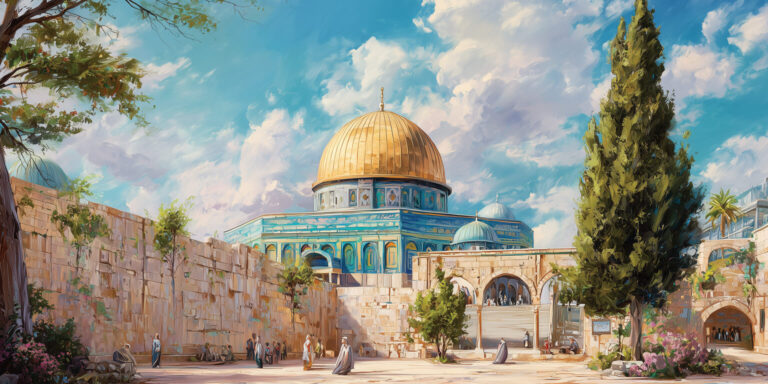
Second: The Ascent. It is from the greatest signs, the Prophet was taken on a night journey from his home to Bayt al-Maqdis in Jerusalem in one night, there he was met by the Prophets and led them in prayer. Then Angel Jibrīl took him on an ascent into the heavens until they reached Sidrat al-Muntahā (a tree in the highest part of Paradise) above the seventh heaven. At that high point, Allah revealed to him and the Prophet witnessed further major signs and then passed by some other Prophets on his descent through the heavens before returning to Mecca. Even with the great distance between Mecca and Jerusalem and the altitude difference between Earth and the heavens that reach Sidrat al-Muntahā (a tree in the highest part of Paradise), all of this happened in one single night. Allah has mentioned this sign in the Qurʾān. He mentioned the night journey in Al-Isrāʾ and the ascent in An-Najm.
Third: The rain that fell and stopped immediately as a result of the Prophet’s invocation to Allah. It has been recorded in Ṣaḥīḥ al-Bukhārī and Muslim on the authority of Anas ibn Mālik ؓ, who said:
أصابت سنة على عهد رسول الله فبينا النبي يخطب في يوم الجمعة قام أعرابي فقال: يا رسول الله هلك المال وجاع العيال، فادع الله لنا. فرفع يديه وما نرى في السماء قزعة، فوالذي نفسي بيده ما وضعها حتى ثار السحاب أمثال الجبال، ثم لم ينزل عن منبره حتى رأيت المطر يتحادر على لحيته، فمطرنا يومنا ذلك، ومن الغد ومن بعد الغد حتى الجمعة الأخرى، وقام ذلك الأعرابي أو غيره فقال: يا رسول الله تهدم البناء وغرق المال، فادع الله لنا. فرفع يديه وقال: اللهم حوالينا ولا علينا، فما يشير إلى ناحية من السحاب إلا انفرجت، فأقلع المطر وخرجنا نمشي في الشمس
“We were struck with drought during the life of the Messenger of Allah. While the Prophet was delivering a sermon on a Friday, a Bedouin stood up and said: ‘Messenger of Allah! Our wealth is ruined and our families are hungry. Invoke Allah for us.’ He raised his hands while no cloud could be seen in the sky. By the One in Whose Hand my soul is, he did not lower his hands before clouds began to gather like mountains, and he did not descend from his pulpit before I saw raindrops dripping from his beard. Rain fell that day, the day after, and the day after that, until the following Friday. The same Bedouin or another one stood and said: ‘Messenger of Allah! The buildings have been wrecked and the wealth drowned. Invoke Allah for us.’ He raised his hands and said: ‘Allah, let it rain around us and not on us.’ He did not point to a cloud except that it dispersed. The rain stopped and we went out walking under the sun.” Abridged wording combining Ṣaḥīḥ al-Bukhārī, no. 933, and Ṣaḥīḥ Muslim, no. 897a, as quoted in the lecture.
There are other Prophetic signs pertaining to the unseen realm that happened during his life and after his death in the exact same way they were prophesied by him. Below are some examples of them:
First: It has been recorded in Ṣaḥīḥ Muslim on the authority of Anas ibn Mālik, from ʿUmar ibn al-Khaṭṭāb ؓ, who said:
إن رسول الله كان يرينا مصارع أهل بدر قبل ابتداء القتال يقول: هذا مصرع فلان غدا إن شاء الله، هذا مصرع فلان، فوالذي بعثه بالحق ما أخطئوا الحدود التي حددها رسول الله
“The Messenger of Allah showed us the places where the people of Badr would die, before the battle. He said: ‘This is the place where so-and-so will die tomorrow, Allah willing. This is the place where so-and-so will die.’ By the One Who sent him with the truth, they did not fall outside the places he had specified.” As quoted in this lecture; compare Ṣaḥīḥ Muslim, no. 2873 (excerpt).
Second: The prophecy conveyed by the Messenger of Allah about a fire that would appear in the region of Ḥijāz and illuminate the necks of camels in Buṣrā, a town in ash-Shām. Al-Bukhārī recorded that the Prophet Muḥammad said:
لاَ تَقُومُ السَّاعَةُ حَتَّى تَخْرُجَ نَارٌ مِنْ أَرْضِ الْحِجَازِ تُضِيءُ أَعْنَاقَ الإِبِلِ بِبُصْرَى
“The Hour will not be established until a fire emerges from the land of Ḥijāz, illuminating the necks of camels in Buṣrā.” Ṣaḥīḥ al-Bukhārī, no. 7118.
This fire appeared in Jumādā al-Ākhirah 654 AH/1256 CE, east of Medina. It remained for about a month and filled the valleys in that region. The people in Buṣrā saw the necks of camels illuminated by it, as prophesied. Ibn Taymiyyah said:
وهذه النار كانت تحرق الحجر
“This fire used to burn stone.” Quoted by Ibn ʿUthaymīn in this lecture.
There are other examples of the news that was conveyed by the Prophet about the trials and tribulations that will occur along with the changing state of the people and more.
Likewise, from the signs of Prophethood is the incident that has been recorded by al-Bukhārī and other than him on the authority of Jābir ibn ʿAbd Allah , who said:
عطش الناس يوم الحديبية والنبي بين يديه ركوة فتوضأ فجهش الناس نحوه، فقال: ما لكم؟ قالوا: ليس عندنا ماء نتوضأ ولا نشرب إلا ما بين يديك. فوضع يده في الركوة فجعل الماء يثور بين أصابعه كأمثال العيون، فشربنا وتوضأنا. قلت: كم كنتم؟ قال: لو كنا مائة ألف لكفانا، كنا خمس عشرة مائة
“The people became thirsty on the day of al-Ḥudaybiyyah. A vessel was before the Prophet, and he performed wuḍūʾ from it. The people approached him, and he asked: ‘What is the matter?’ They said: ‘We have no water for wuḍūʾ or drinking except what is in this vessel before you.’ He placed his hand in it, and water began to spring from between his fingers like fountains. We all drank and performed wuḍūʾ. Jābir was asked: ‘How many of you were there?’ He replied: ‘Even if we had been one hundred thousand, it would have sufficed. There were one thousand five hundred of us.’” Ṣaḥīḥ al-Bukhārī, no. 3576.
In addition, there was the sign that came in the form of food being multiplied as was the case on the day of al-Khandaq and in the case of Abū Hurayrah with the people of aṣ-Ṣuffah, the signs are in fact many and the scholars have mentioned and noted many of them throughout time. The most expansive piece of work I have come across in this topic is Al-Bidāyah wa-n-Nihāyah (Tārīkh Ibn Kathīr) by Ismāʿīl ibn ʿUmar Ibn Kathīr (d. 774 AH/1373 CE) ؒ as he compiled the signs of the Prophet in one large volume, and it is also the case that the Prophet Muḥammad and his nation experienced similar signs and greater ones to the other Prophets.
All of these signs that Allah allows His Prophets and righteous servants to experience bear testament to His Perfect Knowledge, Ability and Mercy. It also proves that everything is under His control and He governs however He wills, He is never to be questioned in what He does but rather the people shall be questioned. To Allah belongs all praise and perfect grace, He is the Most High, free from any deficiency, we cannot praise Him enough, He is perfectly praised as He has praised himself.
May the blessings and salutations be bestowed upon our Prophet, his household and companions.
References
Al-Qurʾān, 2:213; 4:165; 6:33, 6:92, 6:124; 12:109; 15:9; 17:88; 20:134; 22:75; 26:34–35, 26:44, 26:47–48; 27:14; 41:13, 41:53; 47:13; 54:1–2; 57:25; 75:17–19.
Abū ʿAbd Allah Muḥammad ibn Ismāʿīl al-Bukhārī, Aṣ-Ṣaḥīḥ, nos. 933, 3576, 4864, 4981, 6483, 7118.
Abū al-Ḥusayn Muslim ibn al-Ḥajjāj al-Qushayrī an-Naysābūrī, Aṣ-Ṣaḥīḥ, nos. 897a, 2873.
Ismāʿīl ibn ʿUmar Ibn Kathīr, Al-Bidāyah wa-n-Nihāyah, referred to as Tārīkh Ibn Kathīr by the lecturer, for its collection of prophetic signs.
Muḥammad ibn Ṣāliḥ ibn ʿUthaymīn, Majmūʿ Fatāwā wa Rasāʾil, vol. 5, Āyāt al-Anbiyāʾ wa Atharuhā fī al-Mujtamaʿ (Signs of the Prophets and Their Effect on Society), pp. 218–235 in the electronic PDF pagination. Lecture date and print edition not established.
Muḥammad Rashīd Riḍā, Al-Waḥy al-Muḥammadī, chapter 4.
Taqī ad-Dīn Aḥmad ibn ʿAbd al-Ḥalīm Ibn Taymiyyah, Al-Jawāb aṣ-Ṣaḥīḥ li-man Baddala Dīn al-Masīḥ, quoted through Ibn ʿUthaymīn’s lecture.
The reports from Ibn ʿAbbās, al-Walīd ibn al-Mughīrah and ʿUtbah ibn Rabīʿah, the etymology of al-Masīḥ and the anonymous poem are reproduced through the lecture.