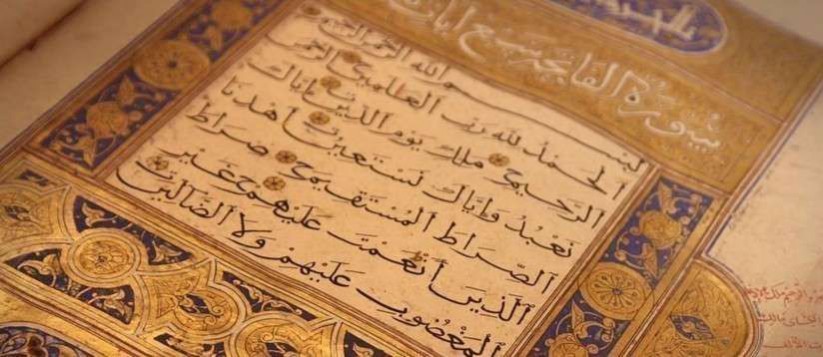
Sūrat al-Fātiḥah is recited in every rakʿah of the prayer, and the Messenger of Allah taught his Companions not only its words, but also the manner in which it should be recited. Among the established aspects of his recitation was that he would pause at the end of each āyah.
Umm Salamah Hind bint Abī Umayyah was asked about the recitation of the Messenger of Allah , and she described it by saying:
كَانَ النَّبِيُّ صَلَّى اللَّهُ عَلَيْهِ وَسَلَّمَ يَقْطَعُ قِرَاءَتَهُ آيَةً آيَةً: بِسْمِ اللَّهِ الرَّحْمَنِ الرَّحِيمِ، الْحَمْدُ لِلَّهِ رَبِّ الْعَالَمِينَ، الرَّحْمَنِ الرَّحِيمِ، مَالِكِ يَوْمِ الدِّينِ
“The Prophet would divide his recitation verse by verse: ‘In the Name of Allah, the Most Merciful, the Especially Merciful; all praise belongs to Allah, the Lord of the worlds; the Most Merciful, the Especially Merciful; Master of the Day of Judgement.’” (Sunan Abī Dāwūd, no. 4001; Sunan at-Tirmidhī, no. 2927).
The wording yaqṭaʿu qirāʾatahu āyatan āyatan, meaning “he would divide his recitation verse by verse”, demonstrates that he would pause at the ends of the verses. This narration is recorded by Abū Dāwūd, at-Tirmidhī, and Aḥmad, and was authenticated by Shaykh Muḥammad Nāṣir ad-Dīn al-Albānī (d. 1420 AH/1999 CE), may Allah have mercy upon him.
This practice was also recognised by the early specialists of Qurʾānic recitation. Abū ʿAmr ʿUthmān ibn Saʿīd ad-Dānī (d. 444 AH/1053 CE), may Allah have mercy upon him, stated:
وَكَانَ جَمَاعَةٌ مِنَ الْأَئِمَّةِ السَّالِفِينَ وَالْقُرَّاءِ الْمَاضِينَ يَسْتَحِبُّونَ الْقَطْعَ عَلَى الْآيَاتِ، وَإِنْ تَعَلَّقَ بَعْضُهَا بِبَعْضٍ
“A group of the early imāms and earlier reciters used to recommend stopping at the verses, even if some of them were connected to one another.” [Ad-Dānī, al-Bayān fī ʿAdd Āy al-Qurʾān.]
Muḥammad ibn Muḥammad ibn al-Jazarī (d. 833 AH/1429 CE), may Allah have mercy upon him, likewise recorded that some scholars considered stopping at the ends of the verses to be a sunnah, and cited Abū ʿAmr as saying:
وَهُوَ أَحَبُّ إِلَيَّ
“It is more beloved to me.” [Ibn al-Jazarī, an-Nashr fī al-Qirāʾāt al-ʿAshr, vol. 1, p. 226.]
Ibn al-Jazarī further recorded:
وَالْأَفْضَلُ الْوُقُوفُ عَلَى رُؤُوسِ الْآيِ، وَإِنْ تَعَلَّقَتْ بِمَا بَعْدَهَا
“The preferable practice is to stop at the ends of the verses, even if they are connected to what follows.” [Ibn al-Jazarī, an-Nashr fī al-Qirāʾāt al-ʿAshr, vol. 1, p. 226]
Muḥammad ibn Abī Bakr ibn Qayyim al-Jawziyyah (d. 751 AH/1350 CE), may Allah have mercy upon him, similarly stated:
وَكَانَ يَقْطَعُ قِرَاءَتَهُ آيَةً آيَةً
“He used to divide his recitation verse by verse.” [Ibn al-Qayyim, Zād al-Maʿād, vol. 1, p. 326.]
Ibn al-Qayyim also said:
وَاتِّبَاعُ هَدْيِ النَّبِيِّ صَلَّى اللَّهُ عَلَيْهِ وَسَلَّمَ وَسُنَّتِهِ أَوْلَى
“Following the guidance and sunnah of the Prophet is preferable.” [Ibn al-Qayyim, Zād al-Maʿād fī Hady Khayr al-ʿIbād, vol. 1, p. 326]
The Servant and His Lord
The significance of reciting al-Fātiḥah verse by verse becomes even greater when we consider another authentic ḥadīth. Abū Hurayrah ʿAbd ar-Raḥmān ibn Ṣakhr narrated that the Messenger of Allah said that Allah said:
قَسَمْتُ الصَّلَاةَ بَيْنِي وَبَيْنَ عَبْدِي نِصْفَيْنِ، وَلِعَبْدِي مَا سَأَلَ
“I have divided the prayer between Myself and My servant into two halves, and My servant shall have what he asks for.” (Ṣaḥīḥ Muslim, no. 395).
Allah then describes His response to the servant’s recitation of Sūrat al-Fātiḥah. The servant says:
الْحَمْدُ لِلَّهِ رَبِّ الْعَالَمِينَ
“All praise belongs to Allah, the Lord of the worlds.” [Q 1:2].
Allah says:
حَمِدَنِي عَبْدِي
“My servant has praised Me.” (Ṣaḥīḥ Muslim, no. 395).
The servant then says:
الرَّحْمَنِ الرَّحِيمِ
“The Most Merciful, the Especially Merciful.” [Q 1:3].
Allah says:
أَثْنَى عَلَيَّ عَبْدِي
“My servant has extolled Me.” (Ṣaḥīḥ Muslim, no. 395).
The servant then says:
مَالِكِ يَوْمِ الدِّينِ
“Master of the Day of Judgement.” [Q 1:4].
Allah says:
مَجَّدَنِي عَبْدِي
“My servant has glorified Me.” (Ṣaḥīḥ Muslim, no. 395).
The servant then says:
إِيَّاكَ نَعْبُدُ وَإِيَّاكَ نَسْتَعِينُ
“You alone we worship, and You alone we ask for help.” [Q 1:5].
Allah says:
هَذَا بَيْنِي وَبَيْنَ عَبْدِي، وَلِعَبْدِي مَا سَأَلَ
“This is between Me and My servant, and My servant shall have what he asks for.” (Ṣaḥīḥ Muslim, no. 395).
Then the servant says:
اهْدِنَا الصِّرَاطَ الْمُسْتَقِيمَ صِرَاطَ الَّذِينَ أَنْعَمْتَ عَلَيْهِمْ غَيْرِ الْمَغْضُوبِ عَلَيْهِمْ وَلَا الضَّالِّينَ
“Guide us to the straight path, the path of those upon whom You have bestowed favour, not those who have incurred anger, nor those who have gone astray.” [Q 1:6–7].
Allah says:
هَذَا لِعَبْدِي، وَلِعَبْدِي مَا سَأَلَ
“This is for My servant, and My servant shall have what he asks for.” (Ṣaḥīḥ Muslim, no. 395).
This ḥadīth reveals the tremendous nature of Sūrat al-Fātiḥah. The worshipper is not merely reciting a sūrah which he has memorised. Allah has informed us that He responds to His servant’s recitation:
حَمِدَنِي عَبْدِي
“My servant has praised Me.” (Ṣaḥīḥ Muslim, no. 395).
He also says:
أَثْنَى عَلَيَّ عَبْدِي
“My servant has extolled Me.” (Ṣaḥīḥ Muslim, no. 395).
He also says:
مَجَّدَنِي عَبْدِي
“My servant has glorified Me.” (Ṣaḥīḥ Muslim, no. 395).
When the servant asks Him for guidance, He says:
وَلِعَبْدِي مَا سَأَلَ
“My servant shall have what he asks for.” (Ṣaḥīḥ Muslim, no. 395).
When this ḥadīth is considered alongside the narration of Umm Salamah رضي الله عنها, the wisdom of taking one’s time with each āyah becomes clear. The servant says:
الْحَمْدُ لِلَّهِ رَبِّ الْعَالَمِينَ
“All praise belongs to Allah, the Lord of the worlds.” [Q 1:2].
He pauses, then says:
الرَّحْمَنِ الرَّحِيمِ
“The Most Merciful, the Especially Merciful.” [Q 1:3].
He pauses, then says:
مَالِكِ يَوْمِ الدِّينِ
“Master of the Day of Judgement.” [Q 1:4].
He pauses again. This is the Prophetic manner of recitation, while the ḥadīth of Abū Hurayrah رضي الله عنه allows the worshipper to reflect upon what Allah has informed us concerning each portion of his recitation.
The pause itself should not be presented as a separate command contained within the ḥadīth of Abū Hurayrah رضي الله عنه. Rather, the sunnah of pausing at the ends of the verses is established by the narration describing the Prophet’s recitation, while the ḥadīth qudsī reveals the extraordinary interaction between Allah and His servant during al-Fātiḥah.
Thus, when reciting al-Fātiḥah, the believer should not rush through its verses. He should recite them with tranquillity, understand what he is saying and follow the Prophetic manner by stopping at their ends. He praises Allah , and Allah says:
حَمِدَنِي عَبْدِي
“My servant has praised Me.” (Ṣaḥīḥ Muslim, no. 395).
He glorifies Allah , and Allah says:
مَجَّدَنِي عَبْدِي
“My servant has glorified Me.” (Ṣaḥīḥ Muslim, no. 395).
He declares:
إِيَّاكَ نَعْبُدُ وَإِيَّاكَ نَسْتَعِينُ
“You alone we worship, and You alone we ask for help.” [Q 1:5].
Allah says:
هَذَا بَيْنِي وَبَيْنَ عَبْدِي
“This is between Me and My servant.” (Ṣaḥīḥ Muslim, no. 395).
Then he asks:
اهْدِنَا الصِّرَاطَ الْمُسْتَقِيمَ
“Guide us to the straight path.” [Q 1:6].
Allah says:
وَلِعَبْدِي مَا سَأَلَ
“My servant shall have what he asks for.” (Ṣaḥīḥ Muslim, no. 395).
This is the beauty of reciting al-Fātiḥah according to the sunnah: the servant recites, pauses, reflects and continues, knowing that he is standing before the One who hears his recitation and has Himself informed him of His response.
References
Al-Qurʾān, Sūrat al-Fātiḥah, verses 2–7.
Abū Dāwūd, Sulaymān ibn al-Ashʿath as-Sijistānī (d. 275 AH/889 CE), Sunan Abī Dāwūd, no. 4001.
Aḥmad ibn Ḥanbal (d. 241 AH/855 CE), al-Musnad.
Ad-Dānī, Abū ʿAmr ʿUthmān ibn Saʿīd (d. 444 AH/1053 CE), al-Bayān fī ʿAdd Āy al-Qurʾān.
Ibn al-Jazarī, Muḥammad ibn Muḥammad (d. 833 AH/1429 CE), an-Nashr fī al-Qirāʾāt al-ʿAshr, vol. 1, p. 226.
Ibn al-Qayyim, Muḥammad ibn Abī Bakr (d. 751 AH/1350 CE), Zād al-Maʿād fī Hady Khayr al-ʿIbād, vol. 1, p. 326.
Muslim, ibn al-Ḥajjāj an-Naysābūrī (d. 261 AH/875 CE), Ṣaḥīḥ Muslim, no. 395.
At-Tirmidhī, Muḥammad ibn ʿĪsā (d. 279 AH/892 CE), Sunan at-Tirmidhī, no. 2927.