All praise is due to Allah . We praise Him, seek His aid, and seek His forgiveness. We seek refuge in Allah from the evils of ourselves and the evil consequences of our deeds. Whomsoever Allah guides, none can misguide, and whomsoever He leaves astray, none can guide.
Few trials are more painful than the loss of a child. It is a calamity that pierces the heart, weakens the limbs, and can leave a person feeling as though a part of themselves has been taken away. Yet the believer knows that every decree of Allah is founded upon perfect wisdom, mercy, and justice, even when that wisdom remains hidden from us.
The death of a child is not a sign of Allah’s displeasure. Rather, for many believers, it is a means by which Allah raises their rank, expiates their sins, and prepares for them a reward that cannot be imagined. The texts of the Qurʾān and sunnah are filled with consolation, hope, and glad tidings for those who endure this trial with patience and faith.
Every Soul Belongs to Allah
Allah , the Most High, said:
لِلَّهِ مُلْكُ السَّمَاوَاتِ وَالْأَرْضِ ۚ يَخْلُقُ مَا يَشَاءُ ۚ يَهَبُ لِمَن يَشَاءُ إِنَاثًا وَيَهَبُ لِمَن يَشَاءُ الذُّكُورَ
“To Allah belongs the dominion of the heavens and the earth. He creates what He wills. He bestows female children upon whom He wills, and bestows male children upon whom He wills.” [Q 42:49]
Children are among the greatest blessings bestowed upon a person. Yet they are not possessions that belong to us. Rather, they are trusts given to us by Allah for a period of time.
Abū Hurayrah ؓ narrated that the Messenger of Allah said:
يَقُولُ اللَّهُ تَعَالَى مَا لِعَبْدِي الْمُؤْمِنِ عِنْدِي جَزَاءٌ، إِذَا قَبَضْتُ صَفِيَّهُ مِنْ أَهْلِ الدُّنْيَا، ثُمَّ احْتَسَبَهُ إِلاَّ الْجَنَّةُ
“Indeed, Allah, the Most High, said: ‘My believing servant has no reward with Me except Paradise when I take from him his beloved one from among the people of the world and he remains patient, seeking the reward from Allah.’” (Ṣaḥīḥ al-Bukhārī, no. 6424).
This ḥadīth alone contains immense comfort. Allah Himself promises Paradise to the believer who loses a beloved family member and bears that loss with patience and hope for reward.
The Example of the Prophet When His Son Ibrāhīm Died
Perhaps the greatest consolation is found in the example of the Messenger of Allah himself.
His son Ibrāhīm died whilst still an infant. The Prophet loved him deeply. When Ibrāhīm was brought to him during his final moments, the Messenger of Allah held him, kissed him, and wept.
Anas ibn Mālik ؓ narrated:
دَخَلْنَا مَعَ رَسُولِ اللَّهِ صلى الله عليه وسلم عَلَى أَبِي سَيْفٍ الْقَيْنِ ـ وَكَانَ ظِئْرًا لإِبْرَاهِيمَ ـ عَلَيْهِ السَّلاَمُ ـ فَأَخَذَ رَسُولُ اللَّهِ صلى الله عليه وسلم إِبْرَاهِيمَ فَقَبَّلَهُ وَشَمَّهُ، ثُمَّ دَخَلْنَا عَلَيْهِ بَعْدَ ذَلِكَ، وَإِبْرَاهِيمُ يَجُودُ بِنَفْسِهِ، فَجَعَلَتْ عَيْنَا رَسُولِ اللَّهِ صلى الله عليه وسلم تَذْرِفَانِ
“We went with the Messenger of Allah to the blacksmith Abū Sayf, who was the husband of the wet nurse of Ibrāhīm. The Messenger of Allah took Ibrāhīm, kissed him, and smelled him. Then we entered after that, and Ibrāhīm was breathing his last. The eyes of the Messenger of Allah began shedding tears.” (Ṣaḥīḥ al-Bukhārī, no. 1303; Ṣaḥīḥ Muslim, no. 2315).
When ʿAbd ar-Raḥmān ibn ʿAwf ؓ expressed surprise at seeing him cry, the Prophet replied:
إِنَّ الْعَيْنَ تَدْمَعُ، وَالْقَلْبَ يَحْزَنُ، وَلاَ نَقُولُ إِلاَّ مَا يَرْضَى رَبُّنَا، وَإِنَّا بِفِرَاقِكَ يَا إِبْرَاهِيمُ لَمَحْزُونُونَ
“The eyes shed tears and the heart grieves, but we do not say except that which pleases our Lord. Indeed, O Ibrāhīm, we are grieved by your separation.” (Ṣaḥīḥ al-Bukhārī, no. 1303).
This noble ḥadīth teaches that tears do not contradict patience. The believer may cry. The believer may feel sadness. The believer may miss their child every day of their life. What is prohibited is objecting to Allah’s decree or speaking words of displeasure.
Shaykh ʿAbd al-ʿAzīz ibn ʿAbd Allah ibn Bāz (d. 1420 AH/1999 CE), may Allah have mercy upon him, explained that patience means restraining oneself upon obedience to Allah , restraining oneself from sin, and restraining oneself from objection to His painful decrees, whilst seeking the reward of Allah . He described patience as a tremendous station of the religion that is attained through certainty and faith. (Ibn Bāz, Majmūʿ Fatāwā wa-Maqālāt ash-Shaykh ʿAbd al-ʿAzīz ibn Bāz, vol. 4, p. 210)
Your Child Awaits You at the Gates of Paradise
Among the greatest glad tidings for bereaved parents is the narration of Muʿāwiyah ibn Qurrah from his father, Qurrah ibn Iyās ؓ.
He said:
كَانَ نَبِيُّ اللَّهِ صلى الله عليه وسلم إِذَا جَلَسَ يَجْلِسُ إِلَيْهِ نَفَرٌ مِنْ أَصْحَابِهِ وَفِيهِمْ رَجُلٌ لَهُ ابْنٌ صَغِيرٌ يَأْتِيهِ مِنْ خَلْفِ ظَهْرِهِ فَيُقْعِدُهُ بَيْنَ يَدَيْهِ فَهَلَكَ فَامْتَنَعَ الرَّجُلُ أَنْ يَحْضُرَ الْحَلْقَةَ لِذِكْرِ ابْنِهِ فَحَزِنَ عَلَيْهِ فَفَقَدَهُ النَّبِيُّ صلى الله عليه وسلم فَقَالَ مَا لِي لاَ أَرَى فُلاَنًا. قَالُوا يَا رَسُولَ اللَّهِ بُنَيَّهُ الَّذِي رَأَيْتَهُ هَلَكَ. فَلَقِيَهُ النَّبِيُّ صلى الله عليه وسلم فَسَأَلَهُ عَنْ بُنَيِّهِ فَأَخْبَرَهُ أَنَّهُ هَلَكَ فَعَزَّاهُ عَلَيْهِ ثُمَّ قَالَ يَا فُلاَنُ أَيُّمَا كَانَ أَحَبُّ إِلَيْكَ أَنْ تَمَتَّعَ بِهِ عُمْرَكَ أَوْ لاَ تَأْتِي غَدًا إِلَى بَابٍ مِنْ أَبْوَابِ الْجَنَّةِ إِلاَّ وَجَدْتَهُ قَدْ سَبَقَكَ إِلَيْهِ يَفْتَحُهُ لَكَ. قَالَ يَا نَبِيَّ اللَّهِ بَلْ يَسْبِقُنِي إِلَى بَابِ الْجَنَّةِ فَيَفْتَحُهَا لِي لَهُوَ أَحَبُّ إِلَىَّ. قَالَ فَذَاكَ لَكَ
“When the Prophet used to sit, a group from among his Companions would sit with him. Among them was a man who had a young son who would come to him from behind, and he would place him in front of himself. The child later died, and the man stopped attending the gatherings because they reminded him of his son and caused him sadness. The Prophet asked, ‘Why do I not see so-and-so?’ They replied, ‘O Messenger of Allah, his son whom you used to see has died.’ The Prophet met him and asked about his son. He told him that the child had died, and the Prophet offered him condolences. Then he said: ‘O so-and-so, which is more beloved to you: that you enjoy his company throughout your life, or that you come to any of the gates of Paradise on the Day of Resurrection and find him having preceded you there, opening it for you?’ The man replied, ‘O Prophet of Allah, him preceding me to the gate of Paradise and opening it for me is more beloved to me.’ The Prophet said, ‘Then that is for you.’” (Sunan an-Nasāʾī, no. 2088, authenticated by al-Albānī).
Reflect upon this tremendous promise. Your child has not simply vanished. Rather, by Allah’s permission, your child has gone ahead. The child whom you carried may be waiting for you. The child whose voice you once heard may be among those whom Allah has made a means of comfort and joy for you in the Hereafter.
Tiny Hands at the Gates of Paradise
Shaykh Muḥammad Nāṣir ad-Dīn al-Albānī (d. 1420 AH/1999 CE), may Allah have mercy upon him, mentioned:
“It is established through many aḥādīth that on the Day of Judgement young children will stand at the gates of Paradise, crying and seeking their parents. Allah, though He is the Most Knowing of their condition, will send Jibrīl to ask them why they are crying.
They will reply: ‘We will not enter Paradise except with our parents.’
Then Allah will grant them permission to enter Paradise along with their parents. This is a form of intercession. Their plea hastens their parents’ entry into Paradise.” [Al-Albānī, Silsilat al-Hudā wa-n-Nūr, cassette 16.]
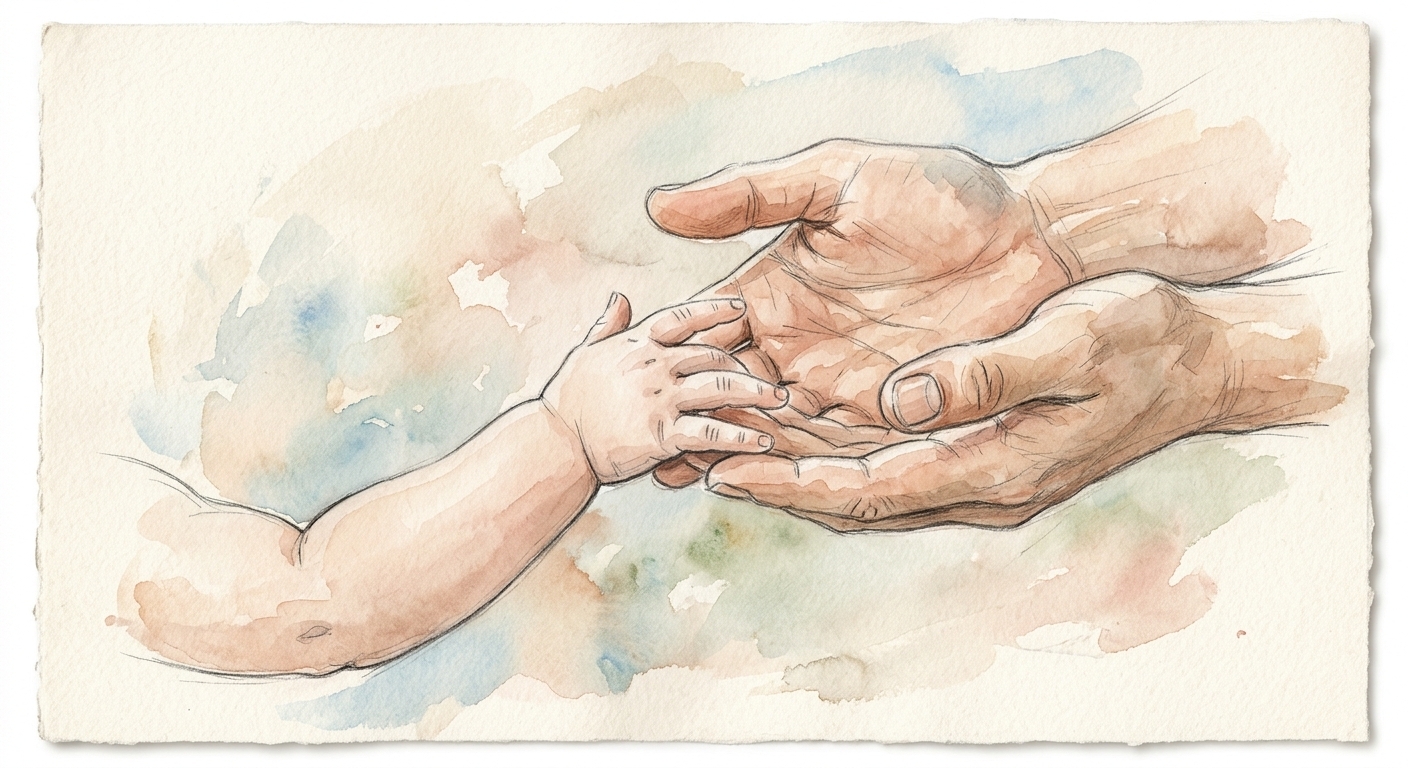
What a beautiful image for the grieving parent. The tiny hands that once reached for you in this world may, by Allah’s mercy, be reaching for you again on the Day of Resurrection. The child whom you carried may be waiting to lead you into eternal bliss.
The Children of the Believers Are in Paradise
Abū Hurayrah ؓ narrated that the Messenger of Allah said:
صِغَارُهُمْ دَعَامِيصُ الْجَنَّةِ
“Their young ones are the little ones of Paradise.” (Ṣaḥīḥ Muslim, no. 2635).
The scholars explained that the children of the believers who die before reaching the age of accountability are among the people of Paradise. There is no sickness there. There is no fear there. There is no loneliness there. There is no pain there. Rather, they are in Paradise, enjoying the mercy of their Lord.
Children Draw Their Parents Towards Paradise
Abū Ḥassān reported:
قُلْتُ لأَبِي هُرَيْرَةَ إِنَّهُ قَدْ مَاتَ لِيَ ابْنَانِ فَمَا أَنْتَ مُحَدِّثِي عَنْ رَسُولِ اللَّهِ صلى الله عليه وسلم بِحَدِيثٍ تُطَيِّبُ بِهِ أَنْفُسَنَا عَنْ مَوْتَانَا قَالَ قَالَ نَعَمْ صِغَارُهُمْ دَعَامِيصُ الْجَنَّةِ يَتَلَقَّى أَحَدُهُمْ أَبَاهُ – أَوْ قَالَ أَبَوَيْهِ – فَيَأْخُذُ بِثَوْبِهِ – أَوْ قَالَ بِيَدِهِ – كَمَا آخُذُ أَنَا بِصَنِفَةِ ثَوْبِكَ هَذَا فَلاَ يَتَنَاهَى – أَوْ قَالَ فَلاَ يَنْتَهِي – حَتَّى يُدْخِلَهُ اللَّهُ وَأَبَاهُ الْجَنَّةَ
“I said to Abū Hurayrah: ‘Two of my children have died. Can you narrate to us something from the Messenger of Allah that will comfort us regarding our dead?’
He replied: ‘Yes. Their young ones are the little ones of Paradise. One of them will meet his father, or his parents, and seize his garment, or his hand, just as I am holding the edge of your garment now, and he will not let go until Allah admits him and his parent into Paradise.’” (Ṣaḥīḥ Muslim, no. 2635).
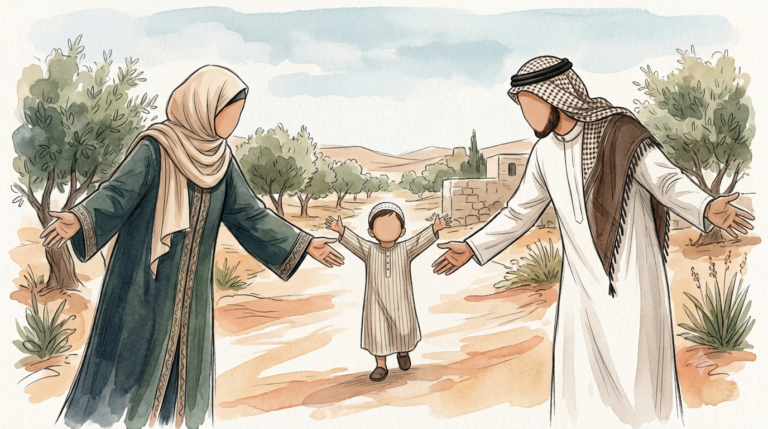
What greater comfort could there be? The child does not abandon their parents. Rather, the ḥadīth describes the child taking hold of his parent’s garment or hand and not letting go until Allah admits them into Paradise.
The Reward for Patience
Allah , the Most High, said:
إِنَّمَا يُوَفَّى الصَّابِرُونَ أَجْرَهُم بِغَيْرِ حِسَابٍ
“Only those who are patient shall receive their rewards in full, without reckoning.” [Q 39:10, excerpt]
And He said:
وَبَشِّرِ الصَّابِرِينَ الَّذِينَ إِذَا أَصَابَتْهُم مُّصِيبَةٌ قَالُوا إِنَّا لِلَّهِ وَإِنَّا إِلَيْهِ رَاجِعُونَ
“And give glad tidings to the patient, who, when afflicted with calamity, say: ‘Truly, to Allah we belong and unto Him is our return.’” [Q 2:155–156, beginning at the end of verse 155]
Muḥammad ibn Abī Bakr ibn Qayyim al-Jawziyyah (d. 751 AH/1350 CE), may Allah have mercy upon him, said:
“If the veil were lifted and a person could see the reward prepared for him through his calamity, he would wish that the calamity had been greater.”
The believer therefore strives to remember that every tear shed in patience is recorded. Every moment of grief endured for Allah’s sake is rewarded. Every longing for the child is known by Allah.
Advice from the Scholars
Shaykh Muḥammad ibn Ṣāliḥ al-ʿUthaymīn (d. 1421 AH/2001 CE), may Allah have mercy upon him, said:
“Indeed, when a person has young children who die before reaching the age of accountability, meaning before reaching maturity, they become a shield for him from the Fire by virtue of his mercy towards them. This is because these young children are objects of mercy. When children grow older, they become independent and their parent does not have the same degree of mercy towards them as the mercy he has towards young children.
Therefore, if a person has young children who die, and he seeks the reward from Allah, and they are three in number, then they become a shield for him from the Fire, such that the Fire will not touch him except as a fulfilment of the oath. What is meant by ‘the fulfilment of the oath’ is the statement of Allah, the Most High: ” [Ibn ʿUthaymīn, Sharḥ Riyāḍ aṣ-Ṣāliḥīn min Kalām Sayyid al-Mursalīn, vol. 4, p. 575.]
Allah says:
وَإِن مِّنكُمْ إِلَّا وَارِدُهَا ۚ كَانَ عَلَىٰ رَبِّكَ حَتْمًۭا مَّقْضِيًّۭا
ثُمَّ نُنَجِّى ٱلَّذِينَ ٱتَّقَوا۟ وَّنَذَرُ ٱلظَّـٰلِمِينَ فِيهَا جِثِيًّۭا
“There is none of you except that he will pass over it. This is upon your Lord a decree which must be fulfilled. Then We shall save those who feared Allah and leave the wrongdoers therein on their knees.” [Q 19:71–72]
This meaning is supported by the authentic narrations concerning the immense reward promised to those who patiently endure the loss of their children.
Shaykh Ṣāliḥ al-Fawzān
“The believer meets calamities with patience and hope for reward. He knows that what Allah chooses for him is better than what he chooses for himself.”
This is the attitude of the believer when confronted with a decree that is painful and difficult to understand. He knows that Allah is the Most Wise and that His decree contains wisdom, even when that wisdom is hidden from him.
Shaykh ʿAbd ar-Razzāq al-Badr
In his explanation of al-Adab al-Mufrad, under the chapter “The Virtue of One Whose Child Dies” (Faḍl man Māta lahu al-Walad), Shaykh ʿAbd ar-Razzāq ibn ʿAbd al-Muḥsin al-Badr, may Allah preserve him, says, after mentioning the narrations concerning the death of children:
“In these narrations there is that which cools and brings relief to the chest of the afflicted person and brings comfort to his eyes, because of what has come in these tremendous narrations indicating the immense reward of the one who seeks his reward from Allah, the Most High, for the loss of his child.” [Al-Badr, Sharḥ al-Adab al-Mufrad, lesson 19.]
He then mentions that Muḥammad ibn ʿAbd Allah ibn Nāṣir ad-Dīn ad-Dimashqī (d. 842 AH/1438 CE), may Allah have mercy upon him, authored a beneficial work on this subject entitled Bard al-Akbād bi-Faqd al-Awlād (“Cooling the Hearts upon the Loss of Children”), which he describes as a valuable work gathering the texts concerning this trial.
He also explains the meaning of iḥtisāb, saying that when a person suffers the loss of a loved one, he should believe that the calamity was decreed by Allah and then remain patient, be pleased with Allah’s decree, and seek the reward for it from Allah . He connects this directly to Allah’s statement:
وَبَشِّرِ الصَّابِرِينَ
“And give glad tidings to the patient.” [Q 2:155, excerpt]
He further explains that a person achieves iḥtisāb by remembering these meanings, having firm belief in Allah’s decree, and understanding the meaning of:
إِنَّا لِلَّهِ وَإِنَّا إِلَيْهِ رَاجِعُونَ
“Indeed, we belong to Allah, and indeed to Him we shall return.” [Q 2:156, excerpt]
His explanation emphasises that the loss of a child, although profoundly painful, can become a tremendous source of reward when the believer responds with patience and seeks the reward of Allah .
Your Reunion Is Not Lost
The believer’s separation from a child is temporary. This worldly life is brief. Its years pass quickly. The child who died upon the fiṭrah has not disappeared into nothingness. Rather, he or she has merely gone ahead. The believer therefore does not say farewell forever.
Rather, they say:
إِنَّا لِلَّهِ وَإِنَّا إِلَيْهِ رَاجِعُونَ
“Indeed, we belong to Allah, and indeed to Him we shall return.” [Q 2:156, excerpt]
And they hope for the day when Allah gathers them once again in a place where there is no death, no sickness, no separation, and no grief.
Conclusion
If you have lost a child, know that Allah sees your tears and hears your supplications. Know that the Messenger of Allah himself experienced this pain. Know that patience does not mean the absence of grief. Know that your child, by Allah’s permission, is safe and cared for. Know that the authentic texts give the bereaved parent glad tidings of reunion and immense reward. Know that the ḥadīth describes the child taking hold of the parent and not letting go until Allah admits them into Paradise.
So be patient. Seek reward from Allah . Continue to make duʿāʾ. Continue to worship your Lord. Hold firmly to the promise of Allah , for Allah never breaks His promise.
May Allah grant patience to every grieving parent, forgive their sins, unite them with their children in the highest levels of Paradise, and make every calamity a means of drawing them nearer to Him. Āmīn.
References
The Noble Qurʾān. Translation of the meanings by Muḥammad Muḥsin Khān and Muḥammad Taqī ad-Dīn al-Hilālī. Madīnah: King Fahd Complex for the Printing of the Holy Qurʾān.
Al-Albānī, Muḥammad Nāṣir ad-Dīn (d. 1420 AH/1999 CE), Silsilat al-Hudā wa-n-Nūr, cassette 16.
Al-Badr, ʿAbd ar-Razzāq (n.d.), Sharḥ al-Adab al-Mufrad, lesson 19, chapter: Faḍl man Māta lahu al-Walad.
Al-Bukhārī, Muḥammad ibn Ismāʿīl (d. 256 AH/870 CE) (2002), Ṣaḥīḥ al-Bukhārī. Riyadh: Dārussalām, ḥadīth nos. 1303 and 6424.
Ibn al-Qayyim al-Jawziyyah, Muḥammad ibn Abī Bakr (d. 751 AH/1350 CE) (2008), Ṭarīq al-Hijratayn wa-Bāb as-Saʿādatayn. Edited by Muḥammad Ajmal al-Iṣlāḥī; aḥādīth referenced by Zāʾid ibn Aḥmad an-Nashīrī. Makkah: Dār ʿĀlam al-Fawāʾid.
Ibn Bāz, ʿAbd al-ʿAzīz ibn ʿAbd Allah (d. 1420 AH/1999 CE), Majmūʿ Fatāwā wa-Maqālāt ash-Shaykh ʿAbd al-ʿAzīz ibn Bāz, vol. 4, p. 210.
Ibn Nāṣir ad-Dīn ad-Dimashqī, Muḥammad ibn ʿAbd Allah (d. 842 AH/1438 CE) (1997), Bard al-Akbād ʿinda Faqd al-Awlād. Edited and annotated by Abū ʿUbaydah Mashhūr ibn Ḥasan Āl Salmān. 1st edn. Dammām: Dār Ibn ʿAffān.
Ibn ʿUthaymīn, Muḥammad ibn Ṣāliḥ (d. 1421 AH/2001 CE) (2005), Sharḥ Riyāḍ aṣ-Ṣāliḥīn min Kalām Sayyid al-Mursalīn. Riyadh: Dār al-Waṭan li-n-Nashr, vol. 4, p. 575.
Muslim, ibn al-Ḥajjāj (d. 261 AH/875 CE) (2007), Ṣaḥīḥ Muslim. Riyadh: Dārussalām, ḥadīth nos. 2315 and 2635.
An-Nasāʾī, Aḥmad ibn Shuʿayb (d. 303 AH/915 CE) (2007), Sunan an-Nasāʾī. Riyadh: Dārussalām, ḥadīth no. 2088. Authenticated by Muḥammad Nāṣir ad-Dīn al-Albānī in Ṣaḥīḥ Sunan an-Nasāʾī.