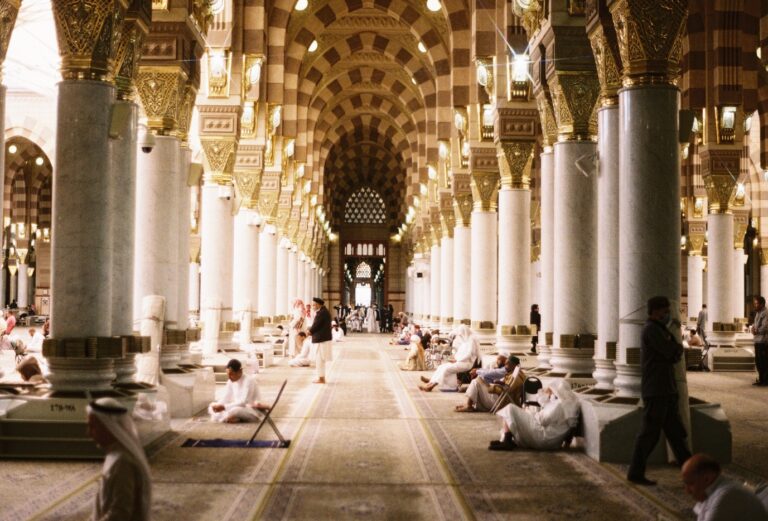

In the earliest period of Islam, imprisonment did not necessarily mean confinement within a purpose-built prison. The jurists explained that al-ḥabs ash-sharʿī, legal detention, originally referred more broadly to restraining a person and preventing him from acting freely, whether he was kept in a house, a mosque, or placed under supervision. This was the form of detention known during the time of the Prophet and Abū Bakr. It was only later, during the caliphate of ʿUmar ibn al-Khaṭṭāb, that a specific premises was acquired for use as a prison, marking an important development in the administration of legal detention in the early Muslim community.
What is meant by “legal detention” (al-ḥabs al-sharʿī), and what was imprisonment like during the time of ʿUmar ibn al-Khaṭṭāb? (1/295)
Al-Māwardī (d. 450 AH/1058 CE) said: legal imprisonment is not a confined physical place. Rather, it is the restraint of a person and preventing him from acting freely, whether this takes place in a house or in a mosque. The very opposing party, or his agent, could be tasked with overseeing him and keeping him under watch. It is for this reason that the Prophet named a captive from the tribe of Banū Tamīm in the ḥadīth: “O brother of Banū Tamīm, do as you wish with your captive.” This was the manner in which imprisonment was conducted in the time of the Prophet and of Abū Bakr.
Ibn al-Qayyim (d. 751 AH/1350 CE) said likewise in aṭ-Ṭuruq al-Ḥukmiyyah (p. 148). As for designating a specific location for this purpose, this did not occur except in the time of ʿUmar. ʿUmar imprisoned al-Ḥuṭayʾah in a well, and after that, ʿUmar purchased the house of Ṣafwān ibn Umayyah, which was thereafter named Dār as-Sijn (“the House of Imprisonment”)
Al-ʿAynī (d. 855 AH/1451 CE) said: the prisons were, at first, mere wells, and the first of the Banū ʿAlī ibn Abī Ṭālib to designate a location purposefully intended for this purpose…
Al-Māwardī said: as for the imprisonment which exists now, it is not permissible for anyone among the Muslims to practise, because it involves gathering a great many people together in a cramped space where they are unable to perform wuḍūʾ or pray properly. Indeed, some of them may even find their nakedness exposed, whilst their food is provided to them by others, exposed to both the cold and the heat.
This serves as a response to the Khawārij and others who claim that the very existence of a prison system is somehow un-Islamic. The historical evidence demonstrates otherwise: lawful imprisonment and detention have a recognised basis within Islam. The distinction must therefore be made between imprisonment itself and the oppressive practices found within some modern prison systems. Injustice, abuse, humiliation and the violation of a prisoner’s rights are condemned, but this does not render the institution of lawful detention itself contrary to the Sharīʿah.
Reference
Al-Māwardī, ʿAlī ibn Muḥammad (d. 450 AH/1058 CE), cited work on judicial rulings, 1/295.
Ibn al-Qayyim al-Jawziyyah, Muḥammad ibn Abī Bakr (d. 751 AH/1350 CE), aṭ-Ṭuruq al-Ḥukmiyyah fī as-Siyāsah ash-Sharʿiyyah, p. 148.
Al-ʿAynī, Badr ad-Dīn Maḥmūd ibn Aḥmad (d. 855 AH/1451 CE), cited commentary.