
Seeking and Teaching Knowledge
Videos
Seeking and Teaching Knowledge
Seeking and Teaching Knowledge
Youtubers & Islamic Influencers Opening Up Big Books! | Shamsi Speakers Corner
Seeking and Teaching Knowledge
How to Seek Authentic Islamic Knowledge | Speakers Corner
Seeking and Teaching Knowledge
What Books Should I Read ?
Seeking and Teaching Knowledge
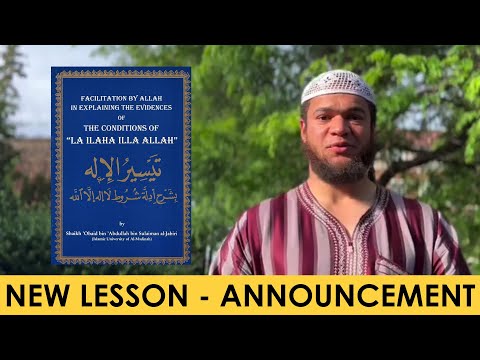
NEW LESSON – ANNOUNCEMENT

Seeking and Teaching Knowledge
This Knowledge Is Deen | Shamsi
Seeking and Teaching Knowledge
Islamic Knowledge and the Importance of Seeking it | Shamsi
Seeking and Teaching Knowledge
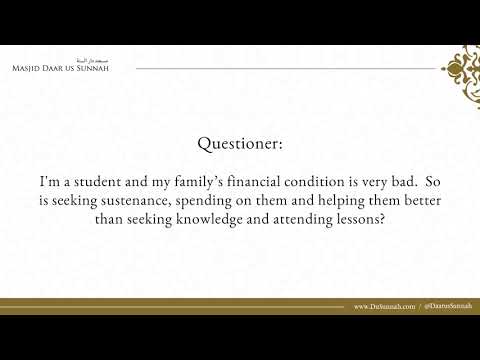
Should I Quit Studies to Support My Family?
A student asks Shaykh Salih al-Fawzan if he should leave his studies to support his poor family. The Shaykh says it is better to seek income for the family when needed. But if possible, one should try to balance both work and education.
Seeking and Teaching Knowledge
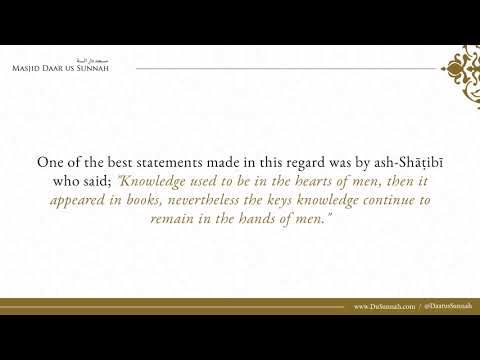
Books Alone Are Not Enough
Shaykh Salih Aal-Shaykh explains that studying books should be done gradually and under a knowledgeable scholar. Books contain guidance, but understanding them correctly requires a teacher who can explain unclear parts. Without this, people may misunderstand and spread wrong ideas.
Seeking and Teaching Knowledge
Which Fiqh Book Should a Student Study First?
There is no single fiqh book that every student must begin with. The student should study a book with a Sunni scholar who addresses questions and proofs. Foundational works include the Sunan collections and books of legal traditions. Learning the local school’s fiqh with a qualified teacher is also recommended.
Seeking and Teaching Knowledge
Books for Beginners in Knowledge
Shaykh Muhammad al-Jami outlines the essential books a new student should begin with, covering ʿaqīdah, tafsīr, ḥadīth, and fiqh. He emphasizes memorization, studying with scholars, and gradually advancing from fundamentals to more detailed works.
Seeking and Teaching Knowledge
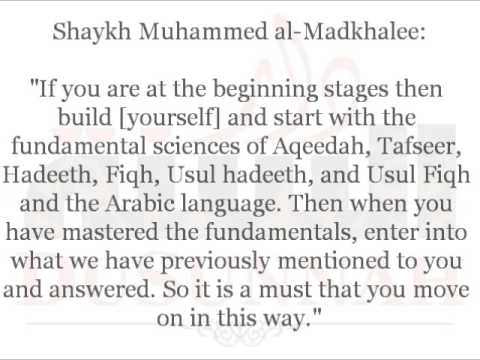
How Should a New Student Start Seeking Knowledge?
Shaykh Muhammad al-Madkhali advises beginners to start with the fundamental sciences: Aqeedah, Tafsir, Hadith, Fiqh, Usul al-Fiqh, Usul al-Hadith, and the Arabic language. Once these are mastered, they can move on to advanced studies in stages.