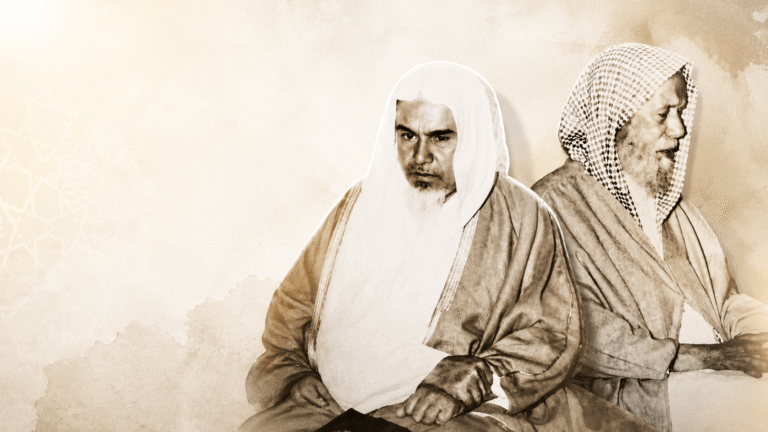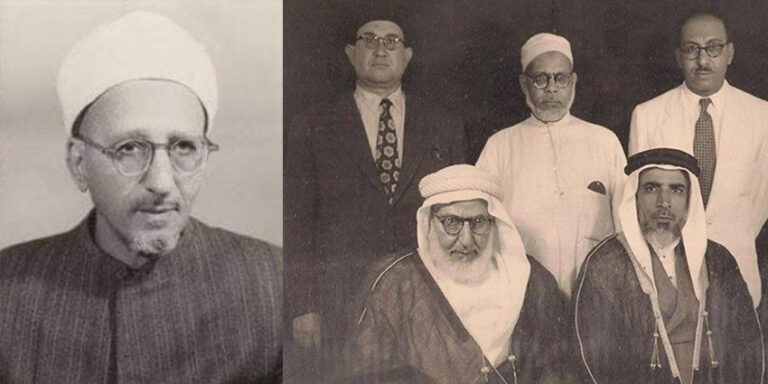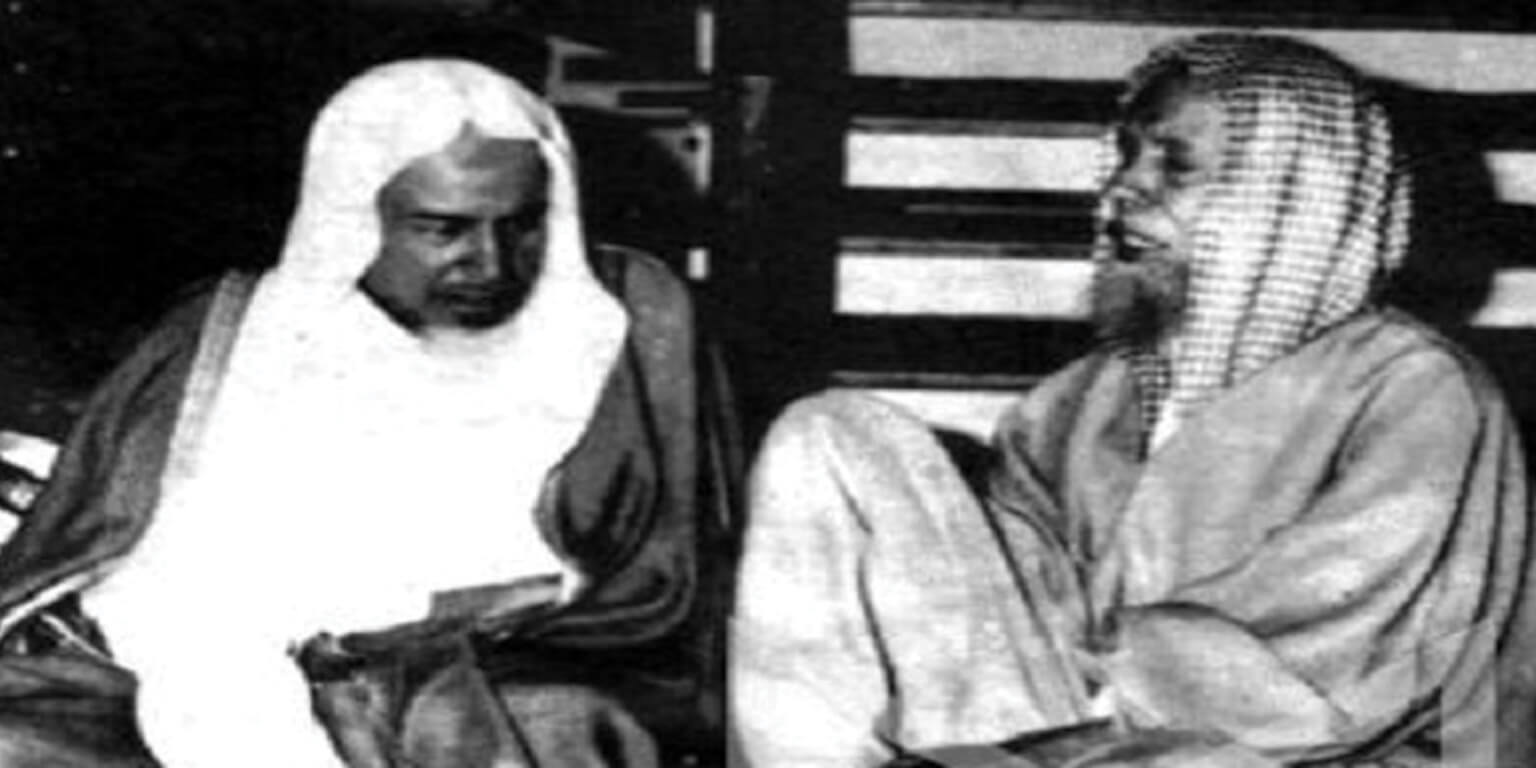
His Name and Lineage
He was the prominent hadith scholar, renowned linguist, distinguished writer, prolific poet and widely travelled Moroccan scholar, Shaykh Dr Muḥammad at-Taqī ibn ʿAbd al-Qādir al-Hilālī ؒ (d. 1407 AH / 1987 CE), better known as Muḥammad Taqī ad-Dīn. His kunyah was Abū Shakīb: he named his firstborn son Shakīb after his close friend, Amīr Shakīb Arslān.
The matching Arabic biography reports his lineage as: Muḥammad Taqī ad-Dīn ibn ʿAbd al-Qādir ibn aṭ-Ṭayyib ibn Aḥmad ibn ʿAbd al-Qādir ibn Muḥammad ibn ʿAbd al-Nūr ibn ʿAbd al-Qādir ibn Hilāl ibn Muḥammad ibn Hilāl ibn Idrīs ibn Ghālib ibn Muḥammad al-Makkī ibn Ismāʿīl ibn Aḥmad ibn Muḥammad ibn Abī al-Qāsim ibn ʿAlī ibn ʿAbd al-Qawī ibn ʿAbd al-Raḥmān ibn Idrīs ibn Ismāʿīl ibn Sulaymān ibn Mūsā al-Kāẓim ibn Jaʿfar aṣ-Ṣādiq ibn Muḥammad al-Bāqir ibn ʿAlī Zayn al-ʿĀbidīn ibn al-Ḥusayn ibn ʿAlī ibn Abī Ṭālib and Fāṭimah, the daughter of the Messenger of Allah .
The biography states that Sulṭān al-Ḥasan I confirmed this lineage when he visited Sijilmāsa in 1311 AH. A fuller lineage printed in the introduction to Sabīl ar-Rashād inserts Muḥammad, known as Bābā, and another ʿAbd al-Qādir between his father ʿAbd al-Qādir and Aṭ-Ṭayyib.
The Shaykh was born in the year 1311 AH (1893 CE) in a village known as al-Farkh, also referred to as al-Fayḍah al-Qadīmah, located just a few miles from Rissani, one of the desert cities of Sijilmāsa, in what is today known as Tāfilālt, situated in the south of the Kingdom of Morocco.
He grew up in a household of knowledge and understanding, as both his father and grandfather were jurists of that region.
His Scholarly Journey
He recited the Qurʾān under his father and memorised it at the age of twelve. He then perfected his recitation with the Shaykh and Qurʾān reciter Aḥmad ibn Ṣāliḥ. Thereafter, he studied extensively with Shaykh Muḥammad Sīdī ibn Ḥabīb Allah at-Tandaghī ash-Shinqīṭī, beginning his studies with him by memorising the Mālikī text Mukhtaṣar Khalīl. He also read under him in the sciences of the Arabic language and Mālikī jurisprudence until the Shaykh permitted him to teach on his behalf during his absence.
After the death of his teacher, he devoted himself to seeking knowledge from the scholars of Oujda and Fez, eventually obtaining a certificate from al-Qarawiyyīn in Fez.
He then travelled to Cairo to pursue the Sunnah of the purified Messenger of Allah . There he met a number of scholars, among them Shaykh ʿAbd aẓ-Ẓāhir Abū as-Samḥ, Shaykh Muḥammad Rashīd Riḍā, and Shaykh Muḥammad ar-Ramālī, as well as others. He also attended the lessons of the advanced studies department at al-Azhar University and remained in Egypt for one year, calling to the creed of the Salaf and combating polytheism and heresy.
After performing the Ḥajj, he travelled to India in pursuit of the science of ḥadīth. There he met prominent scholars and benefitted them just as they benefitted him. Among the most notable of those he met was the prodigious ḥadīth scholar Shaykh ʿAbd ar-Raḥmān ibn ʿAbd ar-Raḥīm al-Mubārakfūrī, the author of Tuḥfat al-Aḥwadhī bi Sharḥ Jāmiʿ at-Tirmidhī. Shaykh al-Hilālī studied ḥadīth under him, received an ijāzah from him, and was honoured with a commendatory poem encouraging students of knowledge to adhere to ḥadīth and benefit from the aforementioned commentary. This poem was published in the fourth volume of the Indian edition of Tuḥfat al-Aḥwadhī bi Sharḥ Jāmiʿ at-Tirmidhī.
He also stayed with Shaykh Muḥammad ibn Ḥusayn ibn Muḥsin al-Ḥadīdī al-Anṣārī al-Yamānī, who had settled in India at that time. Shaykh al-Hilālī read portions of the six canonical books of ḥadīth under him and likewise received an ijāzah from him.
From India, he travelled to az-Zubayr near Basra in Iraq, where he met the discerning Salafī Mauritanian scholar Shaykh Muḥammad al-Amīn ash-Shinqīṭī, founder of the an-Najāh private school in az-Zubayr. He should not be confused with the later exegete and author of Aḍwāʾ al-Bayān. Shaykh al-Hilālī benefitted from him and remained in Iraq for approximately three years.
He then travelled to Saudi Arabia, passing through Egypt, where Shaykh Muḥammad Rashīd Riḍā gave him a letter of recommendation addressed to King ʿAbd al-ʿAzīz Āl Saʿūd, in which he wrote:
إن محمدا تقي الدين الهلالي المغربي أفضل من جاءكم من علماء الآفاق، فأرجو أن تستفيدوا من علمه
“Muḥammad Taqī ad-Dīn al-Hilālī al-Maghribī is the best of the scholars from other lands who have come to you. I hope you will benefit from his knowledge.” (Recommendation attributed to Muḥammad Rashīd Riḍā in the matching Arabic biography; the original letter has not been collated.)
Shaykh al-Hilālī remained a guest of King ʿAbd al-ʿAzīz for several months before being appointed supervisor of teaching at the Prophetic Mosque in Madinah, where he remained for two years. He then transferred to the Sacred Mosque and the Saudi Educational Institute in Makkah, where he remained for one year. Thereafter, he received letters from Indonesia and India inviting him to teach in their respective institutions.
He decided to accept the invitation of Sulaymān an-Nadawī, hoping also to pursue further university studies in India. He became head of the professors of Arabic literature at Nadwat al-ʿUlamāʾ in Lucknow, where he remained for three years. During this period, he studied the English language, though he was unable to pursue further university studies. At the suggestion of Sulaymān an-Nadawī, he published the journal al-Ḍiyāʾ, assisted by his student Masʿūd ʿĀlam an-Nadawī.
He later returned to az-Zubayr, where he remained for three years teaching at the an-Najāh private school. Thereafter, he travelled to Geneva, Switzerland, where he stayed with his close friend Shakīb Arslān, known as Amīr al-Bayān. Shaykh al-Hilālī wished to study at a British university but was unable to do so. Shakīb Arslān therefore wrote to one of his contacts in the German Ministry of Foreign Affairs, stating:
عندي شاب مغربي أديب ما دخل ألمانيا مثله، وهو يريد أن يدرس في إحدى الجامعات، فعسى أن تجدوا له مكانا لتدريس الأدب العربي براتب يستعين به على الدراسة
“I have with me a young Moroccan man of letters, the like of whom has never entered Germany. He wishes to study at one of its universities. Perhaps you can find him a position teaching Arabic literature, with a salary to help him study.” (Letter attributed to Shakīb Arslān in the matching Arabic biography; original letter uncollated.)
The response came swiftly, granting acceptance. Shaykh al-Hilālī travelled to Germany and was appointed lecturer at the University of Bonn. There, he learned German and obtained a language certificate after one year. He subsequently enrolled as a student while continuing to lecture and translated extensively to and from German. After three years, he transferred to the University of Berlin, then named Friedrich-Wilhelms-Universität and now Humboldt-Universität, serving as a student, lecturer, and supervisor of the Arabic radio station.
According to this biography, in 1940 CE, he presented his doctoral thesis addressing orientalist claims advanced by figures such as Martin Hartmann and Carl Brockelmann. The title of his dissertation was The Translation of the Introduction to al-Jamāhir fī Maʿrifat al-Jawāhir with commentary. A committee of ten scholars unanimously approved the awarding of a doctorate in Arabic literature.
Editorial Note: The year 1940 is the date reported in this biography. An archival catalogue at the Leibniz Centre for Modern Oriental Studies identifies his doctoral records as 1941. The submission and award dates have not been reconciled against the underlying university documents.
During the Second World War, Shaykh al-Hilālī returned to Morocco. In 1947 CE, he travelled to Iraq and taught at Queen ʿĀliyyah Women’s College in Baghdad until the military coup, after which he returned to Morocco in 1959 CE. During his stay in his ancestral homeland, he actively called to pure tawḥīd, the abandonment of polytheism, and adherence to the methodology of the righteous Salaf.
In that same year, he was appointed professor at Muḥammad V University in Rabat, and later taught at its branch in Fez. In 1968 CE, he received an invitation from Shaykh ʿAbd al-ʿAzīz ibn Bāz, then President of the Islamic University of Madinah, to serve as a professor there while remaining commissioned from Morocco. He accepted and remained in this position until 1974 CE, after which he returned to Meknes to devote himself fully to daʿwah. He continued teaching in mosques and travelling throughout Morocco, spreading the call of the righteous Salaf. He was also a regular contributor to the journals al-Fatḥ edited by Muḥibb ad-Dīn al-Khaṭīb and al-Manār edited by Muḥammad Rashīd Riḍā, may Allah have mercy upon them all.
His Teachers
Among his teachers were:
- Shaykh Muḥammad Sīdī ibn Ḥabīb Allah ash-Shinqīṭī
- Shaykh ʿAbd ar-Raḥmān ibn ʿAbd ar-Raḥīm al-Mubārakfūrī
- Shaykh Muḥammad al-ʿArabī al-ʿAlawī
- Shaykh al-Fāṭimī ash-Sharādī
- Shaykh Aḥmad Sukayrij
- Shaykh Muḥammad ibn Ḥusayn ibn Muḥsin al-Ḥadīdī al-Anṣārī al-Yamānī
- Shaykh Muḥammad al-Amīn ash-Shinqīṭī (not the exegete of Aḍwāʾ al-Bayān)
- Shaykh Muḥammad Rashīd Riḍā
- Shaykh Muḥammad ibn Ibrāhīm
- Scholars of al-Qarawiyyīn and al-Azhar
His Written Works
There are numerous works attributed to Shaykh Muḥammad Taqī ad-Dīn al-Hilālī, written across different periods and lands. Among them are:
- al-Zand al-Wārī wa-l-Badr al-Sārī fī Sharḥ Ṣaḥīḥ al-Bukhārī (vol. 1 only)
- al-Ilhām wa-l-Inʿām fī Tafsīr al-Anʿām
- Mukhtaṣar Hady al-Khalīl fī al-ʿAqāʾid wa ʿIbādat al-Jalīl
- al-Hadiyyah al-Hādiyah li-ṭ-Ṭāʾifah at-Tijāniyyah
- al-Qāḍī al-ʿAdl fī Ḥukm al-Bināʾ ʿalā al-Qubūr
- al-ʿIlm al-Maʾthūr wa-l-ʿIlm al-Mashhūr wa-l-Liwāʾ al-Manshūr fī Bidaʿ al-Qubūr
- Āl al-Bayt: Mā Lahum wa Mā ʿAlayhim
- Ḥāshiyah ʿalā Kitāb al-Tawḥīd li Shaykh al-Islām Muḥammad ibn ʿAbd al-Wahhāb
- Ḥāshiyah ʿalā Kashf al-Shubuhāt li Muḥammad ibn ʿAbd al-Wahhāb
- al-Ḥusām al-Māḥiq li Kulli Mushrik wa Munāfiq
- Dawāʾ ash-Shākkīn wa Qāmiʿ al-Mushakkikīn fī al-Radd ʿalā al-Mulḥidīn
- al-Barāhīn al-Injīliyyah ʿalā Anna ʿĪsā Dākhil fī al-ʿUbūdiyyah wa Barīʾ min al-Ulūhiyyah
- Fikāk al-Asīr al-ʿĀnī al-Makbūl bi-l-Kabl al-Tijānī
- Faḍl al-Kabīr al-Mutaʿālī (poetry)
- Asmāʾ Allah al-Ḥusnā (poem)
- Aṣ-Ṣubḥ as-Sāfir fī Ḥukm Ṣalāt al-Musāfir
- al-ʿUqūd al-Durriyyah fī Manʿ Taḥdīd adh-Dhurriyyah
- Ath-Thaqāfah allatī Naḥtāj Ilayhā (article)
- Taʿlīm al-Ināth wa Tarbiyyatihinna (article)
- Mā Waqaʿ fī al-Qurʾān bi Ghayr Lughah al-ʿArab (article)
- Akhlāq ash-Shabāb al-Muslim (article)
- Min Waḥy al-Andalus (poem)
His Death
The matching Arabic biography dates his death to Monday, 25 Shawwāl 1407 AH (22 June 1987 CE). On that day, the Muslim world was struck by a tremendous loss with the passing of Shaykh Muḥammad Taqī ad-Dīn al-Hilālī in his home in Casablanca, Morocco. His funeral rites were attended by vast numbers of people, beginning with scholars and including educated figures and politicians.
The Messenger of Allah said:
إِنَّ اللَّهَ لَا يَقْبِضُ الْعِلْمَ انْتِزَاعًا يَنْتَزِعُهُ مِنَ الْعِبَادِ، وَلَكِنْ يَقْبِضُ الْعِلْمَ بِقَبْضِ الْعُلَمَاءِ، حَتَّى إِذَا لَمْ يُبْقِ عَالِمًا اتَّخَذَ النَّاسُ رُءُوسًا جُهَّالًا، فَسُئِلُوا فَأَفْتَوْا بِغَيْرِ عِلْمٍ، فَضَلُّوا وَأَضَلُّوا
“Allah does not take away knowledge by removing it directly from the servants. Rather, He takes away knowledge by taking away the scholars, until, when no scholar remains, people take ignorant leaders. They are asked and give verdicts without knowledge, going astray and leading others astray.” (Ṣaḥīḥ al-Bukhārī, hadith 100.)
We ask Allah , the Ever Generous, to envelop the Shaykh in His vast mercy and admit him into the most spacious part of His Paradise.
The biographer reports that he was informed by a man who sat with Shaykh Muḥammad Taqī ad-Dīn al-Hilālī and whom the Shaykh visited at his home, al-Sayyid ʿAbd al-Ilāh ash-Sharqāwī ar-Rabāṭī, described as living in Morocco when the account was written, that the Shaykh’s paternal cousin, widely known in Morocco as “al-Hilālī”, informed him of the following:
During the final days of his life, Shaykh Muḥammad Taqī ad-Dīn al-Hilālī was ill and confined to his bed, unable to perform ablution. He therefore performed tayammum. He held that tayammum should be performed with earth rather than stone and kept a bag of earth at home for this purpose. If he was told to perform tayammum with rock, he would respond: “No, this is what the Messenger of Allah did,” meaning tayammum with pure earth.
On that day, he requested that his family bring him a container of water. They said to him that he was unable to perform ablution and should instead perform tayammum, but he insisted. They brought him a basin of water, and he performed ablution, prayed two units of prayer, then lay back in his bed and asked: “Which of you has the best recitation of the Qurʾān?”
One of them recited Sūrah Yā Sīn over him. He listened attentively until the recitation was complete, then asked the reciter to repeat the statement of Allah :
أَوَلَمْ يَرَ الْإِنسَانُ أَنَّا خَلَقْنَاهُ مِن نُّطْفَةٍ فَإِذَا هُوَ خَصِيمٌ مُّبِينٌ
“Does man not see that We created him from a drop of fluid, yet he becomes an open adversary?” [Q 36:77]
The reciter continued until he reached the statement of Allah :
وَضَرَبَ لَنَا مَثَلًا وَنَسِيَ خَلْقَهُ ۖ قَالَ مَن يُحْيِي الْعِظَامَ وَهِيَ رَمِيمٌ
“He presents an example for Us and forgets his own creation. He says, ‘Who will give life to the bones when they have decayed?’” [Q 36:78]
At that point, the Shaykh raised his index finger towards the sky, as if affirming that it is Allah Who gives life to bones after they have decayed. His soul then departed his body.
May Allah have immense mercy upon him and grant us and you a good end.
What Has Been Said About Him
Shaykh ʿAbd al-ʿAzīz ibn ʿAbd Allah ibn Bāz ؒ (d. 1420 AH / 1999 CE) recorded the following in his biographical notebook, Tuḥfat al-Ikhwān bi-Tarājim Baʿḍ al-Aʿyān:
توفي الشيخ العلامة الدكتور محمد تقي الدين بن عبد القادر الهلالي الحسني في الدار البيضاء في المغرب في يوم الثلاثاء الموافق 27 شوال 1407هـ، فرحمه الله رحمة واسعة، ورفع درجته في المهديين، وضاعف له الحسنات، وكفر عنا وعنه السيئات. وكان مولده رحمه الله في محرم من عام ألف وثلاثمائة وأحد عشر، أخبرني بذلك رحمه الله مشافهة، وبذلك يكون قد عاش سبعا وتسعين سنة إلا شهرين وأياما، وكان عالما فاضلا، باذلا وسعه في الدعوة إلى الله سبحانه أينما كان، وقد طوف في كثير من البلاد، وقام بالدعوة إلى الله سبحانه في أوربا مدة من الزمن، وفي الهند، وفي الجزيرة العربية، ودرس في الجامعة الإسلامية بالمدينة المنورة، وله مؤلفات منها: «الهدية الهادية للفرقة التجانية». وكان أول حياته تجانيا، ثم خلصه الله منها، ورد على أهلها، وكشف عوارها، ومن مؤلفاته الأخيرة: «سبيل الرشاد». وقد خلف ابنين وبنتين أو ثلاثا، وفقهم الله، وأصلح حالهم، وجبر مصيبتهم، وقد صلى عليه جم غفير، ودفن في مقبرة الدار البيضاء، جمعنا الله به في دار الكرامة، وخلفه على المسلمين بأحسن الخلف، إنه جواد كريم.
“The eminent scholar, Dr Muḥammad Taqī ad-Dīn ibn ʿAbd al-Qādir al-Hilālī al-Ḥasanī, died in Casablanca, Morocco, on Tuesday, 27 Shawwāl 1407 AH. May Allah grant him abundant mercy, raise his rank among the rightly guided, multiply his good deeds, and expiate our sins and his. He was born in Muḥarram 1311 AH, as he personally told me, and thus lived ninety-seven years less two months and some days. He was a virtuous scholar who devoted his utmost effort to calling to Allah wherever he was. He travelled through many countries, calling to Allah in Europe for a time, in India and in the Arabian Peninsula. He taught at the Islamic University of Madinah and wrote works including Al-Hadiyyah al-Hādiyah li-l-Firqah at-Tijāniyyah. Early in his life he belonged to the Tijāniyyah, then Allah freed him from it. He refuted its adherents and exposed its defects. Among his final works was Sabīl ar-Rashād. He left two sons and two or three daughters: may Allah grant them success, put their affairs right, and console them in their bereavement. A great multitude prayed over him, and he was buried in the cemetery of Casablanca. May Allah unite us with him in the abode of honour and grant the Muslims the best successor to him. Indeed, He is Most Generous.” (Mukhtaṣar Tuḥfat al-Ikhwān, pp. 65–66; note originally dated 22 Dhū al-Qaʿdah 1407 AH.)
Translator’s Notes
On ijāzah:
“The term ijāzah is derived from the expression jawwāz al-māʾ, which means to grant access to water in order for grazing sheep to drink from it. And it is said, ‘I sought permission from him for water and he gave it to me’ (astajaztuhu fa-ajāzanī), if you are given water for your flock or land. And in this way the student of knowledge seeks the ijāzah of the scholar regarding his knowledge, and in this way it is granted to him. [See Ibn Fāris.] It is also said that the ijāzah is permission. [See Ibn Jamāʿah.] And the example of this is when the scholar says to one of his students, ‘I have given you permission (an ijāzah) to narrate from me such and such.’ [See Tadrīb ar-Rāwī.]” (Qāmūs Muṣṭalaḥāt al-Ḥadīth an-Nabawī, supplied p. 16.)
On the Tijāniyyah: “…a Ṣūfī ṭarīḳa which was founded by Aḥmad al-Tidjānī [q.v.] in the oasis of Abī Samghūn in Algeria in 1196/1781-2. Aḥmad al-Tidjānī settled in Fas in 1789, where he developed a local following and initiated into his ṭarīḳa Muslims from other parts of the Maghrib and West Africa, through whom it spread in these regions.” (Brill Encyclopaedia of Islam, supplied 10:464)
On Sabīl ar-Rashād: Sabīl ar-Rashād fī Hady Khayr al-ʿIbād.
References
The Noble Qurʾān, 36:77–78. The first verse in the death account was incorrectly given as 36:37 in the original article; the matching Arabic account specifies 36:77.
ʿAbd al-ʿAzīz ibn Bāz, Tuḥfat al-Ikhwān bi-Tarājim Baʿḍ al-Aʿyān, supplied reference pp. 69–71, edition unidentified. The obituary was collated against Mukhtaṣar Tuḥfat al-Ikhwān, first edition, 1447 AH / 2025 CE, pp. 65–66 (PDF 66–67); publisher and abridger’s full name not established here. The title variant is also visible in the 2011 extract.
Brill Encyclopaedia of Islam, 10:464
Humboldt-Universität, institutional history, names Friedrich-Wilhelms-Universität before 1949 and Humboldt-Universität from 1949.
Leibniz Centre for Modern Oriental Studies, archival catalogue entry Akten zur Promotion Taqī-ad-Dīn al-Hilālīs (1941), reference 121043. The underlying university documents have not been read here.
Matching Arabic biography and secondhand death account, republished by ʿAqīdat al-Muslim.
Muḥammad ibn Ismāʿīl al-Bukhārī ؒ (d. 256 AH / 870 CE), Ṣaḥīḥ al-Bukhārī, hadith 100, knowledge being taken away through scholars’ deaths.
Muḥammad Taqī ad-Dīn al-Hilālī, Sabīl ar-Rashād fī Hady Khayr al-ʿIbād, with introduction and annotations by Abū ʿUbaydah Mashhūr ibn Ḥasan Āl Salmān, Ad-Dār al-Athariyyah, first edition, 1427 AH / 2006 CE, vol. 1, scanned source. The fuller lineage differs from the shorter one copied in the article; the entire introduction and all the listed works’ print editions have not been collated.
Nūr ad-Dīn Shūbid, biography of Al-Hilālī, Ar-Rābiṭah al-Muḥammadiyyah li-l-ʿUlamāʾ, institutional account supporting the reported Monday death date and distinguishing the al-Qarawiyyīn certificate from a modern university degree.
Qāmūs Muṣṭalaḥāt al-Ḥadīth an-Nabawī, p. 16