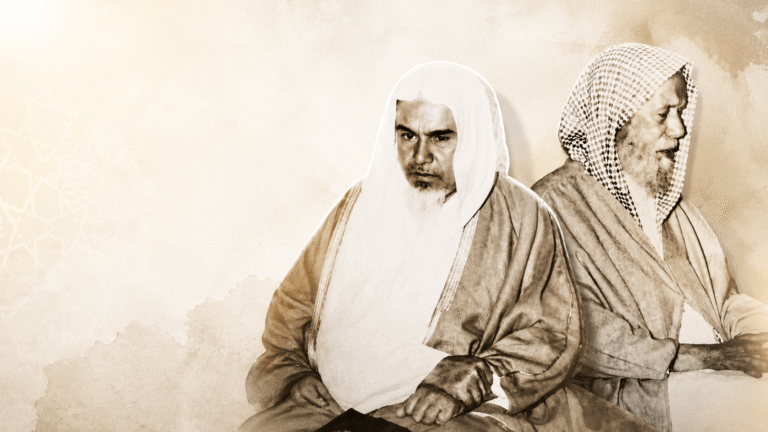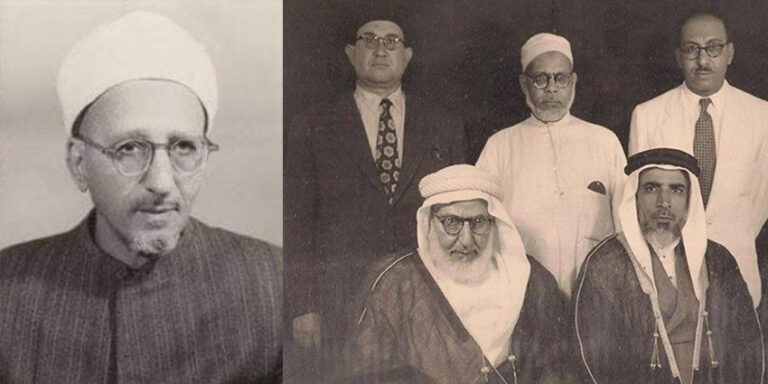
This biography was written by Muṣṭafā ibn ʿAbd al-Qādir al-Fulānī on 5 Rabīʿ al-Awwal 1419 AH (1998 CE). The posts and prayers it records reflect that historical account.
Name and Date of Birth
The subject of this biography is Shaykh Abū Aḥmad Muḥammad Amān ibn ʿAlī al-Jāmī (d. 1416 AH / 1996 CE). According to the biographer, his official documents give his birth year as 1349 AH (1930–1931 CE). The printed text gives the fuller personal name as Muḥammad Amān ibn ʿAlī Jāmī ʿAlī.
His Pursuit of Knowledge
The Shaykh is considered from those who migrated towards Allah and His Messenger and he began his pursuit of knowledge in the Sacred Mosque [al-Masjid al-Ḥarām] in the circles of knowledge that were established throughout its spacious corridors. He benefitted from the noble Shaykh ʿAbd ar-Razzāq Ḥamzah, the noble Shaykh ʿAbd al-Ḥaqq al-Hāshimī and the noble Shaykh ʿAbd Allah aṣ-Ṣūmālī and other than them from 1369 AH (1949–1950 CE), as confirmed by the second printed version of the biography. The collected-volume printing gives 1396 AH, apparently a transposition; this discrepancy is noted in the references.
In Mecca, he became familiar with the esteemed Shaykh ʿAbd al-ʿAzīz ibn Bāz and accompanied him to Riyadh in the year that the educational institute opened (al-Maʿhad al-ʿIlmī) which was in the early 1370s AH.
And from amongst his colleagues, from those who studied with him in secondary school at the educational institute (al-Maʿhad al-ʿIlmī) was the noble Shaykh and prominent scholar of ours ʿAbd al-Muḥsin ibn Ḥamad al-ʿAbbād al-Badr, and the noble Shaykh ʿAlī ibn Muhannā – formerly an appeal judge at the major Sharīʿah court in al-Madīnah al-Munawwarah, just as he would also regularly attend the various circles of knowledge in the capital of Saudi Arabia.
He benefitted and was greatly influenced by the esteemed Muftī Shaykh Muḥammad ibn Ibrāhīm Āl ash-Shaykh who was a distinguished jurist and a scholar well versed in the fundamentals of Islamic jurisprudence. He also studied consistently with the noble Shaykh ʿAbd ar-Raḥmān al-Ifrīqī just as he also studied intensively under the esteemed Shaykh ʿAbd al-ʿAzīz ibn Bāz, until he acquired a significant amount of his knowledge and noble manners. He also sought knowledge in Riyadh from the noble and esteemed Shaykh Muḥammad al-Amīn al-Jaknī ash-Shanqīṭī, the noble Shaykh and esteemed scholar of ḥadīth, Ḥammād al-Anṣārī and the noble Shaykh and esteemed scholar ʿAbd ar-Razzāq al-ʿAfīfī.
The subject of this biography was greatly influenced by Shaykh ʿAbd ar-Razzāq al-ʿAfīfī to the extent that even his teaching style was affected. He similarly benefitted from and was influenced by the noble Shaykh and esteemed scholar ʿAbd ar-Raḥmān ibn Nāṣir as-Saʿdī with whom he would often write even though he did not formally study under him as he did with the noble Shaykh and esteemed scholar Muḥammad Khalīl Harrās who also influenced him. He also benefitted from the noble Shaykh and distinguished caller ʿAbd Allah al-Qaraʿāwī.
His Academic Credentials and Education
- He completed secondary school at the educational institute (al-Maʿhad al-ʿIlmī) in Riyadh.
- Then he enrolled in the College of Sharīʿah from which he would graduate in the year 1380 AH (1960–1961 CE).
- Then he received a master’s equivalency in Sharīʿah in 1974 CE. The existing English identifies the institution as the University of Punjab; the printed Arabic name remains unclear and requires collation.
- Then he received his doctorate from Dār al-ʿUlūm in Cairo.
His Station with Regards to His Knowledge and the Praise of the Scholars for Him
The Shaykh occupied a lofty station amongst the people of knowledge and distinction since they spoke highly of him and was considered trustworthy by them. In fact, the level of trust concerning his knowledge and creed was so great that while he was still a student in Riyadh, and due to what his Shaykh ʿAbd al-ʿAzīz ibn Bāz saw from him in terms of his proficiency and seriousness in seeking knowledge; he introduced him to his excellency Shaykh Muḥammad ibn Ibrāhīm [Āl ash-Shaykh] in order to draft a contract with him to teach in the educational institute (al-Maʿhad al-ʿIlmī) in Ṣāmiṭah, which was located in the region of Jāzān.
Likewise from the indicators of the sense of trust that exists regarding his knowledge and creed and his station amongst the people of knowledge, is that after the Islamic University was opened in the city of Madīnah, he was soon after appointed as teacher, being specifically selected by his Excellency ʿAbd al-ʿAzīz ibn Bāz. And it is well-known that the Islamic University of Madīnah was founded in order to spread the Salafī creed and that the University had designated Shaykh Muḥammad Amān al-Jāmī to teach in the secondary school associated with the University, and then in the College of Sharīʿah with complete confidence in his creed, knowledge and methodology in order for him to take part in fulfilling the goals of the University.
So before you, dear reader, are the statements of those who have praised and commended our noble Shaykh Muḥammad Amān al-Jāmī in their writings:
In the correspondence of his Excellency, the Grand Muftī of the Kingdom of Saudi Arabia [ʿAbd al-ʿAzīz ibn Bāz] said about the Shaykh Muḥammad Amān [number 64 on the ninth of Muḥarram 1418]:
معروف لدي بالعلم، والفضل، وحسن العقيدة، والنشاط في الدعوة إلى الله سبحانه، والتحذير من البدع والخرافات، غفر الله له، وأسكنه فسيح جناته، وأصلح ذريته، وجمعنا وإياكم وإياه في دار كرامته، إنه سميع قريب.
“He is well known to me in terms of his knowledge, prominence and sound creed in addition to his efforts in calling to Allah and warning against religious innovations and superstitions. May Allah forgive him and cause him to reside in the widest expanses of His Paradise. And may Allah rectify his offspring and gather us together with you and him in His noble abode; He is the Ever-Hearing and Ever-Close.” (The biographical source, p. 23.)
The noble Shaykh Muḥammad ibn ʿAlī ibn Muḥammad Thānī, a teacher in the Prophet’s Mosque, said in his correspondence dated the fourth of Muḥarram 1417:
فضيلته عالم سلفي من الطراز الأول في التفاني في الدعوة الإسلامية، وله نشاط في المحاضرات في المساجد، والندوات العلمية في الداخل والخارج، وله مؤلفات مفيدة في العقيدة وغيرها، جزاه الله عن الإسلام والمسلمين خير الجزاء، وأجزل له الأجر في الآخرة، إنه سميع مجيب.
“This noble man is a Salafī scholar of the highest degree due to his dedication to the Islamic call. He has exerted much effort in his lectures in various mosques, academic symposiums both inside and outside of the country and he has beneficial written works about Islamic creed and other topics. May Allah reward him in the best manner on behalf of Islam and the Muslims and may He reward him generously in the hereafter certainly He is Ever-Hearing; the One who responds.” (The biographical source, p. 23.)
And the noble Shaykh and caller Muḥammad ʿAbd al-Wahhāb Marzūq al-Bannā said about the subject of this biography:
ولقد كان رحمه الله تعالى على خير ما نحب من حسن الخلق، وسلامة العقيدة، وطيب العشرة، أسأل الله أن يتغمده برحمته ويسكنه فسيح جنته، ويجمعنا جميعا إخوانا على سرر متقابلين.
“He used to exhibit the best of what we admire from good character, sound belief and wonderful demeanour. I ask Allah to shower him with His mercy and enter him into the most spacious dwellings of His Paradise just as I ask that He gathers us together as brothers upon thrones facing each other.” (The biographical source, p. 24.)
The noble Shaykh and esteemed scholar ʿUmar ibn Muḥammad Fallātah who is a teacher in the Prophet’s mosque and the head of a section of Dār al-Ḥadīth wrote in a correspondence dated the eighth of Ṣafar 1417 that which contained the following passage:
وبالجملة، فلقد كان رحمه الله تعالى صادق اللهجة، عظيم الانتماء لمذهب أهل السنة، قوي الإرادة، داعيا إلى الله بقوله وعمله ولسانه، عف اللسان، قوي البيان، سريع الغضب عند انتهاك حرمات الله، تتحدث عنه مجالسه في المسجد النبوي الشريف التي أداها وقام بها، وتآليفه التي نشرها، ورحلاته التي قام بها، ولقد رافقته في السفر، فكان نعم الصديق، ورافق هو فضيلة الشيخ العلامة محمد الأمين الشنقيطي رحمه الله تعالى صاحب أضواء البيان وغيره، فكان له أيضا نعم الرفيق، والسفر هو الذي يظهر الرجال على حقيقتهم: لا يجامل، ولا ينافق، ولا يماري، ولا يجادل، إن كان معه الدليل صدع به، وإن ظهر له خلاف ما هو عليه قال به، ورجع إليه، وهذا هو دأب المؤمنين، كما قال تعالى في كتابه:
“In general, then he was very truthful in his speech and steadfast in his ascription to the understanding of the people of the Sunnah. He was a strong and determined caller to Allah with his statements, actions and tongue. He possessed a pure tongue and was extremely eloquent and was also quick to become angered whenever the prohibitions of Allah had been violated. His classes in the venerated Prophet’s mosque which he offered and presided over speak volumes about him as do his published written works and his travels. And I have accompanied him during his travels and he was a blessed companion. He has also enjoyed the company of the noble and esteemed Shaykh Muḥammad al-Amīn ash-Shanqīṭī the author of ‘Aḍwāʾ al-Bayān’ and other titles for whom he was also a blessed companion. Travel is something that reveals the true reality of men. He did not flatter, act hypocritically, quarrel or dispute. If the evidence supported him, he would proclaim it. And if it became clear to him that it opposed him he would embrace it and return to it. This is the way of the believers as Allah says in His Book:” (The biographical source, pp. 24–25.)
إِنَّمَا كَانَ قَوْلَ الْمُؤْمِنِينَ إِذَا دُعُوا إِلَى اللَّهِ وَرَسُولِهِ لِيَحْكُمَ بَيْنَهُمْ أَن يَقُولُوا سَمِعْنَا وَأَطَعْنَا وَأُولَٰئِكَ هُمُ الْمُفْلِحُونَ
“The believers’ response, when called to Allah and His Messenger to judge between them, is only to say: ‘We hear and obey.’ These are the successful.” [Q 24:51]
وأشهد الله تعالى أنه رحمه الله تعالى قد أدى كثيرا مما عليه من خدمة الدين، ونشر لسنة سيد المرسلين، ولقد صادفت كثيرا من الأذى، وكثيرا من الكيد والمكر، فلم ينثن، ولم يفزع حتى لقي الله، وكان آخر كلامه شهادة أن لا إله إلا الله، وأن محمدا رسول الله. فرحمه الله رحمة واسعة، ونور له في قبره، وجزاء عما قدم لهذه الملة خيرا كثيرا، وثوابا جزيلا، وأصلح له عقبه، وبارك فيهم، وجمعنا الله به في دار كرامته مع النبيين والصديقين والشهداء والصالحين، وحسن أولئك رفيقا، وصلى الله وسلم وبارك على نبينا محمد، وعلى آله وصحبه وسلم.
“And I bear witness before Allah that he has fulfilled much of what he was responsible for in terms of service to the religion and spreading the Sunnah of the leader of the Messengers. He has endured much hardship and extensive plotting and scheming against him but he did not turn away or relent until he met Allah . The last of his speech was the testification that nothing deserves to be worshipped in truth but Allah and that Muḥammad is the Messenger of Allah. So may Allah show him extensive mercy and enlighten his grave and reward him greatly and abundantly for what he has done for this religion and may He reform his descendants and bless them. May Allah unite us with him in His wonderful abode along with the Prophets, the truthful, the martyrs and the righteous who are the greatest of companions. And may the prayers of peace and blessings of Allah be upon our Prophet Muḥammad as well as his family and companions.” (The biographical source, p. 25.)
Our noble Shaykh the esteemed scholar ʿAbd al-Muḥsin ibn Ḥamad al-ʿAbbād al-Badr the teacher in the Prophet’s mosque wrote:
عرفت الشيخ محمد أمان بن علي الجامي طالبا في معهد الرياض العلمي، ثم في كلية الشريعة بالرياض، ثم مدرسا بالجامعة الإسلامية بالمدينة المنورة في المرحلة الثانوية، ثم في المرحلة الجامعية، عرفته حسن العقيدة، سليم الاتجاه، وله عناية في بيان العقيدة على مذهب السلف، والتحذير من البدع، وذلك في دروسه ومحاضراته وكتاباته، غفر الله له، ورحمه، وأجزل له المثوبة.
“I have known Shaykh Muḥammad Amān ibn ʿAlī al-Jāmī since he was a student in the educational institute (al-Maʿhad al-ʿIlmī) of Riyadh and then while he was in the College of Sharīʿah in Riyadh and then when he was a teacher at the Islamic University of Madīnah, first at the secondary level and then in the University itself. I have known him to be a person of good belief and sound direction. He placed great emphasis upon clarifying the Muslim creed upon the understanding of the Salaf and warning against religious innovations. He exhibited this in his lessons, topical lectures as well as his written works , may Allah forgive him, have mercy upon him and grant him a great reward.” (The biographical source, p. 25.)
The noble Shaykh and esteemed scholar Dr. Ṣāliḥ ibn Fawzān al-Fawzān wrote in his correspondence dated the third of Rabīʿ al-Awwal 1418:
الشيخ محمد أمان كما عرفته: إن المتعلمين وحملة الشهادات العليا المتنوعة كثيرون، ولكن قليل منهم من يستفيد من علمه، ويستفاد منه، والشيخ محمد أمان الجامي هو من تلك القلة النادرة من العلماء الذين سخروا علمهم وجهدهم في نفع المسلمين وتوجيههم بالدعوة إلى الله على بصيرة من خلال تدريسه في الجامعة الإسلامية، وفي المسجد النبوي الشريف، وفي جولاته في الأقطار الإسلامية الخارجية، وتجواله في المملكة لإلقاء الدروس والمحاضرات في مختلف المناطق، يدعو إلى التوحيد، وينشر العقيدة الصحيحة، ويوجه شباب الأمة إلى منهج السلف الصالح، ويحذرهم من المبادئ الهدامة والدعوات المضللة. ومن لم يعرفه شخصيا، فليعرفه من خلال كتبه المفيدة، وأشرطته العديدة التي تتضمن فيض ما يحمله من علم غزير، ونفع كثير. وما زال مواصلا عمله في الخير حتى توفاه الله، وقد ترك من بعده علما ينتفع به ممثلا في تلاميذه، وفي كتبه، رحمه الله رحمة واسعة، وغفر له، وجزاه عما علم وعمل خير الجزاء، وصلى الله وسلم على نبينا محمد وعلى آله وصحبه.
“Shaykh Muḥammad Amān, as I know him is as follows; the people who are educated and who carry various degrees of higher studies are many. However, very few of them benefit from their own knowledge and benefit others with it. Shaykh Muḥammad Amān al-Jāmī is from those rare examples of scholars who devoted their knowledge and efforts to benefiting the Muslims, and direct them through calling to Allah upon foresight throughout his time as a teacher at the University of Madīnah, and during his time in the venerated Prophet’s mosque in addition to his travels throughout the Muslim lands abroad, as well as the various trips throughout the Kingdom to give lessons and lectures in different regions calling to monotheism, spreading the correct creed and directing the youth of this nation towards the methodology of the pious predecessors, while also warning them regarding destructive principles and deviant calls. Whoever does not know him personally should know him by virtue of his beneficial books and numerous audios which include an abundance of what he possesses of bountiful knowledge and extensive benefit. His knowledge continued to be utilized for good until Allah caused him to pass away. He left behind knowledge to be benefitted from in the form of his students and books. May Allah show him with extensive mercy and forgive him and may He reward him generously for what he knew and acted upon. May the prayers of peace and blessings of Allah be upon our Prophet Muḥammad as well as his family and Companions.” (The biographical source, pp. 25–26.)
And his Excellency, the [former] Rector of the Islamic University of Madīnah, our noble Shaykh Dr. Ṣāliḥ ibn ʿAbd Allah al-ʿUbūd wrote in his correspondence dated the fifteenth of Rabīʿ al-Ākhir 1417:
بسم الله الرحمن الرحيم، الحمد لله رب العالمين، والصلاة والسلام على رسوله الأمين، وعلى آله وأصحابه والتابعين، ومن تبعهم بإحسان إلى يوم الدين، أما بعد: فقد رغب مني الأخ الشيخ مصطفى بن عبد القادر أن أكتب عن الشيخ محمد أمان الجامي رحمه الله تعالى شيئا مما أعرفه عنه من المحاسن؛ لتكون من بعده في الآخرين. فأجبته بهذه الأحرف اليسيرة على الرغم من أنني لم أكن من تلاميذه، ولا من أصحابه الملازمين له طويلي ملاقاته ومخاطبته، ولكن صار بيني وبينه رحمه الله تعالى لقاءات استفدت منها، وتم من خلالها التعارف وانعقاد المحبة بيننا في الله تعالى، وتوثيق التوافق على منهج السلف الصالح في العقيدة، والرد على المخالفين. فمن ذلك: أنه في عام خمسة وتسعين وثلاث مئة وألف من هجرة المصطفى صلى الله عليه وسلم كانت بيننا وبين أناس من خارج هذه البلاد ممن ابتلينا بهم خلافات في العقيدة والمنهج، يريدون معارضتنا في عقيدتنا الإسلامية، وسياسة حكومتنا الراشدة. فكتبت إلى سماحة والدنا الشيخ عبد العزيز بن باز وغيره من علماء الدعوة في بلادنا، أشكو من بعض هذه الأمور، فلقيت الشيخ محمد أمان في مكة بدار الحديث، وأطلعته على ما كنت أستشيره وأستطلع رأيه، فشد من عزمي، وشرح لي بكلمة موجزة معنى المرجعية الصحيحة، وقال: إن هؤلاء العلماء في بلادنا من علماء الدعوة إلى الله، هم المرجع الذين يؤخذ عنهم الاعتقاد، فينبغي ألا نتردد في الرفع لهم عن كل مخالفة تحدث، وينبغي أن نقول لهم: أنتم مرجعنا في مثل هذه المسائل العقدية، فإذا لم نجدكم أو لم تتحملونا، فقدناكم، ولا حول ولا قوة إلا بالله العلي العظيم. وافترقنا وأنا أحمل هذه الروح، فكان لها تأثير بأمر الله جيد، وفهمت فهما راسخا كيف ينبغي أن نحافظ على سلسلة مرجعيتنا، وألا نلتفت إلى أولئك الأجانب مهما تظاهروا به من التزيي بالعلم ولباس العلماء، وأقصد بالأجانب: الأجانب عن عقيدة السلف الصالح ممن تلقوا ثقافتهم، وتشعبت أفكارهم بمنطق اليونان وفلسفة الفلاسفة البعيدين عن الوحي الإلهي بقسميه: الكتاب والسنة، المغرورين بآرائهم وعقولهم المختلطة، وشبهاتهم المنحرفة، والله المستعان، ولا حول ولا قوة إلا بالله العلي العظيم. رحم الله الشيخ محمد أمان، وأسكنه فسيح جناته، وألحقنا وإياه بالصالحين من أمة محمد سيد المرسلين، صلى الله عليه وسلم وبارك على عبده ورسوله محمد، وعلى آله وأصحابه والتابعين، ومن تبعهم بإحسان إلى يوم الدين.
“In the name of Allah, the Most-Merciful, the Bestower of Mercy. All praise is for Allah, the Lord of the creation, and may the prayers of peace and blessings of Allah be upon His trusted Messenger and his family, companions and their successors and whoever follows them upon goodness until the Day of Resurrection. As to what follows: Our brother Shaykh Muṣṭafā ibn ʿAbd al-Qādir desired that I write something about Shaykh Muḥammad Amān al-Jāmī concerning the good qualities that I know regarding him such that they might be embodied after him by others. So I have responded with these few words despite the fact that I was not from amongst his students or from those who were closest to him that spent a long period of time interacting and collaborating with him. However, between him and I there were several instances that I benefitted from and through them I came to know him, which initiated a mutual love for one another for the sake of Allah and confirmed our shared adherence to the methodology of the pious predecessors in terms of belief and refuting those who oppose it. In this regard, during the year 1395 after the migration of the purified Messenger, there were some differences that arose between us and some people from another country whom we were tried with in some issues of creed and methodology. They wished to oppose us in our Islamic creed and in the policies in which this noble country is governed. So I wrote to his Excellency, our father Shaykh ʿAbd al-ʿAzīz ibn Bāz and other than him from the scholars of this call in our land in order to express my concern over these matters. Then I met Shaykh Muḥammad Amān in Mecca at Dār al-Ḥadīth and showed him what I wrote and sought his advice in order to hear his opinion. He reinforced my conviction and explained to me in a few words the meaning of true direction and leadership, when he said that these scholars in our land – who are from the scholars of the call to Allah , they are the leaders who should be taken from in matters of creed. It is only appropriate that we harbour no doubt in consulting them regarding any error that presents itself. It is only fitting that we say to them that you are our leaders in the like of these matters of creed, so if we do not find you or you cannot tolerate us then we are truly in a state of loss and there is no power or might except with Allah . Then, when we departed, I took with me this spirit which was very influential due to the decree of Allah. I developed a well-grounded understanding of how we should safeguard the chain of our scholarly authorities and that we should not bat an eye at those foreigners regardless of how they adorn themselves with knowledge and the clothing of scholars; and I mean by foreigners here, those for whom the creed of the pious predecessors is foreign from those who have embraced the customs and ideas associated with Greek logic and the rhetoric of philosophers who are far from the divine revelation which consists of two parts: the Book (the Qurʾān) and the sunnah. They are those who are deceived by their own opinions and confused intellects and deviant doubts. And Allah’s refuge is sought and there is no power or might except with Him. May Allah have mercy upon the Shaykh, Muḥammad Amān, and cause him to reside in the most spacious area of His Paradise and may He cause us and him to be united with the righteous from the nation of Muḥammad, the best of those who were sent. And may the prayers of peace and blessings of Allah be upon His servant and Messenger Muḥammad as well as his family and companions and their successors as well as those who follow him upon goodness until the Day of Resurrection.” (The biographical source, pp. 26–28.)
And our Shaykh and professor Dr. Muḥammad ibn Ḥamūd al-Wāʾilī the [former] teacher at the Prophet’s mosque and the Islamic University of Madīnah and the Vice-Rector for Postgraduate Studies and Academic Research wrote in his correspondence dated the twenty-ninth of Jumādā al-Awwal 1417:
بسم الله الرحمن الرحيم: ما أعرفه عن فضيلة الشيخ محمد أمان بن علي الجامي رحمه الله تعالى: لقد طلب مني أحد تلاميذي وهو من أخص تلاميذ الشيخ محمد أمان الجامي المتأخرين أن أكتب شيئا مما أعرفه عن شيخه وشيخنا الشيخ محمد أمان رحمه الله تعالى؛ لأنه بصدد إخراج كتيب عن حياة فضيلته، فأقول وبالله التوفيق: بدأت معرفتي بالشيخ رحمه الله تعالى عام 1381 هـ عندما قامت هذه الدولة السعودية الكريمة بإنشاء الجامعة الإسلامية بالمدينة المنورة في العام المذكور، وكان رحمه الله تعالى من أوائل المدرسين بها، وكنت أحد طلابها، كان رحمه الله تعالى من بين عدد من المشايخ الذين يولون طلابهم عناية خاصة لا تقف عند علاقة المدرس بتلميذه في الفصل، وكان في عامة دروسه يعنى عناية عظيمة بعقيدة السلف الصالح رحمه الله تعالى لا يترك مناسبة تمر دون أن يبين فيها مكانة هذه العقيدة، لا فرق في ذلك بين دروس العقيدة وغيرها. وهو حين يتحدث عن عقيدة السلف الصالح ويسعى في غرسها في نفوس أبنائه الطلاب الذين جاء أكثرهم من كل فج عميق، إنما يتحدث بلسان خبير بتلك العقيدة؛ لأنه ذاق حلاوتها، وسبر غورها، حتى إن السامع والمشاهد له وهو يتكلم عنها يحس أن قلبه ينضح حبا وتعلقا بها، وكانت له رحلات في مجال الدعوة والتعليم خارج المملكة، لا يدع مناسبة تجيء، أو فرصة تمر دون أن يبين فيها سمو هذه العقيدة، وصفاءها، ورحابتها، بيانا شافيا. وإن القارئ ليلمس صدق دعوته في كتبه ورسائله التي ألفها. وقد حضرت مناقشة رسالته في مرحلة الدكتوراه في دار العلوم التابعة لجامعة القاهرة بمصر، وكان يسعى في عامة مباحثها إلى بيان صفاء عقيدة السلف الصالح وسلامة منهجها، وتجلت شخصيته العلمية في قدرته أثناء المناقشة على كشف زيف كل منهج خرج عن منهج عقيدة السلف، وبطلان كل دعوة صوبت نحو دعاتها المخلصين الذين أفنوا أعمارهم في خدمتها، والوقوف عندها، والدعوة إليها، ودحض كل مقالة أو شبهة يحاول أهل الباطل النيل بها من هذه العقيدة. وخلاصة القول: إن فضيلته رحمه الله تعالى كان شديد الحب لعقيدة السلف الصالح، مخلصا في الدعوة إليها، متفانيا في الدفاع عنها، لا يمنعه من أن يقول الحق في ذلك اعتراض معترض، أو مقاطعة مخالف، رحمه الله، وغفر لنا وله.
“In the name of Allah, the Most-Merciful, the Bestower of Mercy: What I know about the noble Shaykh Muḥammad Amān ibn ʿAlī al-Jāmī. It has been requested of me from one of my students, who is from the closest students of Shaykh Muḥammad Amān al-Jāmī to write something regarding what I know about his and our Shaykh Muḥammad Amān, because he intends to publish a small book about the life of the noble Shaykh. So to this I say, and with Allah is all success, my knowledge of the Shaykh began in the year 1381 when this noble Saudi country established the Islamic University of Madīnah. He was from the very first of the professors there while I was one of the students there. He was from amongst a number of the scholars who used to give his students specific attention that was not restricted to the relationship between a professor and his student in class. His classes generally used to greatly emphasize the creed of the Pious Predecessors to the extent that he would not pass over an opportunity to clarify the station of this doctrine. He used to do this in his lessons about creed as well as other lessons. He used to, whenever he would talk about the creed of the Pious Predecessors strive to instil it within his young students who have come from the depths of every mountain pass; he used to speak with the tongue of someone well versed in that doctrine. This is because he has tasted the sweetness of it and has studied it thoroughly to the extent that anyone who hears him or witnesses him speak about it will feel as though his heart fills with love and attachment to it. He has travelled far and wide for the sake of calling to it and teaching outside of the Kingdom. He does not allow any occasion or opportunity to pass except that he clarifies the lofty nature of this creed and its purity and its comprehensiveness in the best and most informative way. And certainly the reader will detect the truthful nature of his call in his books and treatises that he has authored. I attended his defence of his doctoral thesis at Dār al-ʿUlūm which is affiliated with Cairo University in Egypt and he strove in most of his research to clarify the purity of the creed of the pious predecessors and the soundness of their methodology. The academic nature of his personality and his abilities were on display during his dissertation when he exposed the deviance of every methodology that opposed the methodology of the Salaf, and the baseless nature of every call that targeted the sincere callers to the creed of the Salaf who committed years of their lives serving this creed, and standing by it and calling to it and refuting every doctrine or doubt used by the people of falsehood to undermine this creed. In summary, truly the noble Shaykh possessed a strong love for the creed of the pious predecessors and was sincere in his call to it and exhausted himself in defending it. Nothing could deter him from speaking the truth in this matter, not the obstruction of the opponent, or the interruption of the opposition. May Allah have mercy upon him and forgive us and him.” (The biographical source, pp. 28–30.)
From what has preceded from the speech of the people of knowledge and distinction regarding Muḥammad Amān al-Jāmī, his scholarly station becomes clear as well as his efforts and struggles while calling to Allah over the course of forty years, just as his firm relationship with the scholars also becomes clear in addition to the importance and emphasis that he has placed upon promoting and clarifying the doctrine of Salafiyyah and refutation of the religious innovators who have rejected the path of the pious predecessors and his commitment to refuting their deviant doubts until he was not known except for his association to this creed and his association and emphasis upon it; all of this is complemented by his participation in the fields of Qurʾānic exegesis (tafsīr), Islamic jurisprudence (fiqh) and his comprehensive understanding of the Arabic language.
Some of His Written Works
- The book ‘Aṣ-Ṣifāt al-Ilāhiyyah fī al-Kitāb wa-s-Sunnah an-Nabawiyyah fī Ḍawʾ al-Ithbāt wa-t-Tanzīh’. This book is from the most beneficial of his works and it is from the works published by the Academic Council at the Islamic University in the Prophetic city of Madīnah. The first edition is dated 1408 AH in the located biography; the existing English gave 1407 AH.
- The second edition of the book ‘Aḍwāʾ ʿalā Ṭarīq ad-Daʿwah ilā al-Islām’ was published by al-Maktab al-Islāmī in the year 1399. This book incorporates many lectures and symposiums in several subjects related to the promotion of the creed of Salafiyyah or presenting this call to Africa or the mention of the problems associated with this call and those who call to it in this time along with the mention of appropriate solutions for those problems or a refutation of the Ṣūfīs.
- The first edition of the book ‘Majmūʿ Rasāʾil al-Jāmī fī al-ʿAqīdah wa-s-Sunnah’ was published by Dār Ibn Rajab in the year 1414.
- His treatise titled ‘Al-Muḥāḍarah ad-Difāʿiyyah ʿan as-Sunnah al-Muḥammadiyyah’ was originally a lecture that he gave in Sudan in the year 1383. In this book, he refutes the heretic Maḥmūd Muḥammad Ṭāhā and it is from the publications of the Muslim World League in holy city of Mecca.
- The first edition of his treatise titled ‘Ḥaqīqat ad-Dīmuqrāṭiyyah wa-Annahā Laysat min al-Islām’ was published by Dār Ibn Rajab in the year 1414. It was also published the previous year with the title: ‘Li-l-Jazīrah al-ʿArabiyyah Khuṣūṣiyyah fa-lā Tanbutad-Dīmuqrāṭiyyah’ which was originally a lecture given in the year 1412.
- The first edition of a treatise with the title ‘Ḥaqīqahal-Shūrá fī al-Islām’ which was published by Dār Ibn Rajab in the year 1413.
- The first edition of a treatise with the title ‘Al-ʿAqīdah al-Islāmiyyahwa Tārīkhuhā’ which was published by Dār Ibn Rajab in the year 1414.
Some of His Students
A man who has reached this station amongst the people of knowledge who has exerted this much effort in calling to Allah with such love for this enduring doctrine of Salafiyyah for which he endured harm for the sake of spreading it and promoting it amongst the Muslims whether this occurred within the Kingdom of Saudi Arabia or abroad; with a man like this it is difficult to identify all of his pupils and students regardless of whether they studied with him in Jāzān or in the prophetic city of Madīnah or in Pakistan or in Africa or elsewhere like in his lessons in the holy Prophet’s mosque or the mosques of Jeddah or the eastern province. However I will mention some of his students:
- Our noble Shaykh and professor and Salafīḥadīth specialist and defender of the Sunnah and suppressor of innovation Dr. Rabīʿ ibn Hādī ibn ʿUmayr al-Madkhalī.
- The noble and esteemed Shaykh Zayd ibn Muḥammad ibn Hādī al-Madkhalī who is the author of ‘Al-Afnān an-Nadiyyah Sharḥ as-Subul as-Sawiyyah’.
- The noble Shaykh, Dr. ʿAlī ibn Muḥammad ibn Nāṣir al-Faqīhī who is a teacher in the Prophet’s mosque , may Allah preserve him.
- The noble Shaykh and professor Dr. Muḥammad ibn Ḥamūd al-Wāʾilī who was a teacher in the Prophet’s mosque and the former Vice-Rector for Postgraduate Studies and Academic Research at the Islamic University of Madīnah.
- The noble Shaykh and ḥadīth specialist ʿAbd al-Qādir ibn Ḥabīb al-Sindī.
- The noble professor Dr. Ṣāliḥ ibn Saʿd al-Suḥaymī who is a teacher in the Prophet’s mosque and a professor at the Islamic University of Madīnah.
- The noble Shaykh Dr. Bakr ibn ʿAbd Allah Abū Zayd who was a former member of the Council of Senior Scholars.
And there are many others whom it would be difficult to mention.
Some of His Noble Manners
Sincere Advice: He used to offer advice – according to my knowledge, regarding Allah, His Book, His Messenger, the leaders of the Muslims and the common people amongst them. And this is clear for the one who does the least amount of reflection. He certainly dedicated his life to the promotion of what is obligatory towards the Lord, the Glorified and Exalted, as it relates to His Lordship (rubūbiyyah), his sole Right to be worshipped exclusively (ulūhiyyah), and His Names and Attributes (asmāʾihi wa ṣifātihi), according to the understanding of the pious predecessors. This is evident from his lessons, written works, lectures and refutations of those who have opposed the Qurʾān and the Sunnah. And he was just in his refutations of them and avoided zealousness and partiality.
His Penchant for Avoiding Mixing with the People: He used to be known to avoid mixing with the people except to cooperate upon goodness. The majority of his days and his time were accounted for and his method in managing time was well-known. He would leave his home to work at the University. Then he would return to his home before leaving for the noble Prophet’s Mosque to offer his lessons after the afternoon prayer (ʿaṣr), the prayer at sunset (maghrib) and the evening prayer (ʿishāʾ) as well as his lessons after the early morning prayer (fajr). This was his schedule until he became bedridden due to the severity of his illness.
The Purity of His Tongue: He used to keep a pure tongue. He would not slander, smear or backbite. In fact he would not allow anyone to backbite in his presence. Just as he also would not allow people to bring gossip and the shortcomings of the people to his attention. If some of the students of knowledge fell into error, he would request the recording or the book [in which the error was made in] which he would [then] listen to or read it. If it became clear to him that the student erred, he would do what he was obligated to do in terms of advice.
His Ability to Overlook and His Forbearance: In light of what he faced in terms of harm, trials, plotting, and conspiring against him; he responded to those who wronged him with forbearance and forgiveness. And I was with him many times in the Prophet’s mosque or in the street when he was approached by some of those who used to slander him with curses or insults or pure fabrication and he would seek forgiveness them and say:
أرجو الله تعالى ألا يدخل أحدا النار بسببي.
“I hope that Allah will not cause anyone to enter the Fire because of me.” (The biographical source, p. 35.)
And he would pardon those who used to speak ill of him and say:
لا داعي لأن يأتي من يعتذر، فإني قد عفوت عن الجميع.
“There is no need for someone wishing to apologise to come, for I have forgiven everyone.” (The biographical source, p. 35.)
And he would ask those who were sitting with him to convey this from him.
His Concern and Commitment to His Students: He certainly used to be from those who gave a great amount of attention to his students specifically. This attention would not end at the end of his lesson. Rather, he would attend their social gatherings [i.e. weddings, celebrations of a new child and other social occasions]. Similarly, he would inquire about them, tend to some of their needs and secretly rectify some of their problems or things that they were confronting in the way of difficulties in life. In general, he used to spend his money, use his position and offer his time to assist whoever was in need from his students. This selflessness from him had a profound influence upon his students and caused their sincere love for him to increase. Truly the Shaykh possessed a number of wonderful characteristics. If I were to attempt to mention them all, people might consider me biased concerning him. And what I have conveyed previously from the people of knowledge is sufficient and Allah knows best.
His Salafī Creed
In reality, I was uncertain of whether to write this section or not due to the clear nature of the Shaykh’sSalafī creed since it is known to specialists as well as laypeople. However, I have decided to write it anyway, in the event that this biography will find itself before someone who knows nothing about the Shaykh. Similarly, it is from what is included in the writing of biographies that the creed of the subject of the biography is mentioned.
Some of the Things That Indicate His Salafī Creed
- During the course of his lessons in Jāzān in the educational institute (al-Maʿhad al-ʿIlmī) and also in his lessons at the Islamic University in the city of the Prophet as well as his lessons in the noble Prophet’s mosque and throughout his travels for the purpose of calling to Islām within Saudi Arabia or abroad he taught from Salafī books like: ‘Al-ʿAqīdah al-Ṭaḥāwiyyah’ by Ibn Abī al-ʿIzz, ‘Al-Wāsiṭiyyah’, ‘Al-Fatwā al-Ḥamawiyyah al-Kubrā’, ‘At-Tadmuriyyah’, ‘Al-Īmān’, ‘Thalāthah al-Uṣūl’, ‘Fatḥ al-Majīd li Sharḥ Kitāb al-Tawḥīd’, ‘Qurrah ʿUyūn al-Muwaḥḥidīn’, ‘Al-Uṣūl as-Sittah’, ‘Al-Wājibāt al-Mutaḥattimāt’, ‘Al-Qawāʿid al-Muthlā’ and ‘Tajrīdal-Tawḥīd’ by al-Maqrīzī.
- His refutations against the people of religious innovation like the Ashāʿirah, the Ṣūfīs and the Rāfiḍī, this occurs in his books, his articles in academic journals in addition to his lectures and formal lessons. Look to the second edition of the book ‘Aḍwāʾ ʿalā Ṭarīq ad-Daʿwah ilā al-Islām’ was published by al-Maktab al-Islāmī in the year 1399 as an example of this.
- This can also be understood from the previously mentioned speech of the people of knowledge which affirms his Salafiyyah.
His Illness and Passing
He was afflicted at the end of his life with an incurable disease that kept him bedridden for nearly a year during which he was patient and sought the pleasure of Allah.
The biographer records that he died on the morning of Wednesday, 26 Shaʿbān 1416 AH (1996 CE). Both located printings give the twenty-sixth; the existing English gives the twentieth and 11 January 1996. The precise Gregorian correspondence has not been independently verified. The funeral prayer was performed upon him after the noon (ẓuhr) prayer and he was buried in al-Baqīʿ graveyard in the Prophetic city of Madīnah. His funeral rites were witnessed by a large number of scholars, judges and students of knowledge in addition to others. With his death there was a great loss amongst the scholars who act upon their knowledge.
So we ask Allah to forgive him and show him mercy and that He leaves a significant number of scholars who act upon their knowledge to lead the Muslims…Āmīn. And may the prayers of peace and blessings of Allah be upon your servant and Messenger; our Prophet Muḥammad as well as his family and companions.
Written by his student:
Muṣṭafā ibn ʿAbd al-Qādir al-Fulānī
On the 5 of Rabīʿ al-Awwal in the year 1419
in the Prophetic city of Madīnah.
References
The Qurʾān, 24:51.
Al-Fulānī, biography reproduced in the second located printed source, pp. 17–31. It confirms 1369 AH for the Makkah studies and 1974 CE for the master’s equivalency. The collected-volume printing gives 1396 AH and labels 1974 as AH. Both printings give Wednesday, 26 Shaʿbān 1416 AH for the death; the existing English’s twentieth and 11 January 1996 do not match. The university name, precise Gregorian conversions of the letters and the degree documentation remain unverified.
Al-Fulānī, Muṣṭafā ibn ʿAbd al-Qādir, Mukhtaṣar Tarjamat Faḍīlat ash-Shaykh al-ʿAllāmah Muḥammad Amān ibn ʿAlī al-Jāmī, dated 5 Rabīʿ al-Awwal 1419 AH, in Majmūʿ Rasāʾil al-Jāmī fī al-ʿAqīdah wa-s-Sunnah, pp. 20–37. The principal letters are on pp. 23–30. The English retains eight letters and seven students; this printing contains an additional letter from Muḥammad ibn ʿAbd ar-Raḥmān al-Khumayyis and four further students, which have not been added to the existing article.
Ibn Abī al-ʿIzz, Sharḥ al-ʿAqīdah aṭ-Ṭaḥāwiyyah; the existing English incorrectly names him as author of the underlying creed rather than its commentary. Other teaching texts named in the biography are Al-ʿAqīdah al-Wāsiṭiyyah, Al-Fatwā al-Ḥamawiyyah al-Kubrā, At-Tadmuriyyah, Al-Īmān, Thalāthat al-Uṣūl, Fatḥ al-Majīd li-Sharḥ Kitāb at-Tawḥīd, Qurrat ʿUyūn al-Muwaḥḥidīn, Al-Uṣūl as-Sittah, Al-Wājibāt al-Mutaḥattimāt, Al-Qawāʿid al-Muthlā, and al-Maqrīzī’s Tajrīd at-Tawḥīd. Specific editions were not supplied.
Al-Jāmī, Muḥammad Amān ibn ʿAlī, seven works described by the biographer: Aṣ-Ṣifāt al-Ilāhiyyah fī al-Kitāb wa-s-Sunnah an-Nabawiyyah fī Ḍawʾ al-Ithbāt wa-t-Tanzīh; Aḍwāʾ ʿalā Ṭarīq ad-Daʿwah ilā al-Islām; Majmūʿ Rasāʾil al-Jāmī fī al-ʿAqīdah wa-s-Sunnah; Al-Muḥāḍarah ad-Difāʿiyyah ʿan as-Sunnah al-Muḥammadiyyah; Ḥaqīqat ad-Dīmuqrāṭiyyah wa-Annahā Laysat min al-Islām, also published as Li-l-Jazīrah al-ʿArabiyyah Khuṣūṣiyyah fa-lā Tanbut ad-Dīmuqrāṭiyyah; Ḥaqīqat ash-Shūrā fī al-Islām; and Al-ʿAqīdah al-Islāmiyyah wa-Tārīkhuhā. Publication details in the body are reported by the biography, not independently verified editions. It gives 1408 AH for the first Aṣ-Ṣifāt edition, against the original English’s 1407 AH. It gives 1399 AH for Aḍwāʾ in its works list but 1396 AH in a later citation; that inconsistency remains unresolved.
Al-Madkhalī, Zayd ibn Muḥammad ibn Hādī, Al-Afnān an-Nadiyyah Sharḥ as-Subul as-Sawiyyah, mentioned in the student list; edition unspecified.
Ash-Shanqīṭī, Muḥammad al-Amīn, Aḍwāʾ al-Bayān, mentioned in ʿUmar Fallātah’s letter; edition unspecified.