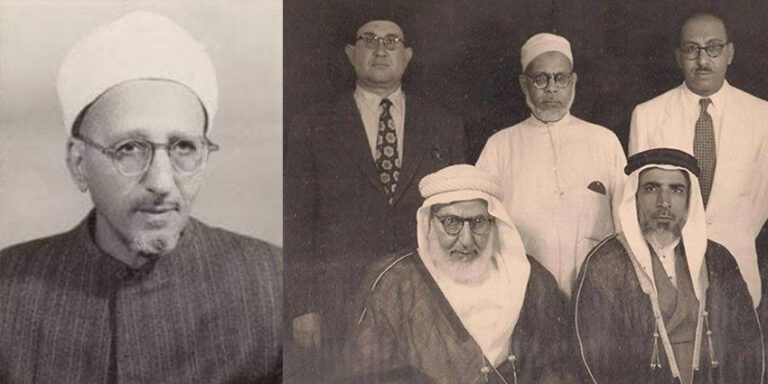

His Name and Upbringing
Shaykh Abū ʿAbd Allah ʿAbd ar-Raḥmān ibn Nāṣir ibn ʿAbd Allah ibn Nāṣir as-Saʿdī (d. 1376 AH/1957 CE) ؒ belonged to the Āl Saʿdī family of Banū Tamīm. He was born in ʿUnayzah, al-Qaṣīm, on 12 Muḥarram 1307 AH. His mother died when he was four and his father when he was seven. He therefore grew up an orphan, but received a sound upbringing.
From an early age, his intelligence and strong desire to learn attracted attention. After his father’s death, he read the Qurʾān and had thoroughly memorised it by the age of eleven. He then studied with the scholars of his town and those who visited it, working diligently until he acquired substantial knowledge in every discipline. At twenty-three he began teaching, continuing to learn and teach throughout his time. By 1350 AH, teaching in his town centred on him and the students relied upon him. This describes his scholarly standing, rather than a documented administrative appointment.
His Teachers
Shaykh Ibrāhīm ibn Ḥamd ibn Jāsir was the first teacher to whom he read. He described his teacher’s remarkable memory for ḥadīth and often spoke of his piety and compassion for the poor despite his own limited means. When a poor person came on a cold winter’s day, he would remove one of his two garments and clothe him in it, even though he needed it himself.
With Shaykh Muḥammad ibn ʿAbd al-Karīm ash-Shibl, he studied fiqh, Arabic and other subjects. He also studied extensively with Ṣāliḥ ibn ʿUthmān al-Qāḍī, the judge of ʿUnayzah, learning tawḥīd, tafsīr, the principles and branches of fiqh, and Arabic. He remained closely attached to him until the teacher’s death.
His other teachers included Shaykh ʿAbd Allah ibn ʿĀyiḍ, Shaykh Ṣaʿb at-Tuwayjirī and Shaykh ʿAlī as-Sinānī. With Shaykh ʿAlī ibn Nāṣir Abū Wādī, he studied ḥadīth, including the six major collections and other works, and received an ijāzah to transmit them. He also studied in ʿUnayzah with Muḥammad ibn ʿAbd al-ʿAzīz ibn Māniʿ, who later served as director of education.
Shaykh Muḥammad al-Amīn ash-Shanqīṭī, who had lived in the Ḥijāz and later in az-Zubayr, visited ʿUnayzah and stayed to teach. As-Saʿdī studied tafsīr, ḥadīth, grammar, morphology and other Arabic disciplines with him. This is the scholar associated with az-Zubayr, rather than an identification with the later author of Aḍwāʾ al-Bayān.
His Character and Teaching
He possessed many exceptional virtues and was humble towards young and old, rich and poor. He made time for those who wished to meet him and turned their gatherings into circles of knowledge, encouraging collective study and research. These beneficial discussions occupied their time and brought great benefit to those attending. Ordinary gatherings became occasions for learning and worship. He spoke to each person according to his needs, discussing matters beneficial in this world and the Hereafter. He often settled disputes through fair mediation that satisfied both parties.
He showed compassion to the poor, the needy and strangers, helping them whenever he could. When the opportunity arose, he appealed on their behalf to those known for supporting good causes.
He displayed excellent manners, modesty, integrity and resolve. He was an effective teacher who explained matters clearly, organised lesson times and arranged debates among advanced students to sharpen their thinking. He offered rewards for memorising textbooks and gave them to everyone who completed the memorisation, excluding no one.
He consulted his students about the most beneficial books to study, following the majority’s preference or deciding himself when there was no clear majority. They did not tire of long lessons because they enjoyed his company, and many accomplished students benefited from him.
His Scholarship
He had extensive knowledge of fiqh, its principles and branches. Initially he followed his teachers in adhering to the Ḥanbalī school and memorised some of its textbooks. During that period he composed a work on fiqh of about four hundred lines in the rajaz metre and wrote a concise explanation. He did not wish it to be published because it reflected his early views.
His greatest interests and influences were the works of Aḥmad ibn ʿAbd al-Ḥalīm Ibn Taymiyyah (d. 728 AH/1328 CE) and Muḥammad ibn Abī Bakr Ibn Qayyim al-Jawziyyah (d. 751 AH/1350 CE). Their writings benefited him in fundamental principles, tawḥīd, tafsīr, fiqh and other useful disciplines. Through their influence, he ceased to restrict himself to the Ḥanbalī school and preferred what he considered strongest on the basis of Islamic evidence. He nevertheless avoided disparaging scholars of other schools as some confused people do. May Allah guide them and us to the right path.
He excelled in tafsīr, having read many works in the discipline, and wrote an important commentary in several volumes. He composed it spontaneously, without a book of tafsīr or another reference before him at the time. He regularly read the Qurʾān with his students and explained it without prior preparation, developing its meanings, lessons, remarkable benefits and important concepts. His eloquence, vocabulary and extensive discussion of evidence and accounts made listeners wish that he would continue. Those who met him, studied with him or discussed scholarly matters with him recognised his calibre, as did those who read his books and legal opinions.
His Works
Taysīr al-Karīm ar-Raḥmān fī Tafsīr Kalām al-Mannān is his commentary on the Noble Qurʾān.
Irshād Ūlī al-Baṣāʾir wa-l-Albāb li-Nayl al-Fiqh bi-Aqrab aṭ-Ṭuruq wa-Aysar al-Asbāb, a guide to acquiring fiqh by the easiest means, was arranged as questions and answers. The account records printing at Maṭbaʿat at-Taraqqī in Damascus in 1365 AH, at the author’s expense, for free distribution.
Ad-Durrah al-Mukhtaṣarah fī Maḥāsin ad-Dīn al-Islāmī was printed by Anṣār as-Sunnah Press in 1366 AH.
Al-Khuṭab al-ʿAṣriyyah al-Qayyimah collected valuable sermons on contemporary matters. When he became responsible for sermons in his town, he addressed important subjects appropriate to the season and his audience’s needs at each ʿīd and Friday prayer. He subsequently collected these sermons and printed them with Ad-Durrah al-Mukhtaṣarah at his own expense through Anṣār as-Sunnah Press, distributing them free of charge.
Al-Qawāʿid al-Ḥisān li-Tafsīr al-Qurʾān, excellent principles for explaining the Qurʾān, was printed by Anṣār as-Sunnah Press in 1366 AH and distributed free of charge.
Wujūb at-Taʿāwun bayn al-Muslimīn wa-Mawḍūʿ al-Jihād ad-Dīnī concerns the duty of cooperation among Muslims and religious jihād.
Al-Qawl as-Sadīd fī Maqāṣid at-Tawḥīd, on the aims of tawḥīd, was printed in Egypt by al-Imām Press in 1367 AH at the expense of ʿAbd al-Muḥsin Abā Buṭayn.
Taysīr al-Laṭīf al-Mannān fī Khulāṣat Tafsīr al-Qurʾān, a concise Qurʾānic commentary, was printed by al-Imām Press. The author and a group of benefactors paid for its printing and free distribution.
He also left many useful, widely circulated remarks, legal opinions answering questions from his town and elsewhere, and notes on books he read. Writing came easily to him, and he recorded many legal opinions and other benefits.
Why He Wrote
His main purpose was to disseminate knowledge and call people to the truth. He therefore compiled, wrote and printed as much as he could, seeking no temporary or material reward, and distributed his works freely so that everyone could benefit. May Allah reward him for his service to Islam and the Muslims and enable us to do what pleases Him.
His Death
After a blessed life of almost sixty-nine lunar years devoted to knowledge, he died in ʿUnayzah, al-Qaṣīm, in 1376 AH/1957 CE. May Allah grant him abundant mercy.
References
Ibn Qayyim al-Jawziyyah, Muḥammad ibn Abī Bakr (d. 751 AH/1350 CE). Works influencing as-Saʿdī; individual titles unspecified in the biography.
Ibn Taymiyyah, Aḥmad ibn ʿAbd al-Ḥalīm (d. 728 AH/1328 CE). Works influencing as-Saʿdī; individual titles unspecified in the biography.
As-Saʿdī, ʿAbd ar-Raḥmān ibn Nāṣir (d. 1376 AH/1957 CE). Lessons Learnt from the Story of Yūsuf, DuSunnah Publications, London, 2013, p. 9.
As-Saʿdī, ʿAbd ar-Raḥmān ibn Nāṣir. Taysīr al-Karīm ar-Raḥmān fī Tafsīr Kalām al-Mannān; Irshād Ūlī al-Baṣāʾir wa-l-Albāb li-Nayl al-Fiqh bi-Aqrab aṭ-Ṭuruq wa-Aysar al-Asbāb; Ad-Durrah al-Mukhtaṣarah fī Maḥāsin ad-Dīn al-Islāmī; Al-Khuṭab al-ʿAṣriyyah al-Qayyimah; Al-Qawāʿid al-Ḥisān li-Tafsīr al-Qurʾān; Wujūb at-Taʿāwun bayn al-Muslimīn wa-Mawḍūʿ al-Jihād ad-Dīnī; Al-Qawl as-Sadīd fī Maqāṣid at-Tawḥīd; and Taysīr al-Laṭīf al-Mannān fī Khulāṣat Tafsīr al-Qurʾān. The first title is confirmed by the Arabic commentary transcription; the Irshād title is recorded by its publisher.
As-Saʿdī, Muḥammad, son of the scholar, in the family biography compiled by Musāʿid ʿAbd Allah as-Saʿdī, Ash-Shaykh al-ʿAllāmah ʿAbd ar-Raḥmān ibn Nāṣir as-Saʿdī, p. 4 in the electronic transcription. Records Thursday, 23 Jumādā al-Ākhirah 1376 AH. The corresponding January date is in 1957; some other biographies incorrectly print 1956.
Aṭ-Ṭayyār, ʿAbd Allah ibn Muḥammad ibn Aḥmad. Ṣafaḥāt min Ḥayāt ʿAllāmat al-Qaṣīm ash-Shaykh ʿAbd ar-Raḥmān ibn Nāṣir as-Saʿdī, published on the author’s website. Identifies Ṣaʿb at-Tuwayjirī, ʿAlī ibn Nāṣir Abū Wādī, Muḥammad al-Amīn ash-Shanqīṭī and Muḥammad ibn ʿAbd al-ʿAzīz ibn Māniʿ.