

Foundations of Faith
Videos
Videos

Atheism and Agnosticism
Interesting Discussion between Anwar and Atheist at Speakers Corner

Atheism and Agnosticism
Shamsi, Agnostic and Christian Missionary | Speakers Corner UK
Names and Attributes of Allah
Explanation of the Verse: “Everything Will Perish Except His Face.” | Shamsi


Names and Attributes of Allah
Salat of Allah and the Angels Refutation | Shamsi

Financial Transactions
Is It Permissible to Work as a Cashier Selling Cigarettes?
A cashier working in a store where selling cigarettes is mandatory asks whether their income becomes unlawful and if they are sinful. Shaykh Ṣāliḥ ibn Fawzān al-Fawzān states that selling cigarettes is sinful and that one should only sell what is lawful.

Marriage
How Should a Husband Give Mandatory Spending to His Wife?
A question is asked about the proper method of giving mandatory spending to a wife, such as whether it should be paid weekly. Shaykh Ṣāliḥ ibn Fawzān al-Fawzān explains that it depends on the agreement between the husband and wife, provided she is satisfied with the arrangement.

Scholars and Students of Knowledge
Should New Students Give Dawʿah and Connect People to Scholars?
A student of knowledge asks whether new learners should engage in dawʿah and guide others to scholars following the Prophetic ﷺ Sunnah. Shaykh Ṣāliḥ ibn Fawzān al-Fawzān affirms that they should call to Islam within their knowledge and connect people to trustworthy scholars.

Daily Life and Social Conduct
Driving Customers to Church: Is It Allowed?
A taxi driver asks whether it is permissible to drive a passenger to a church while working abroad. Shaykh Ṣāliḥ ibn Fawzān al-Fawzān clarifies that doing so is considered cooperating in sin and transgression, and therefore it is not permitted.
Financial Transactions
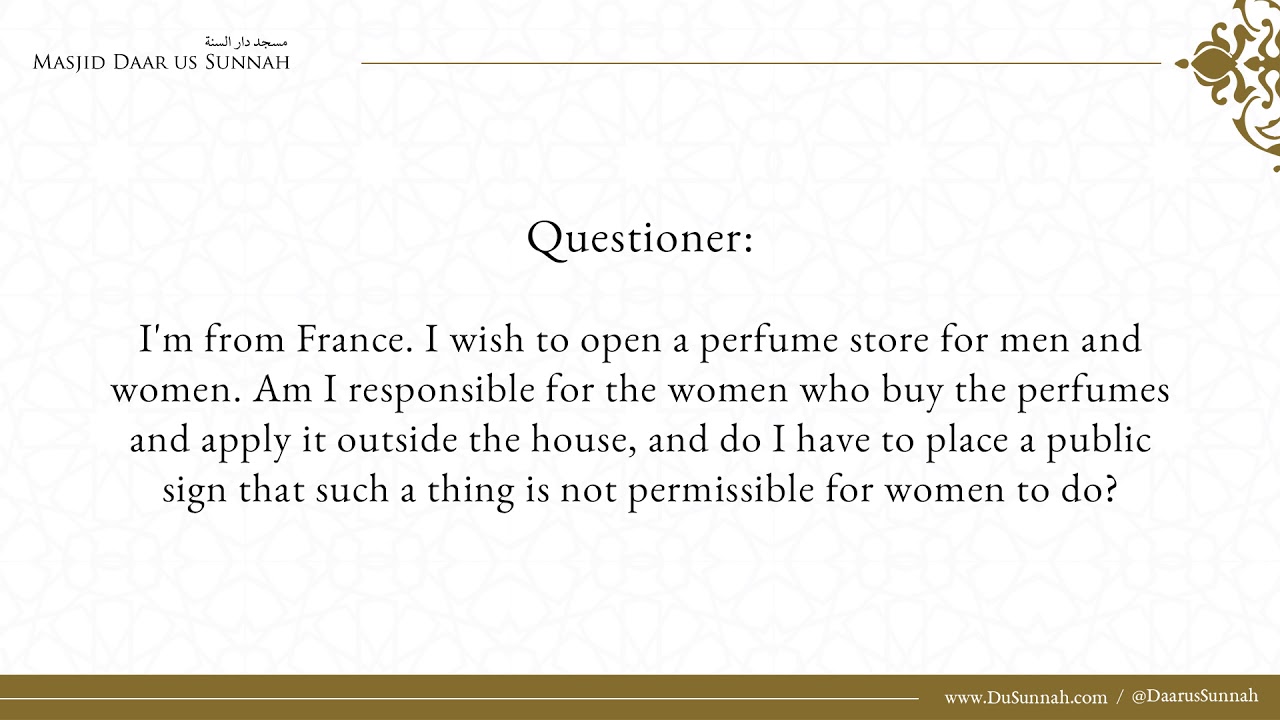
Selling Perfume to Women
A man from France asks if he is responsible for women who buy perfume and use it outside the home. Shaykh Salih al-Fawzan replies that the seller is not responsible. Women are accountable for their own actions, so the shop can sell to both men and women.

Seeking and Teaching Knowledge
Should I Quit Studies to Support My Family?
A student asks Shaykh Salih al-Fawzan if he should leave his studies to support his poor family. The Shaykh says it is better to seek income for the family when needed. But if possible, one should try to balance both work and education.