
Videos

The Salafi Methodology

271 videos · page 16 of 23

Filters

Principles of the Salafī Methodology

Is There No Saved Sect Today?

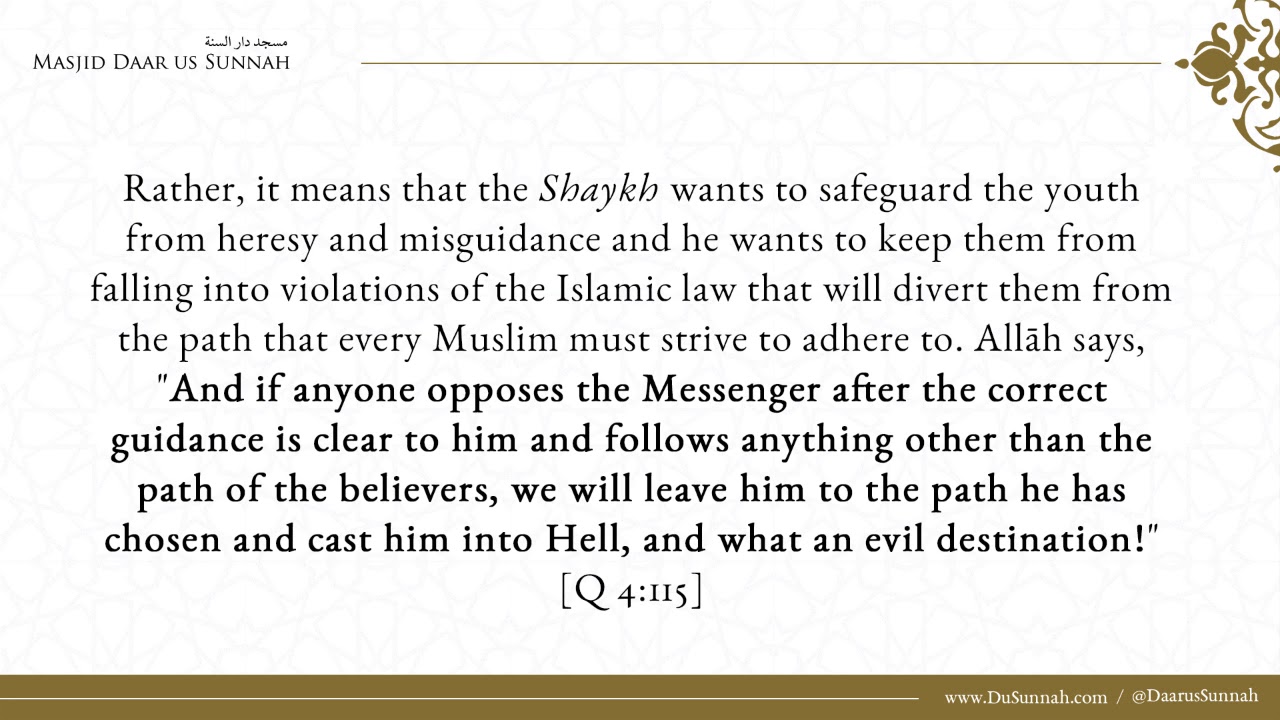
The Prophet ﷺ promised that a group following the truth will always exist until the Hour. Therefore, the claim that no saved sect exists today is false. The Qurʾān and Sunnah confirm the continuous presence of the true community, and those who deny this are following personal desires rather than guidance.
Nūr ad-Dīn an-Nīgerī February 16, 2018

Scholars and Students of Knowledge

What About Madinah Graduates Who Criticize Shaykh Rabi?

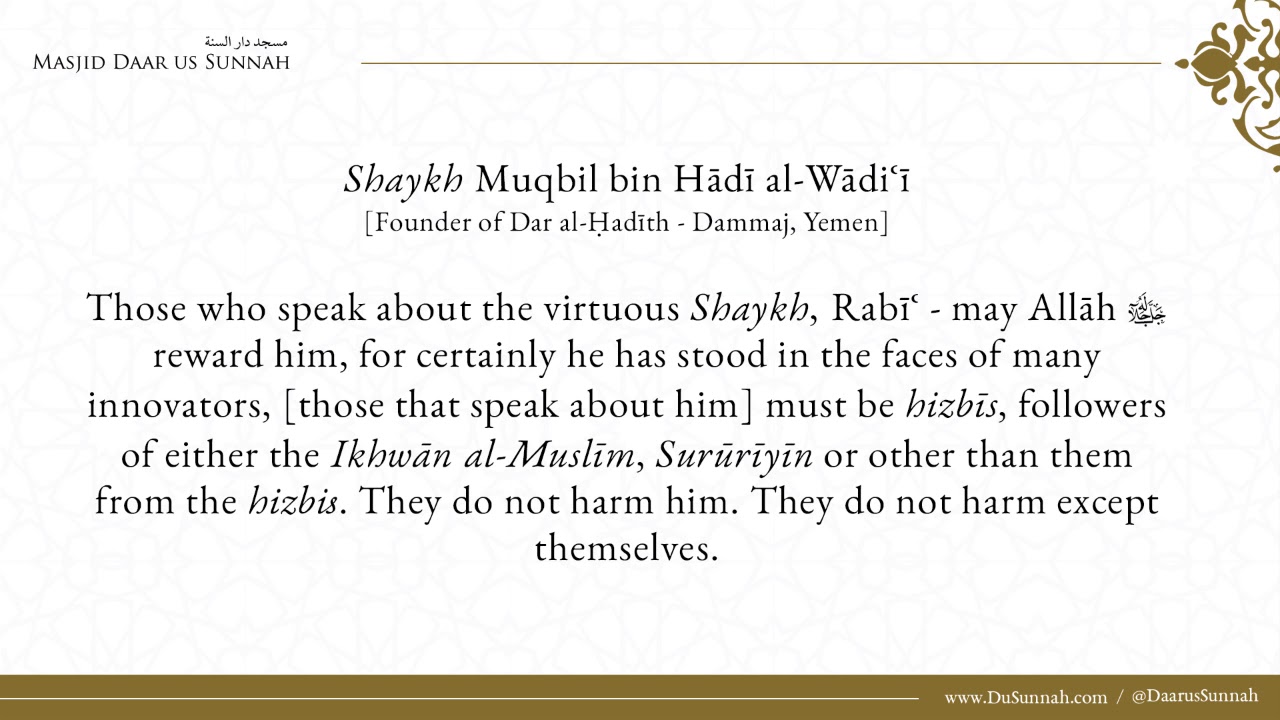
Shaykh Muqbil explains that graduates from Madinah who speak badly about Shaykh Rabi are likely biased followers of groups like the Ikhwan or Sururis. Their criticism does not harm the Shaykh; it only harms themselves, as the Shaykh stood firmly against many innovators.

Ṣalaḥ al-Irānī December 10, 2017

Scholars and Students of Knowledge

Stay Connected with Your Scholars

Shaykh Muhammad Ibn Hadi advises students to keep in touch with their scholars and fellow students after graduation. He stresses that ongoing contact helps preserve unity, trust, and correct knowledge, especially during trials. Staying connected ensures scholars know your status and can guide you rightly.

'Uthmān as-Sūdānī November 9, 2017

Principles of the Salafī Methodology

Do Not Seek Wealth from Hizb Organisations

Shaykh Rabīʿ ibn Hādī al-Madkhalī warns against seeking funding from Hizb organisations such as Ihyaa at-Turāth. He urges Salafīs to remain self-sufficient, rely on what Allah ﷻ has provided, and preserve the Salafi methodology, warning that external wealth can corrupt the call and cause division.

Abū Muhammad Walīd October 20, 2016

Principles of the Salafī Methodology

Advice to Salafi Youth on Unity and the Book and Sunnah

Shaykh Rabīʿ ibn Hādī al-Madkhalī advises the Salafi youth to cling to the Qurʾān and Sunnah, avoid division and innovation, and uphold the methodology of the righteous predecessors. He emphasises unity, sincere adherence to the primary sources, and distancing oneself from causes of discord.

Ḥasan as-Sūmālī September 15, 2016

Principles of the Salafī Methodology

Are Islamic Organisations Permissible?

Shaykh al-Albani explains that forming Islamic organisations or unions is not permissible in Islam because it leads to hizbiyyah (partisanship). He emphasizes that Islam does not support forming separate groups or parties based on religious labels.

Ṣalaḥ al-Irānī September 7, 2016

Principles of the Salafī Methodology

Yahya and Dammaj Have Attacked All Salafis

Shaykh Muḥammad ibn Hādī al-Madkhali condemns the two-faced behaviour of some who support Yahya al-Hajuri and Dammaj, revealing their slander and hostility towards Salafi scholars. He warns that such hypocrisy is more harmful than clear opposition and urges the preservation of respectful scholarly conduct.

'Abd ur-Raḥmān al-Sumālī September 7, 2016

Scholars and Students of Knowledge

Praise vs Criticism in Scholarly Evaluation

Shaykh Muqbil al-Wadi’i explains that when both praise and criticism exist, detailed criticism takes precedence if it comes from reliable scholars. However, if the critic is weak, biased, or has a hidden agenda, their criticism is not accepted. Context and credibility must be checked.

Ṣalaḥ al-Irānī September 7, 2016

Principles of the Salafī Methodology

Accept Truth Over Your Shaykh

Shaykh Rabi stresses that if a shaykh makes a mistake, you must accept the truth even if it contradicts your shaykh. Do not follow blindly or become partisan. Criticism based on evidence and respect is allowed, and mistakes must be corrected regardless of status.

'Abd ur-Raḥmān al-Sumālī September 7, 2016

Scholars and Students of Knowledge

The Ruling on Seeking Fatwa from Non Scholars

Shaykh Salih al-Fawzan advises that fatwa must be sought from trustworthy scholars known for their knowledge and piety. The recipient should avoid those who issue rulings without proper knowledge, and instead rely on established scholars who are firm and reliable.

Ṣalaḥ al-Irānī September 1, 2016

Scholars and Students of Knowledge

Is Tazkiyah Required for a Woman to Teach in the Mosque Shaykh Abdullah al-Ghudayan

Shaykh Abdullah al-Ghudayan explains that knowledge must be taken from qualified scholars. A woman who learns only from translated books and tapes without proper guidance should not teach others. Teaching without correct understanding can lead to mistakes and burden her with others’ sins.

Abū ʿIyāḍ September 1, 2016