Videos

Jurisprudence

73 videos · page 3 of 7

Filters

Jurisprudence

The Ramadan-Only Muslims Are Lost

Shaykh ʿAbd al-ʿAzīz ibn Bāz explains that the saying “those who only know Allah ﷻ in Ramadan will not be successful” is attributed to the Salaf and refers to those who abandon obligatory worship after Ramadan. He clarifies that neglecting voluntary acts outside Ramadan is not sinful.
Ṣalaḥ al-Irānī September 7, 2016

Jurisprudence

How Long Should a Traveller Shorten Prayers?

Shaykh Salih al-Luhaydan explains that a traveller should shorten prayers only if staying less than four days. If the intention is to remain for more than four days, the traveller should perform the full prayers and not shorten them.

Ṣalaḥ al-Irānī September 7, 2016

Fasting

Is One Intention Enough for Ramadan Fasting?

Shaykh Muqbil ibn Hādī al-Wādiʿī explains that intentions for fasting are required daily, based on the Prophet’s ﷺ teaching that actions are judged by intentions. He clarifies that intention is internal, not verbal, and that waking for suḥūr and abstaining from food and drink suffice.

Ṣalaḥ al-Irānī September 7, 2016

Innovations and It’s People

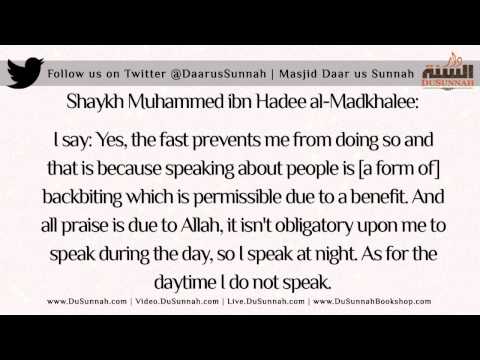
Does Fasting Prevent al-Jarh wa al-Tadʿīl?

A person asks whether fasting stops one from discussing narrators under al-jarh wa al-tadʿīl. Shaykh Muhammad ibn Hadi al-Madkhali answers that fasting does prevent it, as speaking about people may resemble backbiting. Therefore he avoids doing it during the day and prefers to speak at night.

Ṣalaḥ al-Irānī September 7, 2016

Fasting

Fasting Before Ramadan: Is It Allowed?

Shaykh Muqbil explains that one should not fast one or two days before Ramadan, even if unsure about its start. The Prophet ﷺ explicitly forbade anticipating Ramadan, and if the moon is not sighted, the correct action is to complete Sha‘ban as thirty days.

Ṣalaḥ al-Irānī September 7, 2016

Fasting

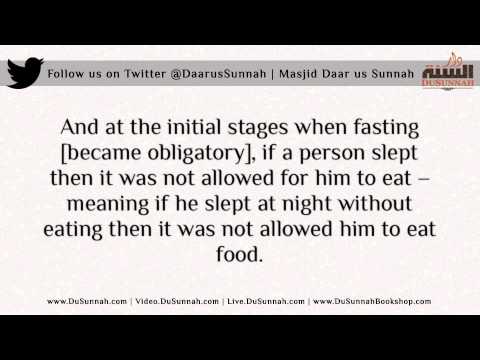
Sleeping Through the Day in Ramadan

Shaykh Muqbil al-Wadi’i explains that if someone sleeps before iftar and wakes after dawn, the fast still continues. The ruling is based on early practice and the Quranic permission to eat until dawn, confirming the fast is not broken by sleeping.

Ṣalaḥ al-Irānī September 7, 2016

Fasting

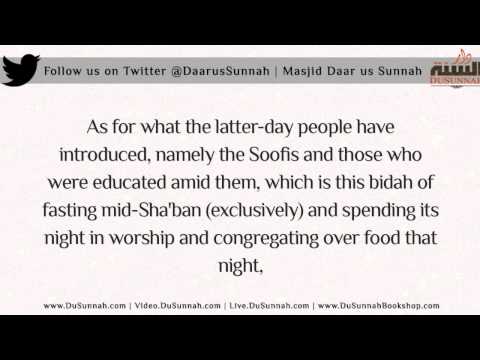
The Sunnah of Sha’ban

Shaykh Muhammad Aman al-Jami explains that the true Sunnah is fasting Sha’ban completely or most of it, as the Prophet ﷺ did. The practice of fasting only the middle of Sha’ban and spending its night in worship is an innovation and not part of the Sunnah.

'Abd ur-Raḥmān al-Sumālī September 7, 2016

Fasting

Eating After Athan in Suhoor

Shaykh Muqbil al-Wadi’i explains that if food is already in your mouth when the Athan is called, you should not spit it out, but you must not eat anything else afterward. Drinking is allowed only if the water is still in your hand when the Athan begins.

Ṣalaḥ al-Irānī September 7, 2016

Fasting

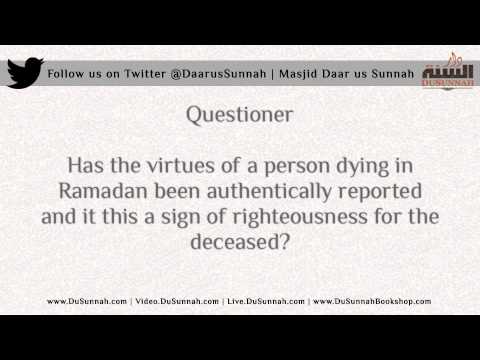
Is Dying in Ramadan a Good Sign?

The question asks whether dying in Ramadan is a sign of righteousness and if the virtues of such a death are authentically reported. Shaykh Muqbil al-Wadi’i states that while reports exist, they are not authentic, so it is not considered a reliable sign.

Ṣalaḥ al-Irānī September 7, 2016

Fasting

Menses Starts Just Before Iftar

If a woman’s menses begins just before Maghrib and the call to prayer is made on time, she must make up that fast later. If the prayer call is delayed beyond sunset, then her fast is valid and she does not need to make it up.

Ṣalaḥ al-Irānī September 7, 2016

Fasting

Breaking Fast Due to Postpartum Bleeding

Shaykh Muqbil states that if a woman breaks her fast due to postpartum bleeding, she must make up the missed fasts later. This ruling also applies if she stops fasting shortly before giving birth because of bleeding, as it is considered postpartum bleeding.

Ṣalaḥ al-Irānī September 7, 2016

Fasting

Permanent Illness and Fasting

Shaykh Muqbil explains that if a person is permanently ill and doctors say recovery is unlikely, he may break the fast and instead feed a poor person for each missed day. This ruling follows the Quranic allowance for those who cannot fast due to illness.

Ṣalaḥ al-Irānī September 7, 2016